


Theme & Story
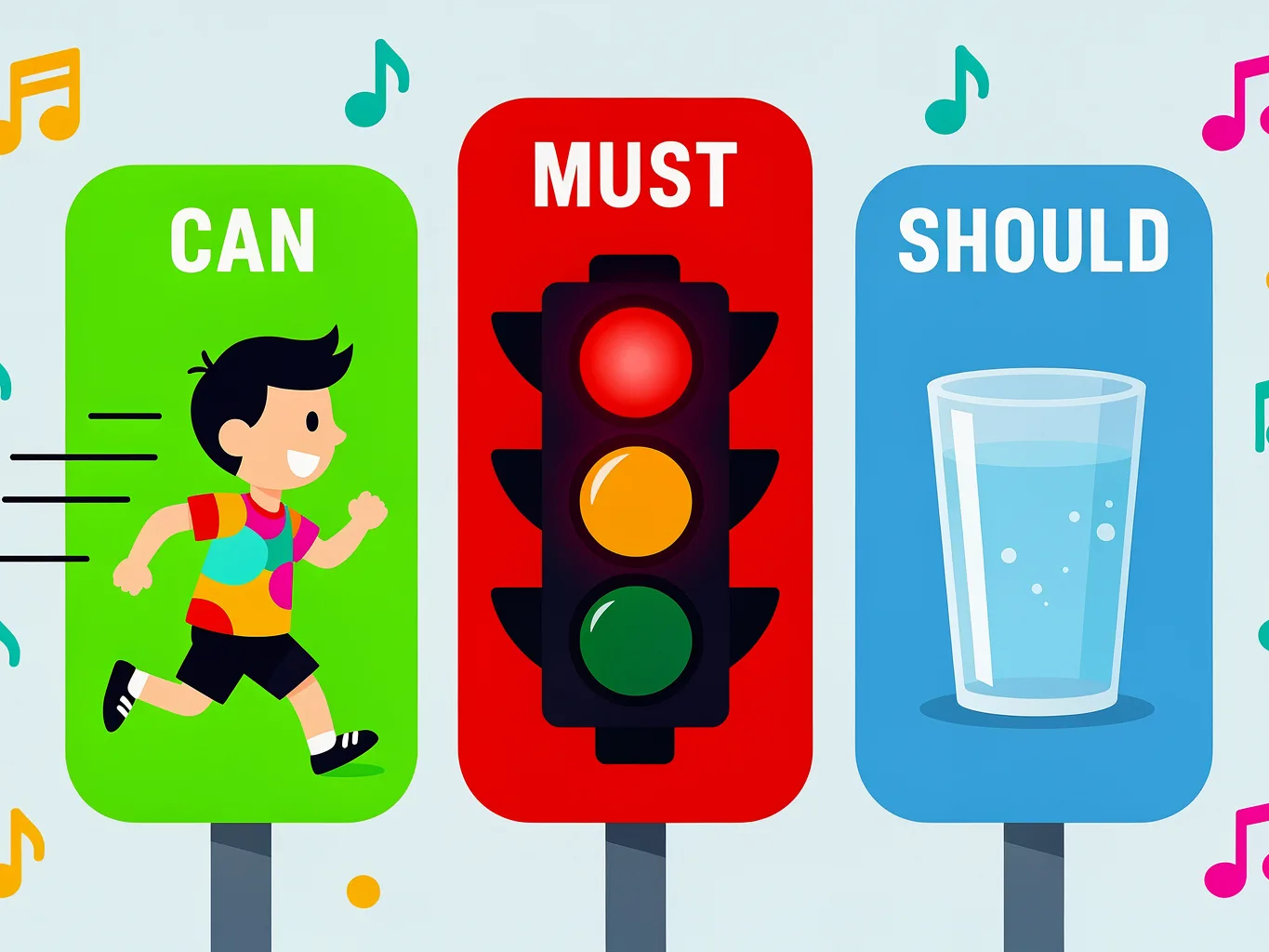
This song is a simple, classroom-style lesson about three important English modal verbs: can, must, and should. It teaches learners how each word expresses a different kind of meaning:
- Can = ability or possibility: “I can run,” “I can swim.”
- Must = strong obligation or rule: “You must stop at the red light.”
- Should = advice or recommendation: “You should rest.”
The “story” is not a dramatic narrative; instead, it works like a musical grammar lesson. The singer introduces rules, gives examples from daily life, and repeats a catchy chorus so learners can remember the modal verbs easily.
Metaphors & Meaning
The lyrics are mostly direct and educational, but a few lines have deeper or figurative meaning:
There are also everyday cultural references, such as stopping at a red light, sleeping enough, listening to your mom, and not stealing or lying. These examples connect grammar to common social rules and good behavior.
Vocabulary & Slang
There is no slang in the song; the language is clear and learner-friendly. Key phrases include:
The song also contrasts negative forms:
Grammar Notes
1. Modal verbs do not change form
Modal verbs like can, must, and should stay the same for all subjects:
Not: “He cans swim.”
2. Use the base verb after a modal
After can, must, and should, use the base form of the verb:
Not: “I can running” or “You must to stop.”
3. Questions use modal + subject + base verb
The chorus shows the question pattern clearly:
This is useful because English modal questions do not need “do/does.”
4. Negative forms have different strength
The song teaches three important negatives:
5. A small grammar correction
The line “Keep your both feet on the ground” sounds a little unnatural in standard English. More natural options are:
Overall, the song is excellent for beginners because it repeats useful grammar patterns and connects them to everyday actions, rules, and advice.