


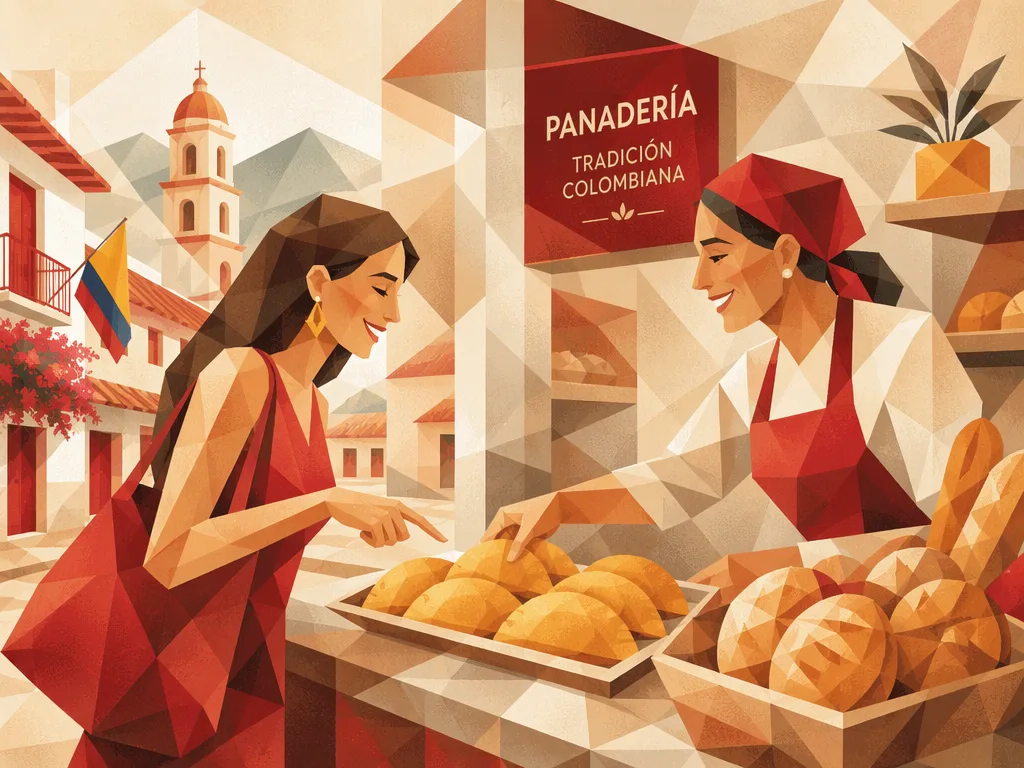
Asking Politely: Me da, Quisiera, ¿Me podría...? and ¿Me regala...?
Practice making polite requests in shops, cafés and on the street with "¿me da...?", "quisiera" and "¿me podría...?", and learn what Colombians mean when they say "¿me regala...?".
Preview
Questions with solutions-
1. Piliin ang tamang sagot.
In a bakery in Bogotá, a customer says this. What does she want?
¿Me regala un pan, por favor?
- Quiere comprar un pan.
- Quiere un pan gratis.
- Quiere regalar un pan a alguien.
- Quiere hacer un pan.
In Colombia, "regalar" in a shop doesn't mean a gift.
Show solution
- Quiere comprar un pan.
In Colombia and some other countries, "¿Me regala...?" is a friendly, polite way to say "Could I have...?". The customer still pays for the bread.
-
2. Punan ang patlang.
You order politely in a café.
___ un café con leche, por favor.
- Quisiera
- Quise
- Quisieron
- Quieres
You need the soft, polite form of "querer" for "I".
Show solution
Quisiera un café con leche, por favor.
"Quisiera" means "I would like". It sounds softer than "quiero". "Quise" is past tense (I wanted), "quisieron" is "they wanted" and "quieres" is "you want".
-
3. Punan ang patlang.
You ask an older stranger for help, using usted.
¿Me ___ ayudar con la maleta?
- podría
- podrías
- podemos
- poder
Usted uses the same verb ending as él and ella.
Show solution
¿Me podría ayudar con la maleta?
"¿Me podría...?" means "Could you...?" for usted. "Podrías" is for tú, which is fine with friends but not with this stranger.
-
4. Piliin ang tamang sagot.
Which is the most polite way to ask a waiter for the bill?
- ¿Me podría traer la cuenta, por favor?
- ¡Dame la cuenta!
- Quiero la cuenta ya.
- La cuenta.
Look for a question with "por favor".
Show solution
- ¿Me podría traer la cuenta, por favor?
"¿Me podría traer...?" is a soft question, and "por favor" makes it even nicer. "¡Dame!" and "Quiero... ya" sound like orders.
-
5. Ilagay sa tamang pagkakasunod-sunod ang mga salita.
Ask for a bottle of water in a shop.
- de agua,
- da
- una botella
- ¿Me
- por favor?
Start with "¿Me" and end with "por favor?".
Show solution
¿Me da una botella de agua, por favor?
"¿Me da...?" (Can you give me...?) is a very common, polite way to ask for things in shops.
-
6. I-type ang sagot.
In a shop in Colombia, ask for an orange juice the Colombian way. Type the usted form of "regalar".
¿Me ___ un jugo de naranja, por favor?
It ends in -a, like "¿Me da...?"
Show solution
- regala
"¿Me regala un jugo?" is a polite, everyday way to order in Colombia. You still pay for it!
-
7. Punan ang mga patlang.
You buy bus tickets at a station.
Buenas tardes, ___ dos boletos para Medellín. ¿Me ___ decir el precio?
- quisiera
- podría
- quise
- puedo
- da
- regala
First you say what you would like, then you ask "Could you...?".
Show solution
Buenas tardes, quisiera dos boletos para Medellín. ¿Me podría decir el precio?
"Quisiera dos boletos" = "I would like two tickets". "¿Me podría decir el precio?" = "Could you tell me the price?". After "podría" comes a verb in the infinitive, like "decir".
-
8. Piliin ang tamang sagot.
Which sentence means almost the same as this one?
Quisiera una mesa para dos.
- Me gustaría una mesa para dos.
- Tuve una mesa para dos.
- Busqué una mesa para dos.
- No quiero una mesa para dos.
"Quisiera" is about a wish now, not the past.
Show solution
- Me gustaría una mesa para dos.
"Quisiera" and "me gustaría" both mean "I would like". Both are polite ways to ask for something.
-
9. Makinig at i-type ang sagot.
Remember the accent in "té" and "azúcar".
Show solution
- Quisiera un té sin azúcar, por favor.
"Quisiera un té sin azúcar" = "I would like a tea without sugar".
-
10. Piliin ang tamang sagot.
At an office counter in Colombia, the employee asks you this. What does she want?
¿Me regala su nombre, por favor?
- Quiere saber su nombre.
- Quiere darle un regalo.
- Quiere cambiar su nombre.
- Quiere comprar algo.
Here "regalar" just means "give".
Show solution
- Quiere saber su nombre.
In Colombia, people also use "¿Me regala...?" for information: "¿Me regala su nombre?" means "Could you give me your name?".
-
11. Ilagay sa tamang pagkakasunod-sunod ang mga salita.
Tell the cashier how you want to pay.
- por favor.
- con tarjeta,
- pagar
- Quisiera
"Quisiera" is followed by a verb in the infinitive.
Show solution
Quisiera pagar con tarjeta, por favor.
"Quisiera + infinitive" says what you would like to do: "Quisiera pagar" = "I would like to pay".
-
12. I-type ang sagot.
"Quiero un sándwich" sounds a bit direct. Make it softer with the polite form of "querer".
___ un sándwich, por favor.
It starts with "Quis-".
Show solution
- Quisiera
"Quisiera un sándwich, por favor" is softer and more polite than "Quiero un sándwich".
-
13. Punan ang patlang.
At the market, you ask the seller (usted) for tomatoes.
¿Me ___ medio kilo de tomates, por favor?
- da
- doy
- di
- dar
The seller gives, so use the usted form of "dar".
Show solution
¿Me da medio kilo de tomates, por favor?
"¿Me da...?" = "Can you give me...?". "Doy" is "I give", "di" is "I gave" and "dar" is the infinitive.
-
14. Punan ang mga patlang.
You ask someone on the street for directions.
Perdón, ¿me ___ ___ dónde está el baño?
- podría
- decir
- quisiera
- dice
- puedo
- da
"Could you tell me...?"
Show solution
Perdón, ¿me podría decir dónde está el baño?
"¿Me podría decir dónde está...?" is the classic polite way to ask for directions. "Podría" is followed by the infinitive "decir".
-
15. Ilagay sa tamang pagkakasunod-sunod ang mga salita.
Ask a stranger for help.
- podría
- ayudar,
- ¿Me
- por favor?
"Me" goes before "podría".
Show solution
¿Me podría ayudar, por favor?
"¿Me podría ayudar?" = "Could you help me?". The word "me" comes before the verb.
-
16. Makinig at i-type ang sagot.
Don't forget the question marks: ¿...?
Show solution
- ¿Me regala una empanada, por favor?
"¿Me regala una empanada?" is how many Colombians order food: polite and friendly, and they pay for it.