


Order and pay in French: read a menu, order at a café or bakery counter, ask for some bread or a kilo of tomatoes, understand prices in euros, and order a meal at a restaurant.
Course
French
English
Beginner
18 lessons
Everyday French: ordering, shopping, getting around
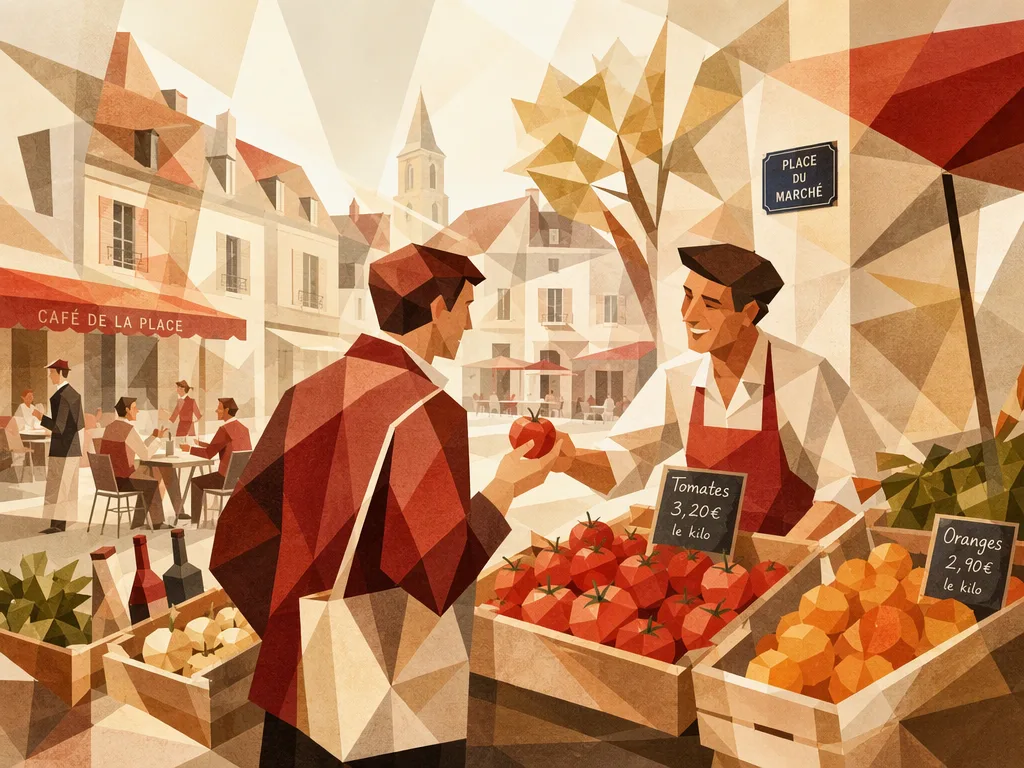
Get through everyday life in France in French: order at a café, shop at the market, find your way, see a doctor and travel by train and metro. You learn the short polite phrases people use in shops, offices and stations, and how to understand prices, signs, directions and the answers you get.
Course content
Lessons
At the café, the market and the restaurant
BeginnerAbout this unit
1
Read the menu
A French menu looks easy until you meet le menu, la formule and l'entrée, which don't mean what they mean in English. This lesson walks you through a café menu and its prices, and shows you how to ask what a dish is.
6 min
2
Je voudrais…: order at the counter
In a French café or bakery, the first word is always Bonjour. This lesson gives you the polite way to order, Je voudrais…, and the short questions you'll hear from the person behind the counter.
5 min
3
Du pain, de l'eau: some of something
English often says some bread or just bread. French needs a small word here: du pain, de la confiture, de l'eau. This lesson shows you when to use it, how to say there isn't any, and how to say you're hungry or thirsty.
6 min
4
How much is it? Prices and quantities
At a French market you ask for fruit by the kilo and hear the price in euros. This lesson gives you the quantities, how prices are said and written, and how to pay.
5 min
5
At the restaurant: order and pay
A meal out in France has its own rhythm: a starter, a main course, and the check only when you ask for it. This lesson takes you from the door to the check.
7 min
Finding your way and getting help
BeginnerAbout this unit
Get around and get help: understand signs, say where you're going and how, ask the way, shop for clothes, and say when you don't understand.
6
Signs and asking where things are
Entrée, Sortie, Poussez, Tirez: French signs are short, and some look nothing like English. This lesson gives you the signs you see every day and the questions to ask when you can't find something.
5 min
7
Going places: au, à la, chez and en tram
Je vais à… is how you say where you're going. This lesson shows you why it's au cinéma but à la pharmacie, when to say chez, and how to say you're taking the tram or the bus, or walking.
6 min
8
How do I get there?
Asking the way is easy; understanding the answer is the hard part. This lesson gives you the question, the few words people use in their answers, and ways to check that you've understood.
5 min
9
Can I try it on?
In a French clothing store, someone will soon ask if you need help. This lesson gives you the answers, how to try something on and ask for another size, and ce, cette and ces to point at what you want.
5 min
10
When you don't understand
Everyone speaks fast when you're new. This lesson gives you polite ways to say you don't understand, to ask someone to repeat or slow down, and to ask what a word means.
6 min
Errands and health
BeginnerAbout this unit
Take care of everyday errands: read opening hours, make an appointment by phone, tell the doctor what's wrong, and ask for something at the pharmacy.
11
When is it open?
French shops don't all keep the same hours: many small ones close for lunch, and most close on Sunday. This lesson shows you how to read opening hours on a door and how to ask when a place opens and closes.
5 min
12
Make an appointment by phone
In France you usually book a doctor's appointment ahead, by phone or online. This lesson takes you through the call: asking for an appointment, agreeing on a day and time, giving your name and checking the details.
5 min
13
At the doctor's
At the doctor's you need a few short sentences: what hurts, what else is wrong, and since when. This lesson gives you J'ai mal à…, the most common complaints, and depuis for how long.
5 min
14
At the pharmacy
In France the pharmacist is often the first person you ask about a cold or a sore throat. This lesson shows you how to ask for something for a complaint, whether you need a prescription, and how often to take it.
6 min
On the move: train, metro and hotel
BeginnerAbout this unit
Take a weekend trip by train: buy a ticket, read the departures board, find your way on the metro, and check in at your hotel.
15
Buy a train ticket
Most train tickets in France are bought on an app, but the station counter is still there, and the words are the same on the screen. This lesson gives you what to ask for: where to, one way or round trip, which day and time, and which class.
5 min
16
When does it leave? The departures board
At a French station, the big board tells you when your train leaves, from which track, and whether it's late. This lesson helps you read it and ask the questions it doesn't answer.
5 min
17
Metro and bus: which line, which stop?
Lyon has a metro, trams and buses, and the questions are the same in all of them: which line, where to change, and where to get off. This lesson gives you those questions and the answers you'll hear.
5 min
18
At the hotel front desk
At the hotel you give your name, show an ID and get your room. This lesson gives you the check-in and the questions about breakfast, the Wi-Fi and checkout time.
7 min