


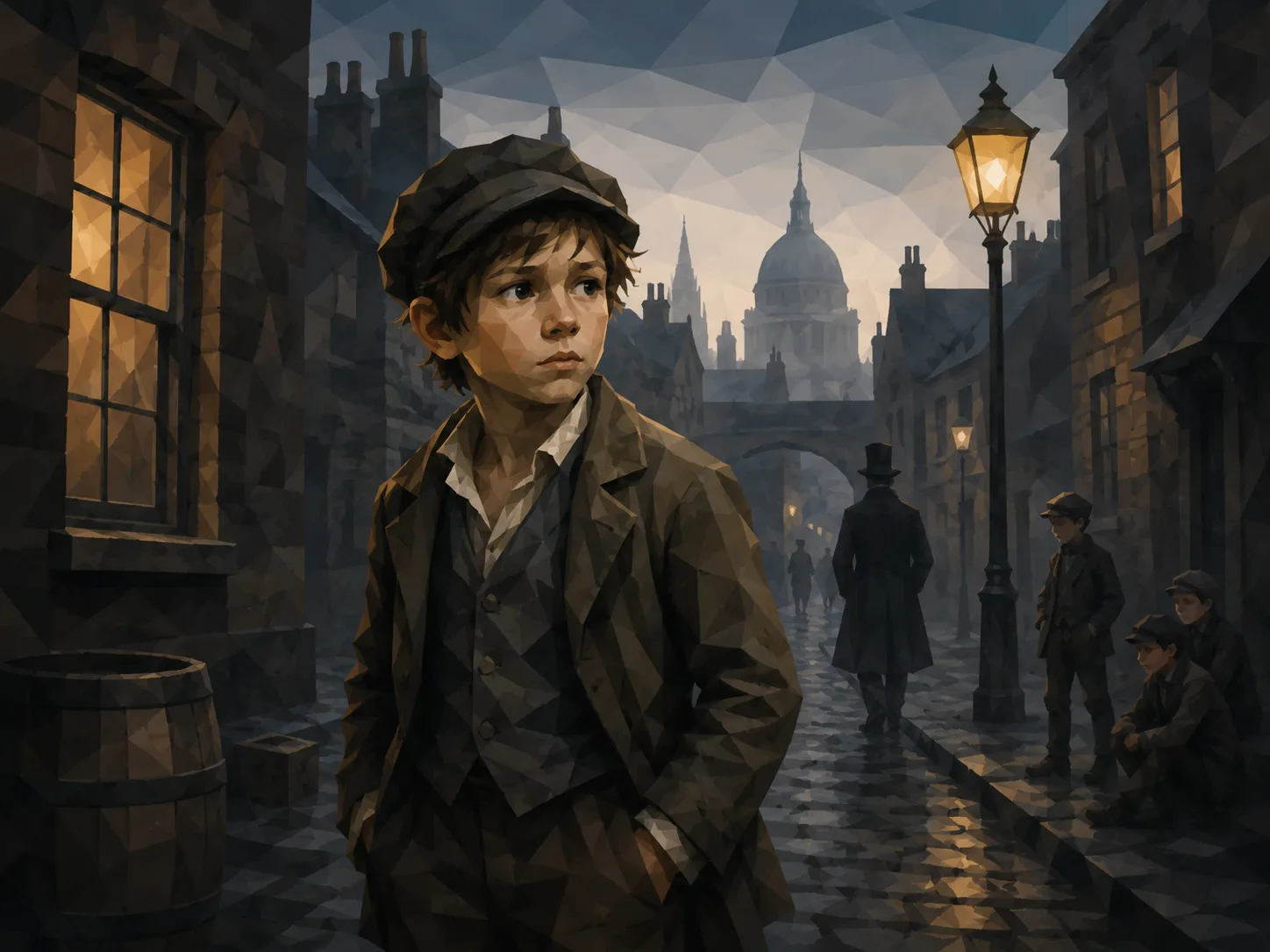
In all good tragic plays, it is the custom on the stage to present scenes of misery and scenes of humor in regular turns, much like the alternating layers of red and white in a side of bacon. The hero sinks onto his bed of straw, weighed down by heavy chains and misfortune; yet, in the very next scene, his faithful but slow-witted servant entertains the audience with a comic song. We watch, with hearts pounding, as the heroine is trapped by a cruel and heartless villain. Her virtue and her life are both in danger, and she draws her dagger to protect her honor at the cost of her life. Just as our expectations have reached their highest point, a whistle is heard, and we are immediately transported to the great hall of a castle. There, an elderly steward sings a cheerful song with a group of servants who seem to wander freely from church vaults to palaces, singing together constantly.
Such changes might appear absurd, but they are not as unnatural as they seem at first glance. The transitions in real life—from a well-spread dinner table to a death-bed, or from funeral clothes to holiday garments—are not a bit less startling. The only difference is that, in real life, we are the active participants instead of passive observers. The actors in the simulated life of the theater are blind to these violent shifts of emotion which, if seen by a mere spectator, would be condemned as ridiculous and unbelievable.
Because sudden shifts of scene and rapid changes of time and place are not only accepted in literature but are even considered by many to be a sign of great skill, this brief introduction may be unnecessary. If so, let it be seen as a polite hint from the narrator that we are returning to the town where Oliver Twist was born. The reader should assume there are substantial reasons for making this journey; otherwise, I would not invite you to follow me on such an expedition.
Mr. Bumble emerged from the workhouse gate early in the morning and walked up the High Street with a heavy, commanding step. He was in the full pride of his position as a beadle; his traditional hat and coat shone brightly in the morning sun, and he gripped his cane with the vigor of a man who possessed both health and power. Mr. Bumble always carried his head high, but this morning it was held even higher than usual. There was a look of deep thought in his eyes and a superior air about him which might have warned an observant stranger that the beadle’s mind was occupied by thoughts too grand to be spoken aloud.
Mr. Bumble did not stop to converse with the small shopkeepers who spoke to him respectfully as he passed. He merely acknowledged their greetings with a wave of his hand and maintained his dignified pace until he reached the farm where Mrs. Mann looked after the infant paupers with "parochial care."
"Drat that beadle!" muttered Mrs. Mann, hearing the familiar rattling at the garden gate. "If it isn’t him at this hour of the morning! Goodness, Mr. Bumble, just think of it being you! Well, dear me, it is a pleasure! Please, come into the parlor, sir."
The first sentence was whispered to a servant named Susan, while the exclamations of delight were directed at Mr. Bumble. The lady unlocked the gate and showed him into the house with great respect.
"Mrs. Mann," said Mr. Bumble, not sitting down quickly like a common person, but lowering himself gradually and slowly into a chair. "Mrs. Mann, ma’am, good morning."
"Well, and a good morning to you, sir," replied Mrs. Mann with many smiles. "I hope you find yourself well, sir?"
"So-so, Mrs. Mann," replied the beadle. "A parochial life is not a bed of roses, Mrs. Mann."
"Ah, that it isn't indeed," the lady agreed. All the infant paupers might have joined her in that statement if they had been allowed to hear it.
"A parochial life, ma’am," continued Mr. Bumble, striking the table with his cane, "is a life of worry, irritation, and hardship. But all public figures, I suppose, must suffer such things."
Mrs. Mann, not quite understanding what the beadle meant, raised her hands in sympathy and sighed. Finding she had done the right thing, she sighed again to the satisfaction of the "public figure." Mr. Bumble repressed a proud smile by looking sternly at his hat and said:
"Mrs. Mann, I am going to London."
"Goodness, Mr. Bumble!" cried Mrs. Mann, jumping back in surprise.
"To London, ma’am," repeated the inflexible beadle, "by coach. I am taking two paupers with me, Mrs. Mann! There is a legal dispute regarding which parish is responsible for them, and the board has appointed me—me, Mrs. Mann—to handle the matter before the court in Clerkenwell. And I suspect," added Mr. Bumble, drawing himself up proudly, "that the court will find they have made a mistake before they are finished with me."
"Oh, you mustn’t be too hard on them, sir," said Mrs. Mann coaxingly.
"The court brought it upon themselves, ma’am," replied Mr. Bumble. "And if they find themselves in a worse position than they expected, they only have themselves to thank."
There was so much determination in Mr. Bumble’s voice that Mrs. Mann appeared quite impressed. At length, she asked, "You’re going by coach, sir? I thought it was usual to send paupers in carts."
"That is only when they are ill, Mrs. Mann," said the beadle. "We put the sick paupers into open carts during rainy weather to prevent them from catching a cold."
"Oh!" said Mrs. Mann, though she looked puzzled.
"The rival coach company has a contract for these two, and it’s very cheap," explained Mr. Bumble. "They are both in a very weak state, and we found it would be two pounds cheaper to move them than to bury them—that is, if we can successfully transfer them to another parish. I think we shall succeed, provided they don’t die on the road just to spite us! Ha! ha! ha!"
When Mr. Bumble had finished laughing, he looked at his official hat and became serious again. "We are forgetting business, ma’am. Here is your parochial payment for the month." He produced some silver coins wrapped in paper and requested a receipt, which Mrs. Mann wrote.
Mr. Bumble nodded politely as Mrs. Mann curtsied and then inquired how the children were.
"Bless their dear little hearts!" said Mrs. Mann with fake emotion. "They are as well as can be—except, of course, the two who died last week. And little Dick."
"Is that boy no better?" inquired Mr. Bumble.
Mrs. Mann shook her head. "He’s a troublesome, wicked, and bad-tempered child, that one," said Mr. Bumble angrily. "Where is he?"
"I’ll bring him to you in a minute," replied Mrs. Mann. "Here, you, Dick!"
After some calling, Dick was found. Having had his face washed under the pump and dried with Mrs. Mann’s dress, he was led into the terrifying presence of the beadle. The child was pale and thin; his cheeks were sunken, and his eyes were large and bright. The cheap workhouse clothes hung loosely on his frail body, and his young limbs had wasted away like those of an old man. This was the little boy who stood trembling beneath Mr. Bumble’s gaze, not daring to look up.
"Can’t you look at the gentleman, you stubborn boy?" said Mrs. Mann.
The child meekly raised his eyes and met those of Mr. Bumble.
"What is the matter with you, Dick?" inquired Mr. Bumble with a sudden, poorly timed attempt at humor.
"Nothing, sir," replied the child faintly.
"I should think not," said Mrs. Mann, who had laughed loudly at Mr. Bumble’s joke. "You want for nothing, I’m sure."
"I should like—" faltered the child.
"What!" interrupted Mrs. Mann. "I suppose you’re going to say you do want something now? Why, you little wretch—"
"Stop, Mrs. Mann," said the beadle, raising his hand with authority. "Like what, boy?"
"I should like," whispered the child, "if someone who can write would put a few words down for me on a piece of paper, and fold it and seal it, and keep it for me... after I am buried."
"What does the boy mean?" exclaimed Mr. Bumble. Even he, accustomed as he was to misery, was somewhat moved by the child’s earnest manner.
"I should like," said the child, "to leave my love to poor Oliver Twist. I want to let him know how often I have sat by myself and cried thinking of him wandering in the dark nights with nobody to help him. And I should like to tell him," said the child, pressing his small hands together with great intensity, "that I was glad to die while I was still young. Because, perhaps, if I had lived to be a man, my little sister who is in Heaven might forget me. It would be so much happier if we were both children there together."
Mr. Bumble looked at the little speaker with total astonishment. Turning to Mrs. Mann, he said, "They are all the same! That outrageous Oliver has corrupted them all!"
"I couldn’t have believed it, sir," said Mrs. Mann, looking at Dick with hatred. "I have never seen such a hardened little villain!"
"Take him away!" ordered Mr. Bumble. "This must be reported to the board."
Dick was immediately taken away and locked in the coal cellar. Shortly afterward, Mr. Bumble left to prepare for his journey.
At six o'clock the next morning, having exchanged his official hat for a simpler one and wearing a thick blue coat, Mr. Bumble took his place on the outside of the coach. He was accompanied by the two paupers, and in due course, they arrived in London. He experienced no problems on the way, other than the annoying behavior of the two paupers, who persisted in shivering and complaining about the cold. Mr. Bumble declared that their complaining made his own teeth chatter, even though he was wearing a heavy coat.
After finding a place for the paupers to stay for the night, Mr. Bumble sat down at an inn and ate a modest dinner of steak and oyster sauce. Placing a glass of hot gin-and-water on the mantelpiece, he drew his chair toward the fire. After reflecting on the "sin" of complaining, he settled down to read the newspaper. The very first paragraph he saw was the following advertisement: