


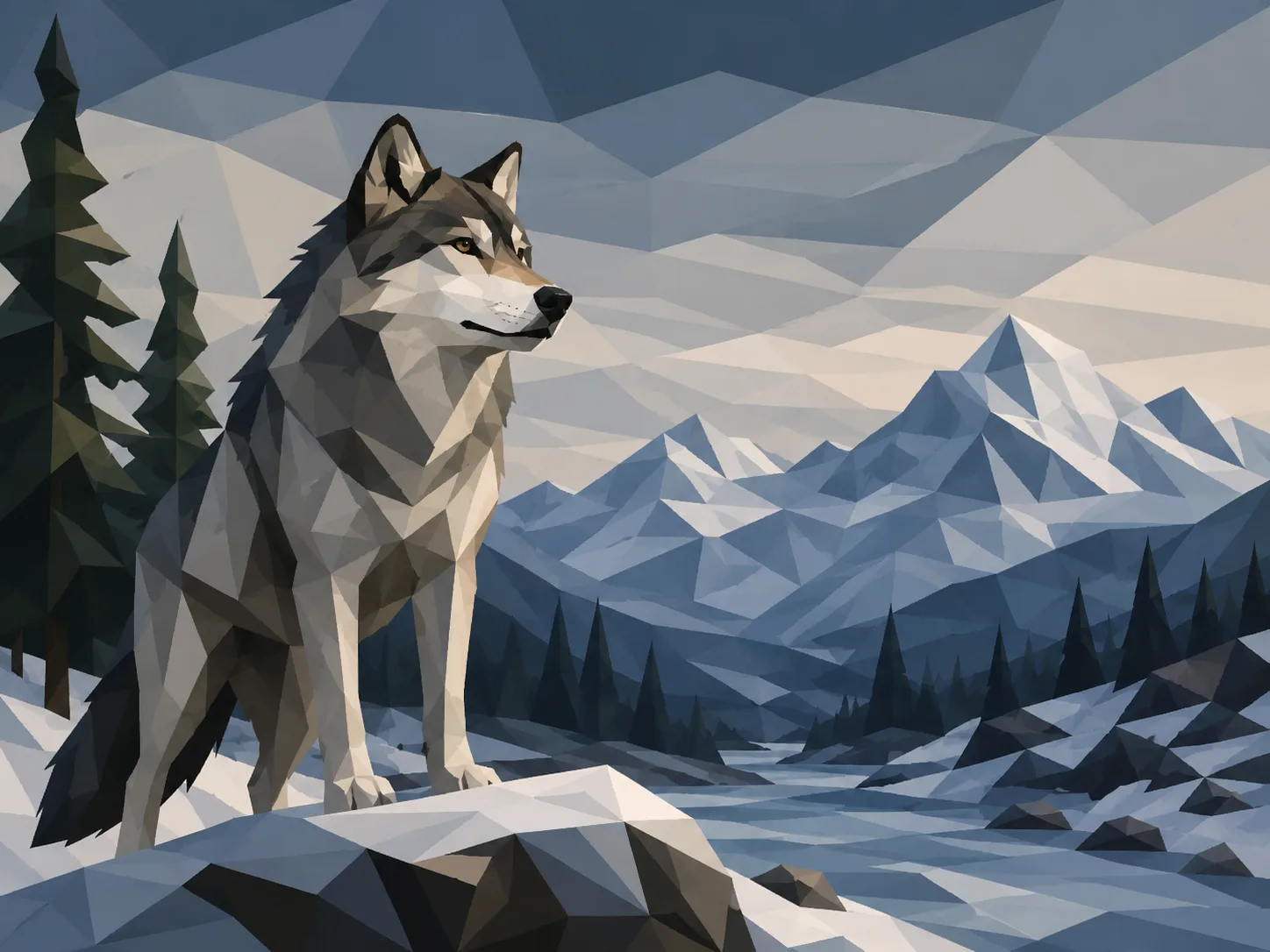
Had there been any possibility of White Fang befriending other dogs, it was destroyed forever when he was made the leader of the sled team. Now, the pack hated him more than ever. They envied the extra meat Mit-sah gave him and resented the perceived favors he received. Most of all, they hated the sight of him always out in front, his waving tail and retreating hindquarters constantly taunting them as they ran.
White Fang returned their hatred with equal bitterness. Being the leader was not a position of pride for him, but a source of constant frustration. To be forced to run away from a pack he had spent three years mastering was almost more than he could bear. Yet, he had to endure it to survive. The moment Mit-sah gave the command to start, the entire team would spring forward with savage cries, hungry to catch their hated leader.
White Fang had no way to defend himself while in the harness. If he turned to fight, Mit-sah’s thirty-foot whip would sting his face. His only option was to run. By fleeing, he violated his own pride every single day, and this internal conflict soured his nature. Every instinct urged him to turn and tear into the pack at his heels, but the "will of the gods" and the biting lash of the whip prevented it. Consequently, he developed a deep malice that matched his fierce and indomitable spirit.
If ever a creature was the enemy of its kind, it was White Fang. He neither asked for mercy nor gave it. He was constantly scarred by the teeth of the pack, but he left his own marks upon them in return. Unlike other leaders who huddled near the humans for protection when the day’s work was done, White Fang disdained such help. He walked boldly through the camp at night, punishing the dogs for the insults he had endured during the day.
The dogs, however, never seemed to learn their lesson. Though they feared him at night, the sight of him fleeing before them during the day erased their caution. Furthermore, they sensed a fundamental difference between themselves and him. They were domesticated wolves who had lost their connection to the Wild over many generations. To them, the Wild was a place of terror. White Fang, in appearance and impulse, was the personification of that Wild. When they bared their teeth at him, they were instinctively defending themselves against the ancient dangers that lurked in the shadows.
White Fang became a master of combat. He was too quick to be surrounded and too wise to be caught in a corner. His feet clung to the earth with the same tenacity that he clung to life. He declared a private war against all dogs, a vendetta so ferocious that even Grey Beaver marveled at his cruelty.
When White Fang was nearly five years old, Grey Beaver took him on another great journey across the Rockies and down to the Yukon. Along the way, White Fang wreaked havoc in every village they visited. The strange dogs he encountered were no match for him; they would approach him with traditional challenges, only to find White Fang’s teeth at their throats before they could even realize the fight had begun. He avoided long struggles, preferring to strike like a steel spring and then move away. To him, physical contact with another living thing suggested the danger of a trap, a fear that was woven into the very fiber of his being.
In the summer of 1898, they arrived at Fort Yukon. The region was transformed by the Gold Rush; thousands of gold-seekers were traveling up the river toward the Klondike. Here, Grey Beaver stopped to trade his furs and handmade mittens. He had expected a modest profit, but the desperate hunger for supplies allowed him to sell his goods for ten times their value.
At Fort Yukon, White Fang saw his first white men. To him, they were a superior race of gods. Their massive log houses and the colossal steamships that arrived every few days were manifestations of a power far beyond anything Grey Beaver possessed. While he remained suspicious and fearful of these new gods, he was also deeply curious.
However, if the white gods were all-powerful, their dogs were remarkably weak. White Fang felt nothing but contempt for these "Southland" animals. They were clumsy, oddly shaped, and had no idea how to fight. They would rush at him with loud barking, only to find themselves knocked off their feet and slashed across the throat in an instant.
White Fang was clever enough to know that the gods grew angry when their dogs were killed. Therefore, he would often wound a strange dog and then step back, allowing the pack of Indian dogs to finish the kill. When the white men rushed in with clubs and revolvers to punish the offenders, White Fang would stand at a safe distance, watching the chaos with cold, intelligent eyes.
Hunting these Southland dogs became his primary occupation. He did not need to exert himself to start a fight; he only had to show himself. As soon as the strange dogs stepped off the steamships, they felt an irresistible impulse to attack him. They saw him not just with their own eyes, but with the eyes of their ancestors. To them, he was the wolf—the ancient enemy they had betrayed and deserted centuries ago.
White Fang’s childhood had been a series of battles against the Wild and the persecution of his own kind. Had he been raised with affection, or had Grey Beaver possessed a gentler nature, White Fang might have been different. But his environment had molded him into a solitary, unloving, and ferocious hunter—the ultimate enemy of his kind.