


Theme & Story
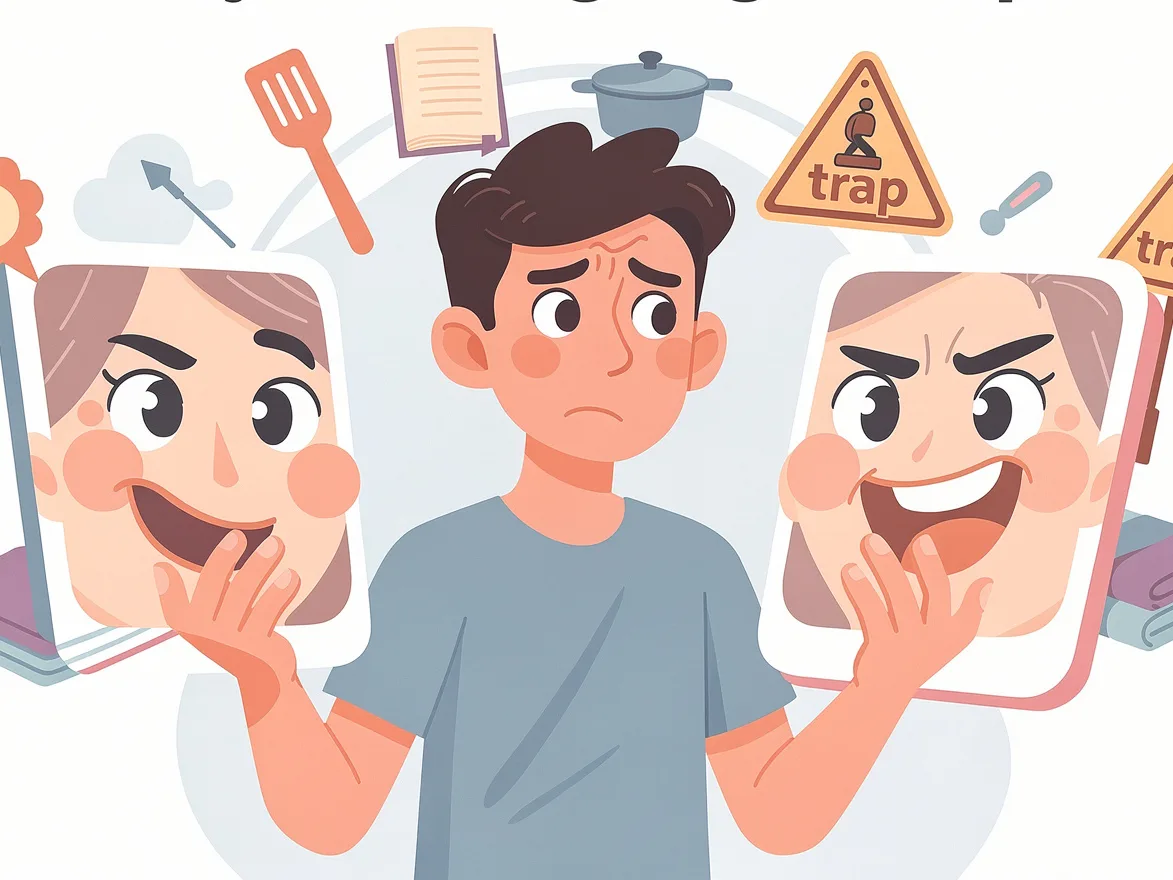
This song is a funny, dramatic warning about false friends: words in two languages that look or sound similar but have different meanings. The singer thinks certain English words mean the same as similar words in another language, but each word “betrays” them.
The story moves through several embarrassing mistakes:
- “Actually” does not mean “right now”; it means “in reality” or “in fact.”
- “Library” is not a shop for books or stationery; it is a place where you borrow books.
- “Chef” is not usually “the boss” in English; it means a professional cook.
- “Fabric” is not a factory; it means cloth or material.
- “Preservatives” in English are chemicals that keep food fresh, but similar-looking words in some languages can mean condoms.
- “Gymnasium” in English is a place for sports, not an academic secondary school as in some European languages.
- False friends: Words in different languages that look or sound similar but have different meanings. Example: English “library” vs. Spanish librería (“bookstore”).
- Actually: Means “in fact” or “in reality,” not “currently” or “right now.” Example: “Actually, I don’t agree.”
- Don’t ask me how!: A playful phrase meaning “I can’t explain why” or “It’s confusing.”
- Borrow: To take something temporarily and return it later. In a library, you borrow books.
- My logic simply fails: A humorous way to say, “This makes no sense to me.”
- Sticky situation: An idiom meaning a difficult, awkward, or embarrassing situation.
- Straight from my heart: Sincerely; with honest feeling.
- Romantic time: A humorous euphemism for sexual intimacy.
- Watch out: Be careful; pay attention to danger.
- “I thought I knew…” / “I thought we were…”: These are past-tense structures used to describe a belief that turned out to be wrong. The past tense in the second verb often follows “thought”: “I thought it was…”
- “You’re not the word I thought you’d be”: “You’d” is a contraction of “you would.” The line means: “You are not the word I expected you to be.”
- “Thinking it meant…”: This uses an -ing clause to explain the speaker’s reason or state of mind. Full version: “I said ‘actually’ because I was thinking it meant ‘right now.’”
- “But you can’t buy things there, just borrow books”: Lyrics often omit repeated words for rhythm. A fuller version would be: “You can’t buy things there; you can just borrow books.”
- Capitalized words like “ACTUALLY,” “LIBRARY,” and “CHEF” emphasize the false-friend vocabulary. This is not normal grammar; it is a visual songwriting technique.
The song turns language learning into a comic heartbreak: the learner trusted the words because they looked familiar, but the words “lied.”
Metaphors & Meaning
The central metaphor is false friends as people who betray you. The singer says, “I thought we were friends,” and then accuses the words: “You lied to me!” Of course, words do not literally lie. The joke is that they seem friendly because they look familiar, but they cause mistakes.
The phrase “language trap” suggests that familiar-looking words can catch learners by surprise. The song uses exaggerated emotions—“My heart is breaking,” “The embarrassment! The shame!”—to make small vocabulary mistakes feel like a dramatic romantic betrayal. This makes the lesson memorable.
There is also cultural humor in the “preservatives” verse. In English, a preservative is something added to food to prevent spoilage. But in languages such as French, similar words like préservatif can mean “condom.” That creates an awkward dinner-table misunderstanding.