


Theme & Story
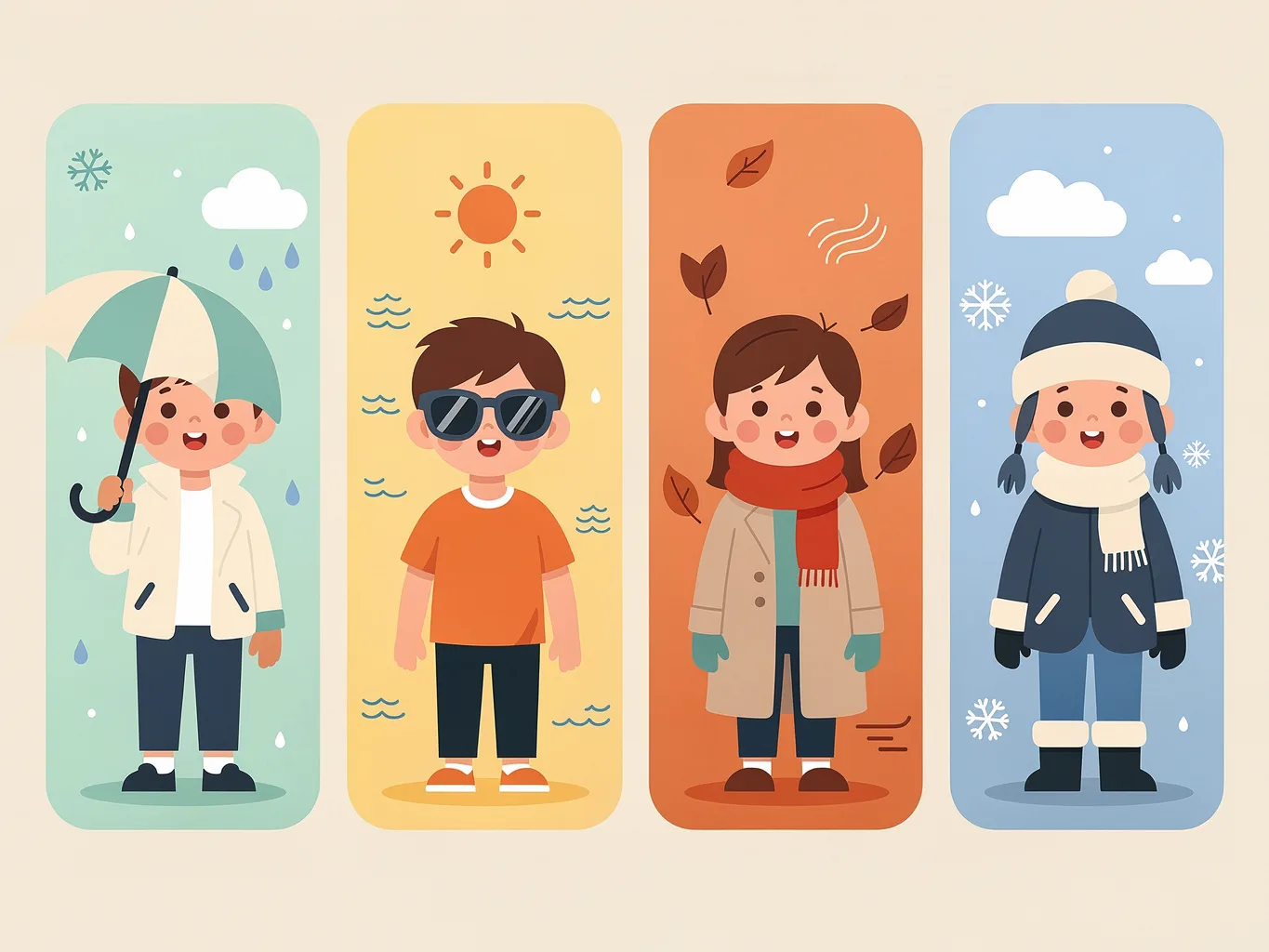
“Four Seasons of Style” is a clear, friendly song about the four seasons—Spring, Summer, Autumn, and Winter—and the clothes we wear in different weather. The singer moves through the year: flowers grow in spring, the summer sun is hot, autumn leaves fall, and winter brings snow and freezing air.
The main story is practical: before going outside, the singer asks what the weather is like and chooses the right clothes. This makes the song especially useful for language learners because it connects everyday weather words with clothing vocabulary.
Metaphors & Meaning
The song is mostly literal, so it is easy to understand. However, it uses a few poetic expressions:
- “The world is turning green again” means spring is returning and plants are growing. The world is not literally turning green all at once; it describes the landscape becoming full of leaves, grass, and flowers.
- “Summer is a lovely place” personifies summer as if it were a location you can visit. It means summer feels pleasant, happy, and enjoyable.
- “Every season is a winner” means every season has something good about it. The song encourages a positive attitude toward all kinds of weather.
- “Golden hues” refers to the warm yellow, orange, and brown colors of autumn leaves. “Hues” means colors or shades.
- season: one of the four parts of the year: spring, summer, autumn/fall, winter.
- light jacket: a thin jacket for cool weather, not very cold weather.
- pocket: a small part of clothing where you can put things, like keys.
- umbrella: something you hold over your head to stay dry in the rain.
- sunglasses: glasses that protect your eyes from the sun.
- sweater: warm clothing for the upper body.
- coat: a heavier outer garment for cold weather.
- scarf: cloth worn around the neck for warmth or style.
- trousers: pants; this word is common in British English.
- gloves: clothing for your hands.
- boots: strong shoes, often worn in rain, snow, or cold weather.
- freezing: very cold. It can be literal or used casually to mean “extremely cold.”
- “What is the weather like today?”: a common question asking about today’s weather.
- “What are you wearing?”: asks about someone’s clothes.
- “Don’t forget your umbrella.”: a practical reminder.
- “Whatever the weather”: no matter what the weather is like.
- Present simple for facts and routines: “The winter ends,” “The flowers grow,” “I walk,” “I wear.” These describe regular events or general truths.
- Present continuous for current actions or changes: “The leaves are falling,” “It is getting cold,” “What are you wearing?” This form shows something happening now or changing over time.
- Weather expressions with “It is…”: English often uses it as a dummy subject for weather: “It is hot,” “It is cold,” “It is raining,” “It is freezing.” The word “it” does not refer to a specific object.
- Modal verb “should” for advice or decisions: “What should I wear?” means “What is the best thing for me to wear?”
- Imperatives for instructions: “Don’t forget your umbrella,” “Wear your coat,” and “Dress yourself well” are commands or advice.
- Article use: “a T-shirt,” “a light jacket,” “a sweater,” “a coat,” and “a heavy hat” use a because they are singular countable nouns.
- British vs. American English:
There are no deep hidden cultural references, but the song reflects a common educational theme in English learning: weather + clothing + daily routines.
Vocabulary & Slang
Key vocabulary for learners:
Useful phrases:
There is no slang in the song; the language is simple, standard, and learner-friendly.