


Listen and Write: German Sounds
Listen to short everyday German sentences and write them down. You practice hearing and spelling the sounds ü, ö, ä, ch, sch, ei and ie, and you learn a few simple rules for how they are written.
Preview
Questions with solutions-
1. ऐका आणि उत्तर लिहा.
Listen to the sentence about a room in the house and write it down.
Listen for two special vowels: ü (like 'ee' said with round lips) and ö (like 'e' said with round lips). 'Die' is spelled with ie.
Show solution
- Die Küche ist schön.
"Die Küche ist schön" means "The kitchen is nice." Küche has ü and a soft ch, schön has sch and ö. The ie in "die" sounds like English 'ee'.
-
2. योग्य उत्तर निवडा.
In German, "ei" sounds like English 'eye', and "ie" sounds like English 'ee'. Which word means "three"? It sounds like 'dry'.
- drei
- drie
- dräi
- dreii
The word ends with the 'eye' sound. Which letters make that sound?
Show solution
- drei
"drei" is spelled with ei, which sounds like 'eye'. "drie" would sound like 'dree'.
-
3. ऐका आणि उत्तर लिहा.
Listen to the sentence about a room and write it down.
You hear the 'eye' sound twice. Remember: that sound is written ei.
Show solution
- Mein Zimmer ist klein.
"Mein Zimmer ist klein" means "My room is small." Both "mein" and "klein" have ei, pronounced like 'eye'. Nouns like "Zimmer" start with a capital letter.
-
4. योग्य उत्तर निवडा.
Which word means "to play"? It sounds like 'shpee-len'.
- spielen
- speilen
- schpielen
- spilen
At the start of a word, "sp" already sounds like 'shp'. The long 'ee' sound is usually written ie.
Show solution
- spielen
"spielen" is correct. At the beginning of a word, sp sounds like 'shp', so you do not write sch. The long 'ee' is written ie.
-
5. ऐका आणि उत्तर लिहा.
You are at the bakery. Listen and write down what you say.
You hear ö twice. Listen for the soft ch sound in "ich", "möchte" and "Brötchen".
Show solution
- Ich möchte ein Brötchen.
"Ich möchte ein Brötchen" means "I would like a bread roll." The ch after i and ö is soft, like a quiet hiss. "Brötchen" is a noun, so it has a capital letter.
-
6. रिकामी जागा भरा.
Order politely: "I would like a coffee, please."
Ich ___ einen Kaffee, bitte.
- möchte
- möschte
- mögte
- mögchte
The soft hissing sound after ö is written with two letters, not three.
Show solution
Ich möchte einen Kaffee, bitte.
"möchte" is spelled with ch. The sound is softer than sch, so "möschte" is wrong, and there is no g in this word.
-
7. ऐका आणि उत्तर लिहा.
Listen to the sentence about school and write it down.
"Schule" starts with the 'sh' sound, written sch. The ch in "acht" is the rough sound at the back of the throat.
Show solution
- Die Schule beginnt um acht.
"Die Schule beginnt um acht" means "School starts at eight." German writes 'sh' as sch. After a, o and u, ch sounds rough, as in "acht".
-
8. रिकाम्या जागा भरा.
Complete the sentence: "On Friday I go to school."
Am ___ gehe ich in die ___.
- Freitag
- Schule
- Frietag
- Shule
- Schuhle
"Freitag" has the 'eye' sound. 'Sh' in German is written with three letters.
Show solution
Am Freitag gehe ich in die Schule.
"Freitag" is spelled with ei ('eye'), and "Schule" with sch and a simple u. "Shule" and "Schuhle" are not German spellings.
-
9. ऐका आणि उत्तर लिहा.
Listen to the sentence about food and write it down.
The first vowel in "Käse" sounds like the vowel in 'air' (or a long German 'e'), and it is written ä.
Show solution
- Der Käse ist sehr gut.
"Der Käse ist sehr gut" means "The cheese is very good." Long ä sounds like the vowel in 'air' or a long German e, so you need to learn the spelling of words like "Käse".
-
10. रिकामी जागा भरा.
Complete the sentence: "The girl is ten years old."
Das ___ ist zehn Jahre alt.
- Mädchen
- Medchen
- Mädschen
- Mätchen
The word comes from "Magd" (an old word for a young woman) and ends in -chen, like "Brötchen".
Show solution
Das Mädchen ist zehn Jahre alt.
"Mädchen" is spelled with ä and the ending -chen. Many small things end in -chen, for example "Brötchen" (small bread roll).
-
11. ऐका आणि उत्तर लिहा.
Listen to the plan for the weekend and write it down.
Listen for ei in the day, a rough ch in "nach" and ü plus a soft ch in the city name.
Show solution
- Am Freitag fahren wir nach München.
"Am Freitag fahren wir nach München" means "On Friday we are going to Munich." You hear the rough ch in "nach" and the soft ch in "München". "wir" is spelled with just an i and no e, even though the vowel sounds long.
-
12. शब्द योग्य क्रमाने लावा.
Put the words in order: "My brother likes playing chess."
- Bruder
- spielt
- Mein
- gern Schach.
The verb comes in second place, right after the person.
Show solution
Mein Bruder spielt gern Schach.
"Mein Bruder spielt gern Schach." The verb "spielt" (with ie) is in second position. "Schach" has sch at the start and a rough ch at the end.
-
13. ऐका आणि उत्तर लिहा.
Listen to the last sentence and write it down.
This sentence has many of today's sounds: ä, ch, sch, ei and ie. "Brief" sounds like 'breef'.
Show solution
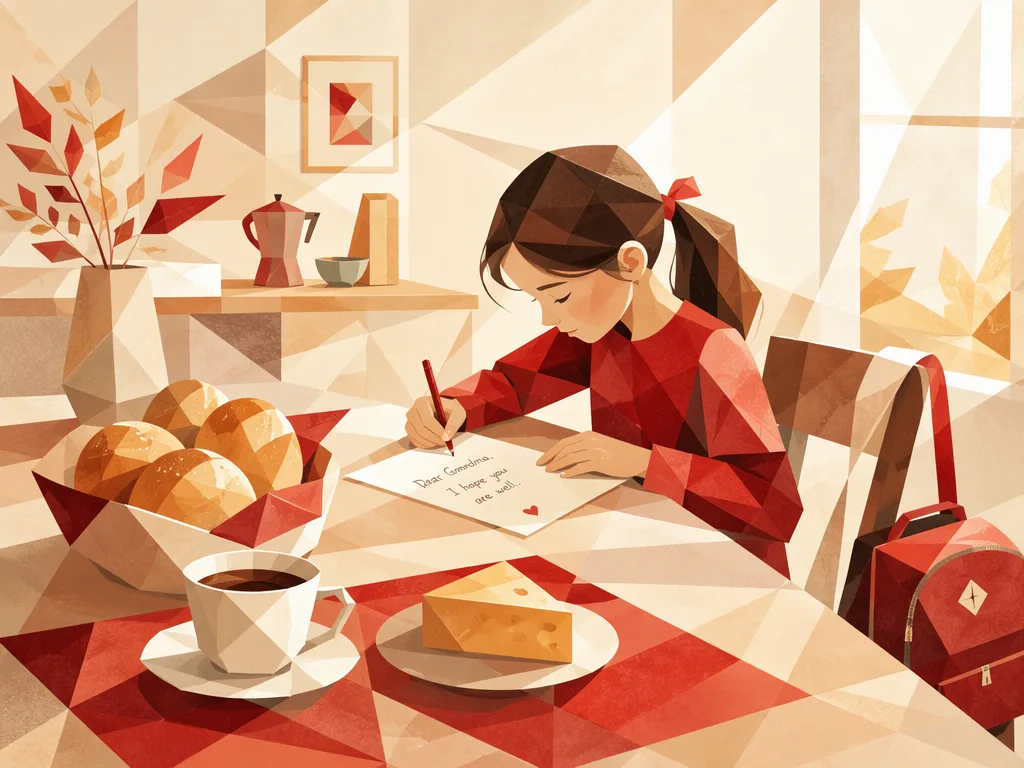
- Das Mädchen schreibt einen Brief.
"Das Mädchen schreibt einen Brief" means "The girl is writing a letter." "schreibt" and "einen" have ei ('eye'), and "Brief" has ie ('ee').