What the song is about
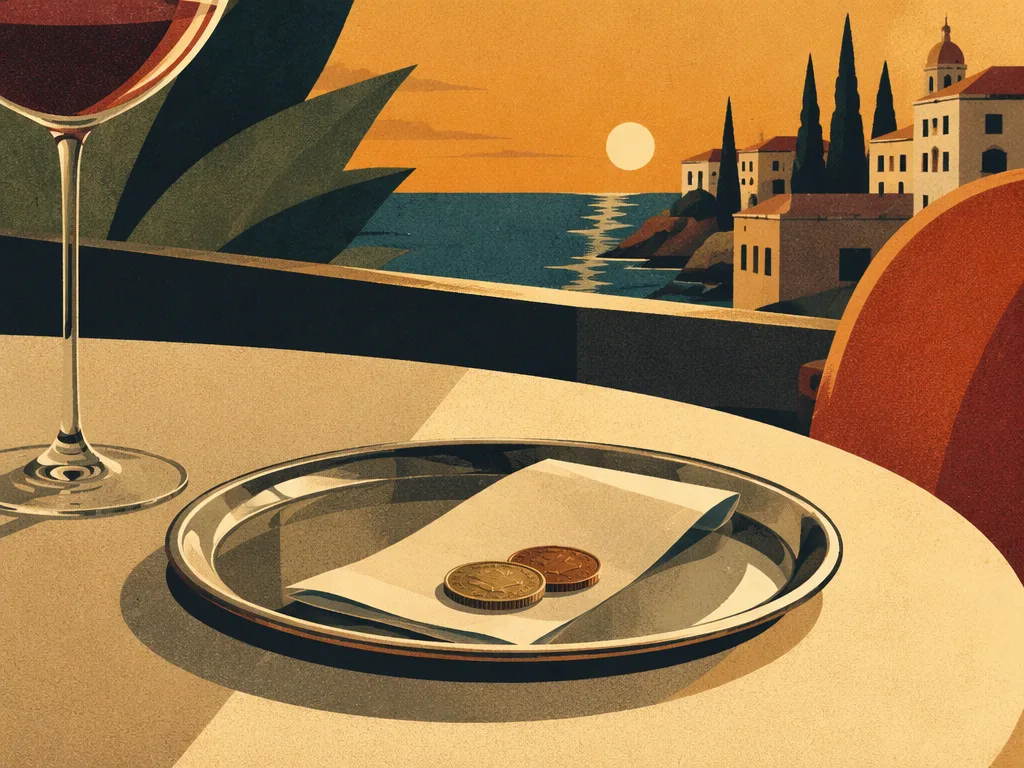
The singer arrives at a restaurant on a lovely evening. A table for two is booked under the name John. The waiter takes the order (chicken and a glass of mineral water), asks about the food, and brings the bill. The guests pay by card, thank the waiter, leave a tip and say goodbye. The song is told as a dialogue between a guest and the restaurant staff. This makes it a useful model for a real restaurant visit.
Useful words and expressions
- a reservation for two / I booked a table: you arranged a table in advance.
- Are you ready to order?: the waiter asks what you want.
- I will have the chicken: a polite way to order. In speech it is usually shortened to I'll have…
- What would you like to drink?: a polite question with would like (= want).
- a glass of mineral water: a glass of + drink.
- That will be just fine: that is perfect, no problem.
- It is delicious: it tastes very good.
- Can I get you anything else?: do you want something more?
- Can we have the bill, please?: the British word is bill. Americans say check.
- by card: paying with a bank card.
- a tip: extra money for good service.
- menu, waiter, in a happy mood.
Grammar
- Present simple describes the scene: I walk into the restaurant, the waiter comes to ask.
- -ing forms in the chorus show actions happening at the same time: looking at the food, listening to the music, reading through the menu, choosing what to eat.
- Polite requests use would, can and please: What would you like…?, Can I get you…?, Can we have…, please?
- will for a decision made at the moment of speaking: I will have the chicken.
- Questions with are you + -ing: Are you paying by cash or card?
Watch out: song language
- taking our seat: with two people, natural English is taking our seats. The singular is used to rhyme with eat.
- I finish up the task: this is an unusual way to say you have finished ordering. It is chosen to rhyme with ask. Don't use it in a restaurant.
- A quiet, nice evening: the usual order is a nice, quiet evening. Opinion adjectives normally come first.
- The tables have some glasses: it is more natural to say There are glasses on the tables.
- by cash or card: the standard form is in cash or by card. By cash is heard in casual speech.