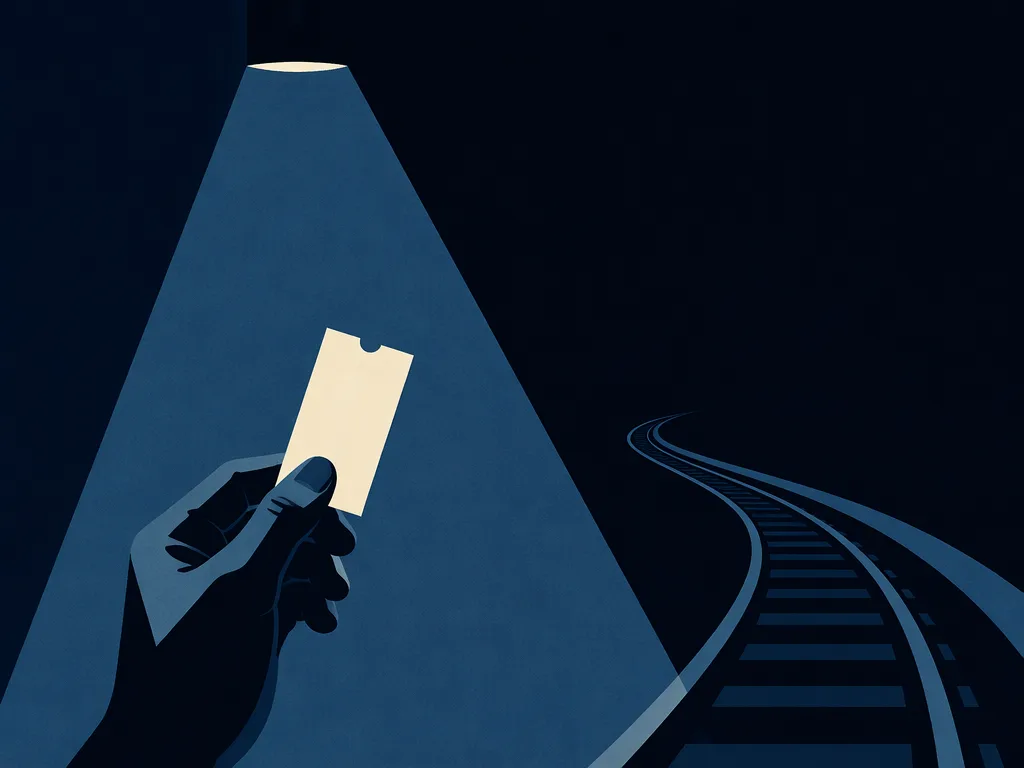
A train journey: departure board, announcements, a delay, and finally setting off. Learn station vocabulary, reflexive verbs, and the present tense to talk about a trip.
Manual sync mode
Start playback, then stamp the highlighted next line with Space or the big stamp button.
You can save once all lines are stamped.
0/0
Guardo lo schermo dentro la stazione
--:--
I look at the screen inside the station
Il tabellone brilla con grande emozione
--:--
The departure board shines with great excitement
Controllo la meta e l'orario di avvio
--:--
I check the destination and the starting time (more naturally: I check the destination and the departure time)
Il biglietto stampato lo tengo, è mio
--:--
The printed ticket I hold it, it is mine (more naturally: I hold onto the printed ticket, it's mine)
L'altoparlante fa il suo annuncio chiaro
--:--
The loudspeaker makes its clear announcement
Il treno è in arrivo, è un momento raro
--:--
The train is arriving, it is a rare moment
Prendo il bagaglio e cammino in avanti
--:--
I take the luggage and walk forward
Scendo le scale tra tutti i passanti
--:--
I go down the stairs among all the passersby
Binario numero cinque, il motore si sente
--:--
Platform number five, the engine is heard (more naturally: Platform number five, you can hear the engine)
Il battito techno attrae la mia mente
--:--
The techno beat attracts my mind (more naturally: The techno beat draws my mind in)
Ho una coincidenza da prendere in fretta
--:--
I have a connection to catch in a hurry
Sotto la luce che qui mi aspetta
--:--
Under the light that here awaits me (more naturally: Under the light waiting for me here)
Ma ecco un ritardo, il tabellone lampeggia
--:--
But here is a delay, the board flashes
Quindici minuti, la voce echeggia
--:--
Fifteen minutes, the voice echoes
L'orario è cambiato, ma io mi rilasso
--:--
The schedule has changed, but I relax
Mi bevo un caffè e rallento un po' il passo
--:--
I drink myself a coffee and slow down a bit the pace (more naturally: I have a coffee and slow my pace down a bit)
Le porte si aprono, salgo a bordo qui
--:--
The doors open, I climb on board here (more naturally: The doors open, I get on board here)
Trovo un posto libero proprio così
--:--
I find a free seat just like that
Il treno si muove, lasciamo il cemento
--:--
The train moves, we leave the concrete
Il suono delle ruote è un gran movimento
--:--
The sound of the wheels is a great movement
L'attesa c'è stata, il tempo era lento
--:--
The wait was there, the time was slow (more naturally: There was a wait, time moved slowly)
Ma adesso le porte si chiudono a vento
--:--
But now the doors close to the wind (more naturally: But now the doors whoosh shut like the wind)
Il ritardo è scordato, la meta ha un gran gusto
--:--
The delay is forgotten, the destination has a great taste (more naturally: The delay is forgotten, the destination feels so sweet)
Ormai noi viaggiamo sul binario giusto
--:--
By now we are traveling on the right track (here 'sul binario giusto' is both literal and an idiom meaning to be headed in the right direction in life)
Binario numero cinque, il motore si sente
--:--
Platform number five, the engine is heard (more naturally: Platform number five, you can hear the engine)
Il battito techno attrae la mia mente
--:--
The techno beat attracts my mind (more naturally: The techno beat draws my mind in)
Ho una coincidenza da prendere in fretta
--:--
I have a connection to catch in a hurry
Sotto la luce che qui mi aspetta
--:--
Under the light that here awaits me (more naturally: Under the light waiting for me here)
I check the destination and the starting time (more naturally: I check the destination and the departure time)
Ilbigliettostampatolotengo, èmio
The printed ticket I hold it, it is mine (more naturally: I hold onto the printed ticket, it's mine)
L'altoparlantefailsuoannunciochiaro
The loudspeaker makes its clear announcement
Iltrenoèinarrivo, èunmomentoraro
The train is arriving, it is a rare moment
Prendoilbagaglioecamminoinavanti
I take the luggage and walk forward
Scendolescaletratuttiipassanti
I go down the stairs among all the passersby
Binarionumerocinque, ilmotoresisente
Platform number five, the engine is heard (more naturally: Platform number five, you can hear the engine)
Ilbattitotechnoattraelamiamente
The techno beat attracts my mind (more naturally: The techno beat draws my mind in)
Hounacoincidenzadaprendereinfretta
I have a connection to catch in a hurry
Sottolalucechequimiaspetta
Under the light that here awaits me (more naturally: Under the light waiting for me here)
Maeccounritardo, iltabellonelampeggia
But here is a delay, the board flashes
Quindiciminuti, lavoceecheggia
Fifteen minutes, the voice echoes
L'orarioècambiato, maiomirilasso
The schedule has changed, but I relax
Mibevouncaffèerallentounpo' ilpasso
I drink myself a coffee and slow down a bit the pace (more naturally: I have a coffee and slow my pace down a bit)
Leportesiaprono, salgoabordoqui
The doors open, I climb on board here (more naturally: The doors open, I get on board here)
Trovounpostoliberopropriocosì
I find a free seat just like that
Iltrenosimuove, lasciamoilcemento
The train moves, we leave the concrete
Ilsuonodelleruoteèungranmovimento
The sound of the wheels is a great movement
L'attesac'èstata, iltempoeralento
The wait was there, the time was slow (more naturally: There was a wait, time moved slowly)
Maadessoleportesichiudonoavento
But now the doors close to the wind (more naturally: But now the doors whoosh shut like the wind)
Ilritardoèscordato, lametahaungrangusto
The delay is forgotten, the destination has a great taste (more naturally: The delay is forgotten, the destination feels so sweet)
Ormainoiviaggiamosulbinariogiusto
By now we are traveling on the right track (here 'sul binario giusto' is both literal and an idiom meaning to be headed in the right direction in life)
Binarionumerocinque, ilmotoresisente
Platform number five, the engine is heard (more naturally: Platform number five, you can hear the engine)
Ilbattitotechnoattraelamiamente
The techno beat attracts my mind (more naturally: The techno beat draws my mind in)
Hounacoincidenzadaprendereinfretta
I have a connection to catch in a hurry
Sottolalucechequimiaspetta
Under the light that here awaits me (more naturally: Under the light waiting for me here)
Binarionumerocinque...
Platform number five...
Prossimafermata...
Next stop...
20+
5+
4
3
2
1
What it's about
The singer is at the station and checks the departure board to find their destination and the time. They hear the announcement from the loudspeaker, grab their luggage, and go down to platform number five. The train has a fifteen-minute delay, but instead of getting stressed, they calmly drink a coffee. Then they get on board, find a free seat, and the journey begins.
Useful words and expressions
il binario: the platform or track where the train arrives and departs (Il treno parte dal binario cinque).
il tabellone: the departure/arrival board or screen.
la meta: the destination of the trip.
il biglietto stampato: the printed paper ticket.
l'altoparlante / l'annuncio: the loudspeaker / the announcement that informs passengers.
il treno è in arrivo: the train is about to arrive.
la coincidenza: a connecting train to take right after the first one (ho una coincidenza).
in fretta: quickly, in a hurry.
il ritardo: a delay, when the train arrives or departs late.
salire a bordo: to get on the train, to board.
la prossima fermata: the next stop or station.
Grammar
Present indicative, first person: guardo, controllo, prendo, cammino, scendo, trovo. This is the right tense for recounting events step by step.
Reflexive and pronominal verbs: mi rilasso, le porte si aprono, si chiudono, il treno si muove, il motore si sente.
Da + infinitive to express a need or purpose: una coincidenza da prendere.
Pronoun resumption: Il biglietto stampato lo tengo. The object is placed at the beginning and repeated with lo, which is typical of spoken Italian.
Mi bevo un caffè: the mi is not necessary, but in spoken Italian it gives a relaxed and personal tone.
Passato prossimo and imperfetto: l'orario è cambiato, l'attesa c'è stata (completed actions) and il tempo era lento (description).
Watch out: choices made for the rhyme
orario di avvio: normally you say orario di partenza.
le porte si chiudono a vento: this is not an Italian expression. You simply say le porte si chiudono.
la meta ha un gran gusto: this is a poetic image, not a common idiom.
il tabellone brilla con grande emozione and è un momento raro: these are used for the rhyme. An arriving train is not a rare moment!
scordato is informal. In standard Italian you say dimenticato.
We do not use third-party advertising cookies or cross-site tracking pixels.
We use cookies and similar technologies to keep our app running smoothly, analyze performance, and improve your experience. You can manage your preferences at any time.