


What is the song about?
Someone looks in the mirror and the song describes their body with admiration, from their hair and face down to their legs and feet. It is a message of self-esteem: the whole body is beautiful and valuable. At the end, a deeper idea appears: the best thing is tener los pies en la tierra, that is, to be a sensible and realistic person.
Useful vocabulary: body parts
- la cabeza, el pelo, la frente, el rostro (= la cara), la nariz, los ojos, las orejas, la boca, los labios, el cuello, la piel
- los hombros, la espalda, los brazos, el pecho, las manos, los dedos
- las piernas, los pies
Expressions
- De pies a cabeza: completely, the whole body. In the song it also appears the other way around: de la cabeza a los pies.
- Te ves súper bien: you look really good. Verse + adjective or adverb describes appearance. Súper before an adjective or adverb is colloquial.
- Labios de miel: a poetic image for sweet lips.
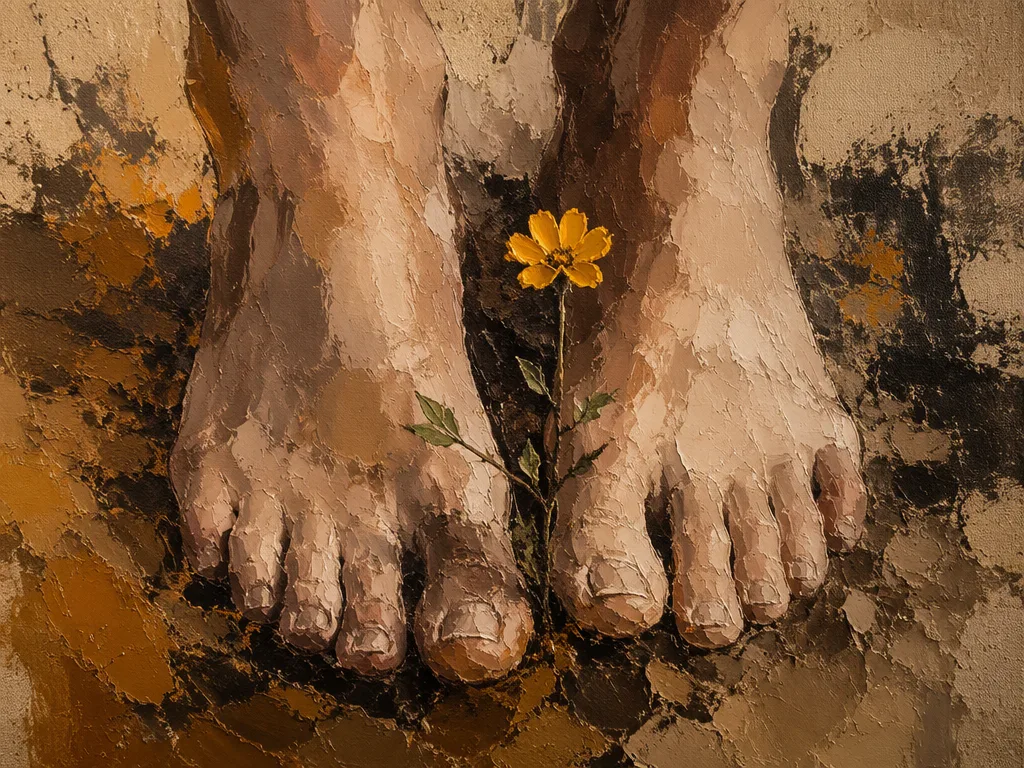
- Tener los pies en la tierra: to be realistic and sensible.
Grammar
- Possessives: tu with singular (tu nariz, tu cuello) and tus with plural (tus ojos, tus manos).
- Articles with body parts: the chorus uses the article (los hombros, la espalda, los brazos), which is normal in Spanish when it is already clear whose body it is.
- Exclamations with qué: ¡Qué bella es tu forma!, ¡Qué gran creación!
- Present indicative to describe: respira, oyen, caminan, avanzan, alcanzan.
Poetic license (do not copy in everyday speech)
- Espejo brillante, ¿qué puedes mirar?: a mirror does not "look". Normally we would say ¿qué ves? or ¿qué reflejas?.
- Muy suave la piel: the verb is missing for the rhythm. In a normal sentence: tu piel es muy suave.
- Tus manos y dedos alcanzan la sierra: this is a poetic image chosen to rhyme with tierra. Hands do not literally reach the mountains.
- Qué lindo que tienes los pies en la tierra: in general Spanish, the subjunctive is preferred: qué lindo que tengas los pies en la tierra. The indicative is sometimes heard in colloquial speech in some countries.
- Tus dos pies: saying dos is redundant. Here it is added to complete the rhythm of the line.