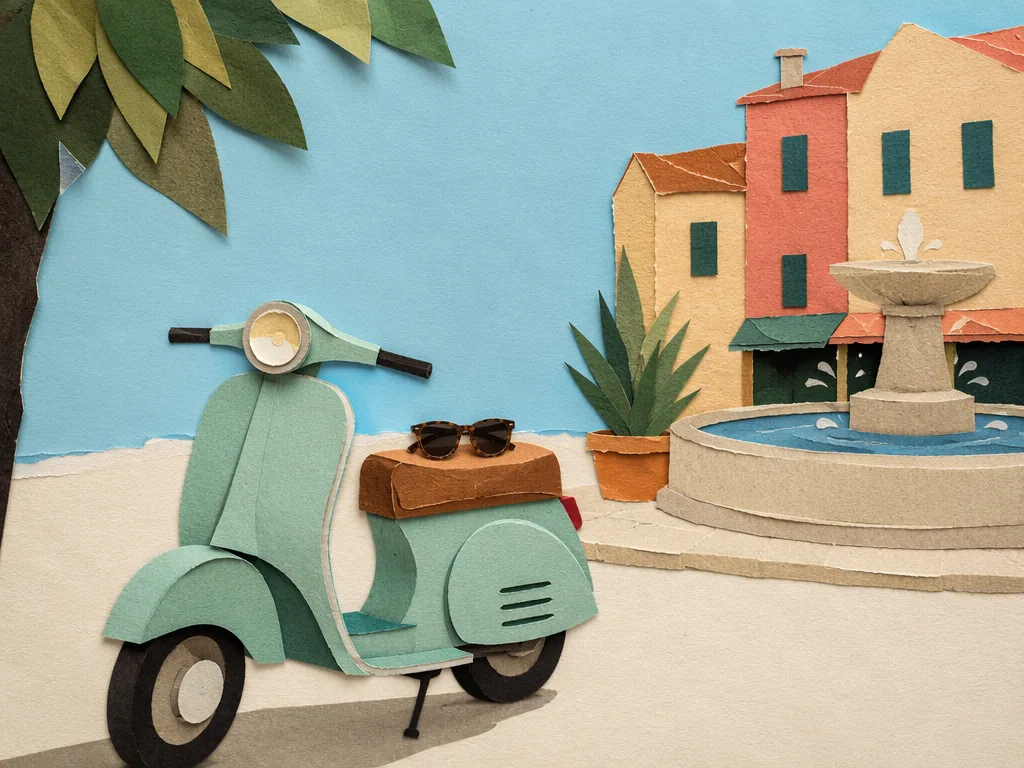
Two friends meet on the street and have a little chat about the weekend, the weather, family, and plans. With this song, you review greetings, icebreaker questions, the imperative with pronouns, and ways to say goodbye.
Manual sync mode
Start playback, then stamp the highlighted next line with Space or the big stamp button.
You can save once all lines are stamped.
0/0
Ciao, come va? Tutto bene per te?
--:--
Hi, how's it going? Everything good for you?
Com'è stato il weekend? Dai, dillo a me!
--:--
How was the weekend? Come on, say it to me! (more naturally: Come on, tell me!)
Mi sento felice, l'umore è alle stelle,
--:--
I feel happy, the mood is at the stars, (an idiom meaning my mood is sky-high or I'm over the moon)
Giornate così sono sempre più belle.
--:--
Days like this are always more beautiful.
Parlami un po' del tempo che fa,
--:--
Talk to me a bit about the weather it makes, (more naturally: Tell me a bit about how the weather is)
C'è il sole che brilla su in città?
--:--
Is there the sun shining up in the city? (more naturally: Is the sun shining over the city?)
Che bello vederti, fermiamoci qua,
--:--
How nice to see you, let's stop here,
Un semplice ciao, e poi si vedrà.
--:--
A simple hello, and then it will be seen. (more naturally: ...and then we'll see what happens.)
Cosa hai fatto di recente, amico mio?
--:--
What have you done recently, my friend?
Hai lavorato sodo? Dimmelo, dai!
--:--
Have you worked hard? Tell it to me, come on! (more naturally: Tell me, come on!)
Come sta la famiglia? Nessun guaio, lo sai?
--:--
How is the family? No trouble, you know?
Ho qualche minuto per stare con te.
--:--
I have a few minutes to stay with you. (more naturally: ...to spend with you.)
Hai dei progetti per la settimana?
--:--
Do you have any plans for the week?
Vai a vedere un film o resti in tana?
--:--
Are you going to see a movie or staying in the den? ('in the den' is a playful way of saying staying cooped up at home)
Fa un po' freschetto, ma il sole uscirà,
--:--
It's a bit chilly, but the sun will come out,
Bere qualcosa ci riscalderà.
--:--
Drinking something will warm us up.
Parlami un po' del tempo che fa,
--:--
Talk to me a bit about the weather it makes, (more naturally: Tell me a bit about how the weather is)
C'è il sole che brilla su in città?
--:--
Is there the sun shining up in the city? (more naturally: Is the sun shining over the city?)
Che bello vederti, fermiamoci qua,
--:--
How nice to see you, let's stop here,
Un semplice ciao, e poi si vedrà.
--:--
A simple hello, and then it will be seen. (more naturally: ...and then we'll see what happens.)
Rompere il ghiaccio, due chiacchiere in pace,
--:--
Breaking the ice, two chats in peace, ('due chiacchiere' literally means 'two chats', an idiom for a little chat or small talk)
È un piccolo gesto, ma quanto mi piace.
--:--
It's a small gesture, but how much I like it. (more naturally: ...but I like it so much.)
Un po' di energia che migliora l'umore,
--:--
A bit of energy that improves the mood,
Tenendo lontano ogni malumore.
--:--
Keeping away every bad mood.
Ora devo scappare, si fa un po' tardi,
--:--
Now I have to run, it's getting a bit late,
Ci vediamo domani, con nuovi sguardi!
--:--
We see each other tomorrow, with new gazes! (more naturally: See you tomorrow, with fresh eyes!)
Abbi cura di te, buona giornata!
--:--
Have care of yourself, good day! (more naturally: Take care of yourself, have a good day!)
How was the weekend? Come on, say it to me! (more naturally: Come on, tell me!)
Misentofelice, l'umoreèallestelle,
I feel happy, the mood is at the stars, (an idiom meaning my mood is sky-high or I'm over the moon)
Giornatecosìsonosemprepiùbelle.
Days like this are always more beautiful.
Parlamiunpo' deltempochefa,
Talk to me a bit about the weather it makes, (more naturally: Tell me a bit about how the weather is)
C'èilsolechebrillasuincittà?
Is there the sun shining up in the city? (more naturally: Is the sun shining over the city?)
Chebellovederti, fermiamociqua,
How nice to see you, let's stop here,
Unsempliceciao, epoisivedrà.
A simple hello, and then it will be seen. (more naturally: ...and then we'll see what happens.)
Cosahaifattodirecente, amicomio?
What have you done recently, my friend?
Hailavoratosodo? Dimmelo, dai!
Have you worked hard? Tell it to me, come on! (more naturally: Tell me, come on!)
Comestalafamiglia? Nessunguaio, losai?
How is the family? No trouble, you know?
Hoqualcheminutoperstareconte.
I have a few minutes to stay with you. (more naturally: ...to spend with you.)
Haideiprogettiperlasettimana?
Do you have any plans for the week?
Vaiavedereunfilmorestiintana?
Are you going to see a movie or staying in the den? ('in the den' is a playful way of saying staying cooped up at home)
Faunpo' freschetto, mailsoleuscirà,
It's a bit chilly, but the sun will come out,
Berequalcosaciriscalderà.
Drinking something will warm us up.
Parlamiunpo' deltempochefa,
Talk to me a bit about the weather it makes, (more naturally: Tell me a bit about how the weather is)
C'èilsolechebrillasuincittà?
Is there the sun shining up in the city? (more naturally: Is the sun shining over the city?)
Chebellovederti, fermiamociqua,
How nice to see you, let's stop here,
Unsempliceciao, epoisivedrà.
A simple hello, and then it will be seen. (more naturally: ...and then we'll see what happens.)
Rompereilghiaccio, duechiacchiereinpace,
Breaking the ice, two chats in peace, ('due chiacchiere' literally means 'two chats', an idiom for a little chat or small talk)
Èunpiccologesto, maquantomipiace.
It's a small gesture, but how much I like it. (more naturally: ...but I like it so much.)
Unpo' dienergiachemiglioral'umore,
A bit of energy that improves the mood,
Tenendolontanoognimalumore.
Keeping away every bad mood.
Oradevoscappare, sifaunpo' tardi,
Now I have to run, it's getting a bit late,
Civediamodomani, connuovisguardi!
We see each other tomorrow, with new gazes! (more naturally: See you tomorrow, with fresh eyes!)
Abbicuradite, buonagiornata!
Have care of yourself, good day! (more naturally: Take care of yourself, have a good day!)
5+
4
3
2
1
What it's about
The song tells the story of a quick, cheerful meeting between two friends. The singer says hello, asks how things are going, how the weekend was, what the weather is like, and what the plans for the week are. At the end, they have to run and say a warm goodbye. The message is simple: even a little chat is a small gesture that brightens the day.
Useful words and expressions
fare due chiacchiere: to talk a bit, in an informal way.
Ciao, come va? / Tutto bene?: the most common greetings between friends.
Com'è stato il weekend?: in Italian, the English word weekend is often used (also fine settimana).
l'umore è alle stelle: I am very happy. More common is ho il morale alle stelle.
il tempo che fa / fa un po' freschetto: for the weather, the verb fare is used. Freschetto is a familiar diminutive of fresco.
lavorare sodo: to work hard and with dedication.
restare in tana: a playful way of saying restare a casa (to stay home).
rompere il ghiaccio: to start a conversation and overcome awkwardness.
il malumore: bad mood, the opposite of buon umore.
devo scappare / si fa tardi: typical phrases for ending a conversation.
Ci vediamo domani! / Abbi cura di te! / Buona giornata!: greetings for saying goodbye.
Dai!: informal interjection to encourage the other person to speak.
Grammar
Informal imperative with attached pronouns: dillo a me, parlami, dimmelo, fermiamoci. With di' (from dire), the consonant of the pronoun doubles: di' + lo → dillo, di' + me + lo → dimmelo.
Imperative of avere: abbi cura di te.
Passato prossimo to ask about the recent past: hai fatto, hai lavorato, è stato. With essere, the participle agrees: com'è stato il weekend.
Simple future for predictions: il sole uscirà, ci riscalderà, poi si vedrà (= we'll see later on).
Infinitive as a subject: Bere qualcosa ci riscalderà.
Gerund: tenendo lontano ogni malumore (= because it keeps away).
Così after a noun: giornate così (= days like this).
Note: choices made for the rhyme
Ci vediamo domani, con nuovi sguardi! is an unusual expression, chosen to rhyme with tardi. In conversation, Ci vediamo domani! is enough.
Nessun guaio, lo sai? sounds a bit strange. To ask about family, people usually say Tutto a posto? or Nessun problema?
in pace in due chiacchiere in pace mainly serves to rhyme with mi piace. The meaning is con calma, tranquillamente (calmly, quietly).
We do not use third-party advertising cookies or cross-site tracking pixels.
We use cookies and similar technologies to keep our app running smoothly, analyze performance, and improve your experience. You can manage your preferences at any time.