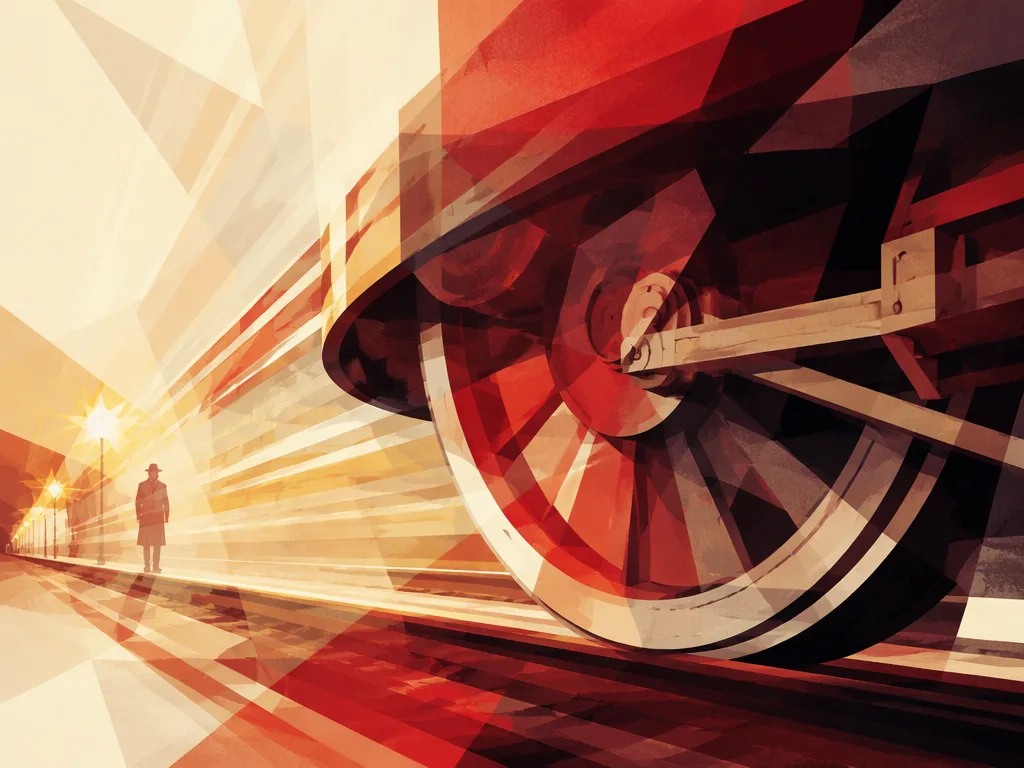
At the train station at night: checking the timetable, listening to the announcement, waiting out a short delay, and then boarding. With this song, you practice vocabulary around trains and travel, as well as separable verbs.
Manual sync mode
Start playback, then stamp the highlighted next line with Space or the big stamp button.
You can save once all lines are stamped.
0/0
Ich stehe im Bahnhof und schau auf das Display
--:--
I stand in the train station and look at the display (more naturally: I'm standing in the station looking at the screen)
Der Fahrplan leuchtet grün, ich bin auf dem Weg
--:--
The timetable shines green, I am on the way (more naturally: The schedule is glowing green, I'm on my way)
Ich prüfe mein Ziel und die Uhrzeit dazu
--:--
I check my destination and the time for it (more naturally: I check my destination and the time as well)
Das Ticket in der Hand, ich warte in Ruh
--:--
The ticket in the hand, I wait in peace (more naturally: Ticket in hand, I wait calmly)
Die Durchsage klingt, eine Stimme macht klar
--:--
The announcement sounds, a voice makes it clear
Der Zug kommt gleich an, er ist wunderbar nah
--:--
The train arrives soon, it is wonderfully close
Ich greife mein Gepäck und gehe durch die Tür
--:--
I grab my luggage and go through the door
Die Rolltreppe hinab, zum Bahnsteig dafür
--:--
Down the escalator, to the platform for it (more naturally: Down the escalator to the right platform)
Gleis Nummer fünf, der Motor ist laut
--:--
Platform number five, the engine is loud
Der Rhythmus der Nacht, der sich aufbaut
--:--
The rhythm of the night, which builds itself up (more naturally: The rhythm of the night building up)
Ich habe einen Umstieg, schnell in der Nacht
--:--
I have a transfer, fast in the night (more naturally: I have a quick connection in the night)
Im hellen Licht, das der Bahnhof hier macht
--:--
In the bright light that the train station makes here (more naturally: In the bright light shining from the station)
Die Tafel blinkt auf, eine kleine Verspätung
--:--
The board flashes up, a small delay
Nur fünfzehn Minuten, das ist keine Tötung
--:--
Only fifteen minutes, that is no killing (more naturally: Just fifteen minutes, it won't kill me)
Der Fahrplan ändert sich, doch das macht mir nichts aus
--:--
The timetable changes, but I don't mind (here the idiom 'macht mir nichts aus' literally means 'makes nothing out to me', meaning 'it doesn't bother me')
Ich hole mir Kaffee im Bahnhofshaus
--:--
I get myself coffee in the station building
Die Türen gehen auf, ich steige jetzt ein
--:--
The doors go open, I get in now (more naturally: The doors open, I'm boarding now)
Ich finde einen Platz, das ist wirklich fein
--:--
I find a seat, that is really fine (more naturally: I find a seat, which is really nice)
Der Motor fängt an, wir verlassen den Ort
--:--
The engine starts, we leave the place
Die Räder aus Metall drehen sich immerfort
--:--
The wheels made of metal turn themselves continuously (more naturally: The metal wheels keep on turning)
Wir haben gewartet, die Uhrzeit war schwer
--:--
We have waited, the time was hard (more naturally: We waited, the late hour was tough)
Doch jetzt sind wir zu, wir warten nicht mehr
--:--
But now we are closed, we wait no more (more naturally: Now the doors are shut, we're not waiting anymore)
Die Verspätung ist weg, wir machen uns bereit
--:--
The delay is gone, we make ourselves ready (more naturally: The delay is over, we get ready)
Einzusteigen, denn es war höchste Eisenbahn, es wird Zeit
--:--
To get in, because it was high time, it is getting time (here the idiom 'höchste Eisenbahn' literally means 'highest railway', a playful pun that means 'high time' or 'urgent')
Gleis Nummer fünf, der Motor ist laut
--:--
Platform number five, the engine is loud
Der Rhythmus der Nacht, der sich aufbaut
--:--
The rhythm of the night, which builds itself up (more naturally: The rhythm of the night building up)
Ich habe einen Umstieg, schnell in der Nacht
--:--
I have a transfer, fast in the night (more naturally: I have a quick connection in the night)
Im hellen Licht, das der Bahnhof hier macht
--:--
In the bright light that the train station makes here (more naturally: In the bright light shining from the station)
I stand in the train station and look at the display (more naturally: I'm standing in the station looking at the screen)
DerFahrplanleuchtetgrün, ichbinaufdemWeg
The timetable shines green, I am on the way (more naturally: The schedule is glowing green, I'm on my way)
IchprüfemeinZielunddieUhrzeitdazu
I check my destination and the time for it (more naturally: I check my destination and the time as well)
DasTicketinderHand, ichwarteinRuh
The ticket in the hand, I wait in peace (more naturally: Ticket in hand, I wait calmly)
DieDurchsageklingt, eineStimmemachtklar
The announcement sounds, a voice makes it clear
DerZugkommtgleichan, eristwunderbarnah
The train arrives soon, it is wonderfully close
IchgreifemeinGepäckundgehedurchdieTür
I grab my luggage and go through the door
DieRolltreppehinab, zumBahnsteigdafür
Down the escalator, to the platform for it (more naturally: Down the escalator to the right platform)
GleisNummerfünf, derMotoristlaut
Platform number five, the engine is loud
DerRhythmusderNacht, dersichaufbaut
The rhythm of the night, which builds itself up (more naturally: The rhythm of the night building up)
IchhabeeinenUmstieg, schnellinderNacht
I have a transfer, fast in the night (more naturally: I have a quick connection in the night)
ImhellenLicht, dasderBahnhofhiermacht
In the bright light that the train station makes here (more naturally: In the bright light shining from the station)
DieTafelblinktauf, einekleineVerspätung
The board flashes up, a small delay
NurfünfzehnMinuten, dasistkeineTötung
Only fifteen minutes, that is no killing (more naturally: Just fifteen minutes, it won't kill me)
DerFahrplanändertsich, dochdasmachtmirnichtsaus
The timetable changes, but I don't mind (here the idiom 'macht mir nichts aus' literally means 'makes nothing out to me', meaning 'it doesn't bother me')
IchholemirKaffeeimBahnhofshaus
I get myself coffee in the station building
DieTürengehenauf, ichsteigejetztein
The doors go open, I get in now (more naturally: The doors open, I'm boarding now)
IchfindeeinenPlatz, dasistwirklichfein
I find a seat, that is really fine (more naturally: I find a seat, which is really nice)
DerMotorfängtan, wirverlassendenOrt
The engine starts, we leave the place
DieRäderausMetalldrehensichimmerfort
The wheels made of metal turn themselves continuously (more naturally: The metal wheels keep on turning)
Wirhabengewartet, dieUhrzeitwarschwer
We have waited, the time was hard (more naturally: We waited, the late hour was tough)
Dochjetztsindwirzu, wirwartennichtmehr
But now we are closed, we wait no more (more naturally: Now the doors are shut, we're not waiting anymore)
DieVerspätungistweg, wirmachenunsbereit
The delay is gone, we make ourselves ready (more naturally: The delay is over, we get ready)
To get in, because it was high time, it is getting time (here the idiom 'höchste Eisenbahn' literally means 'highest railway', a playful pun that means 'high time' or 'urgent')
GleisNummerfünf, derMotoristlaut
Platform number five, the engine is loud
DerRhythmusderNacht, dersichaufbaut
The rhythm of the night, which builds itself up (more naturally: The rhythm of the night building up)
IchhabeeinenUmstieg, schnellinderNacht
I have a transfer, fast in the night (more naturally: I have a quick connection in the night)
ImhellenLicht, dasderBahnhofhiermacht
In the bright light that the train station makes here (more naturally: In the bright light shining from the station)
GleisNummerfünf...
Platform number five...
NächsterHalt...
Next stop...
20+
10+
5+
4
3
2
1
What is it about?
A person is standing in the train station at night, waiting for their train. They look at the display and the timetable, listen to the announcement, and take the escalator to the platform. Then there is a short delay of fifteen minutes, so they get a coffee. Finally, the train arrives, they board, find a seat, and the journey begins. The chorus describes the mood: the loud track, the bright light, and the rhythm of the night.
Useful words and expressions
der Bahnhof, das Gleis, der Bahnsteig: Places where you wait for the train. Gleis Nummer fünf is the number at which the train departs.
der Fahrplan, die Tafel, das Display: The departure times are shown here.
die Durchsage: an announcement over the loudspeaker
die Verspätung: The train arrives later than planned.
der Umstieg: Changing from one train to another. More commonly, people say Ich muss umsteigen.
das Gepäck, das Ticket, die Rolltreppe
Das macht mir nichts aus.: That doesn't bother me.
Es ist höchste Eisenbahn.: an idiom for Es ist höchste Zeit. It fits well here because it is about the train.
Nächster Halt: This is how the announcement for the next station begins on the train.
Grammar
Separable verbs: ich steige ein (einsteigen), der Motor fängt an (anfangen), die Tafel blinkt auf (aufblinken), die Türen gehen auf (aufgehen), das macht mir nichts aus (ausmachen). In the present tense, the prefix goes at the end of the sentence.
Reflexive verbs: der sich aufbaut, wir machen uns bereit, ich hole mir Kaffee, die Räder drehen sich.
Relative clauses: Der Rhythmus der Nacht, der sich aufbaut; im hellen Licht, das der Bahnhof hier macht. The verb goes at the end in a relative clause.
Perfekt: Wir haben gewartet describes what happened beforehand.
Infinitive with zu: Wir machen uns bereit, einzusteigen.
Watch out: Here the lyrics bend the language for the rhyme
„in Ruh“ is a short form of in Ruhe. This is poetic; in everyday life, you say in Ruhe.
„Display“ / „Weg“ only rhymes approximately.
„er ist wunderbar nah“ is unusual. Normally, you would say er ist gleich da.
„zum Bahnsteig dafür“: dafür is just a filler word for the rhyme here and means nothing. Simply say zum Bahnsteig.
„das ist keine Tötung“: Tötung means that someone is killed. The word is only there because it rhymes with Verspätung and makes no sense. What is meant is something like das ist kein Drama. Please do not copy this!
„jetzt sind wir zu“: zu sein means geschlossen sein or colloquially betrunken sein. What is meant is rather jetzt sind wir da.
„die Uhrzeit war schwer“ is not a common phrasing. Better: das Warten war schwer.
„Bahnhofshaus“ is rarely said. Common terms are Bahnhofshalle or Bahnhofscafé.
„der Motor“: With trains, people usually talk about the Lok or the Zug being loud.
We do not use third-party advertising cookies or cross-site tracking pixels.
We use cookies and similar technologies to keep our app running smoothly, analyze performance, and improve your experience. You can manage your preferences at any time.