


Theme & Story
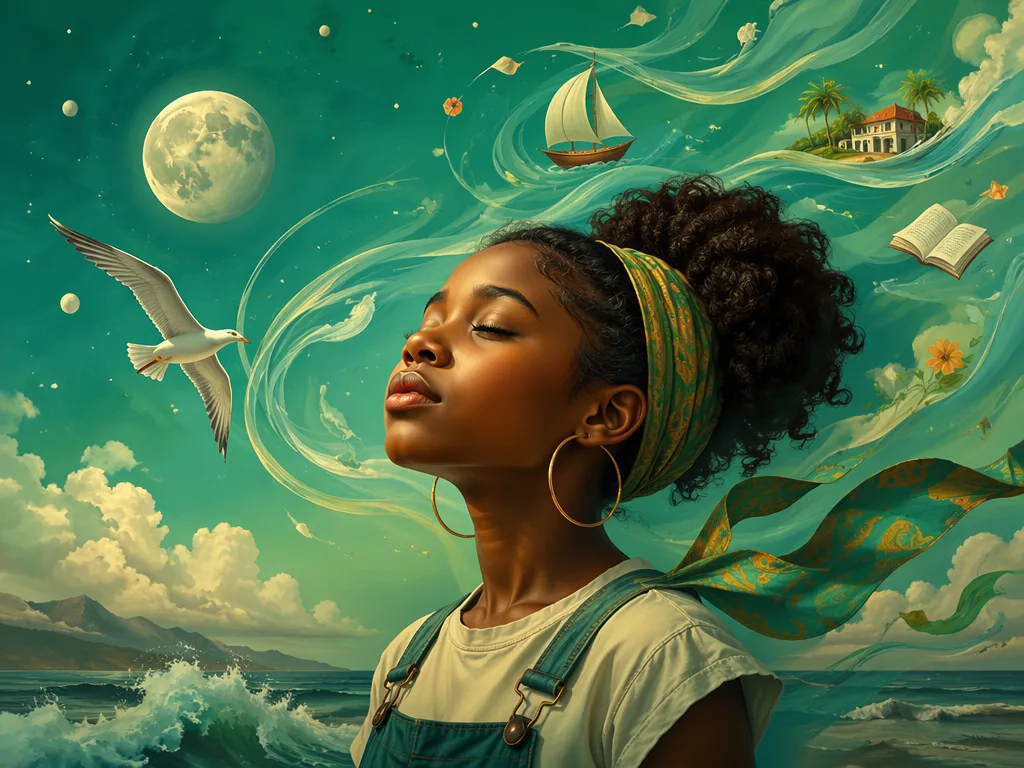
This song is a gentle, playful lesson about imagining unreal situations. The speaker asks us to close our eyes and picture a different world: living by the ocean, having lots of money, knowing a secret, living on the moon, or flying like a bird.
The main theme is dreaming about possibilities that are not true right now. That is why the song teaches the second conditional: a grammar structure used for imaginary, unlikely, or unreal situations in the present or future.
Metaphors & Meaning
- “Close your eyes. Imagine a different world.” This invites the listener into a dream space. It is not about reality; it is about imagination.
- “A beautiful place that I want to find” This suggests hope and desire. The “place” may not be a real location—it can represent a better life, freedom, kindness, or creativity.
- “Like a gentle wind blowing off a cliff” This is a soft, poetic image. It connects grammar with movement and music, making the rule feel light and natural.
- “If I were a bird, I would fly so high” The bird is a common symbol of freedom. The speaker imagines escaping limits and reaching something higher.
- “If I were the wind, I would touch the sky” The wind suggests something invisible but powerful. “Touch the sky” means reaching beyond normal limits or dreaming big.
- “Give it away”: to donate something or let others have it for free. Example: “If I had a lot of money, I would give it away.”
- “By the ocean / by the sea”: near the ocean or sea. “By” here means “next to” or “near.”
- “Secret”: information that is hidden or private.
- “Fantasy”: an imagined situation, often impossible or unreal.
- “Lovely thought”: a pleasant or beautiful idea.
- “Wake up now”: literally means to stop sleeping, but here it also means returning from imagination to reality.
- If I lived by the ocean, I would swim every day.
- If I had a lot of money, I would give it away.
- If he spoke some French, he would go to France.
- If she heard the music, she would start to dance.
- “I don’t live by the sea” is the real situation.
- “If I lived by the ocean, I would swim every day” is the dream.
- If I were a bird, I would fly so high.
- If I were the wind, I would touch the sky.
- If I were rich, I would travel the world.
- If she were here, she would help us.
- If the sky was green, instead of blue.
- If the sky were green, instead of blue.
- If I had a dream… = imagining now or in the future
- If I lived by the ocean… = I do not live there now
- If I knew the secret… = I do not know it now
The song has no deep cultural reference; instead, it uses simple universal images—ocean, moon, sky, birds, wind—to make grammar memorable and emotional.
Vocabulary & Slang
There is no slang in the song. The vocabulary is simple and clear, which makes it useful for English learners.
Grammar Notes
The song teaches the second conditional:
If + past simple, would + base verb
Examples from the song:
Important meaning: these sentences are not facts. They are imaginary or unreal.
For example:
“Were” with imaginary situations
The song says:
In formal or careful English, we often use were instead of was after “if” for unreal situations:
This is called the subjunctive. It sounds a little more formal or traditional, but it is very common in the phrase “If I were…”
“Was” vs. “Were”
The song also says:
In everyday English, many speakers use was in unreal conditionals, especially in casual speech. In more formal grammar, some teachers prefer:
Both can be heard, but “If I were…” is the safest and most standard form for unreal dreams.
Why the verbs look like the past
In the second conditional, the verb after if uses the past form, but the meaning is not really past. It shows distance from reality.
Pattern to remember
The song repeats the key formula clearly:
If I had... I would.
That is the heart of the second conditional. It helps learners practice unreal dreams, wishes, and imagined possibilities in a musical way.