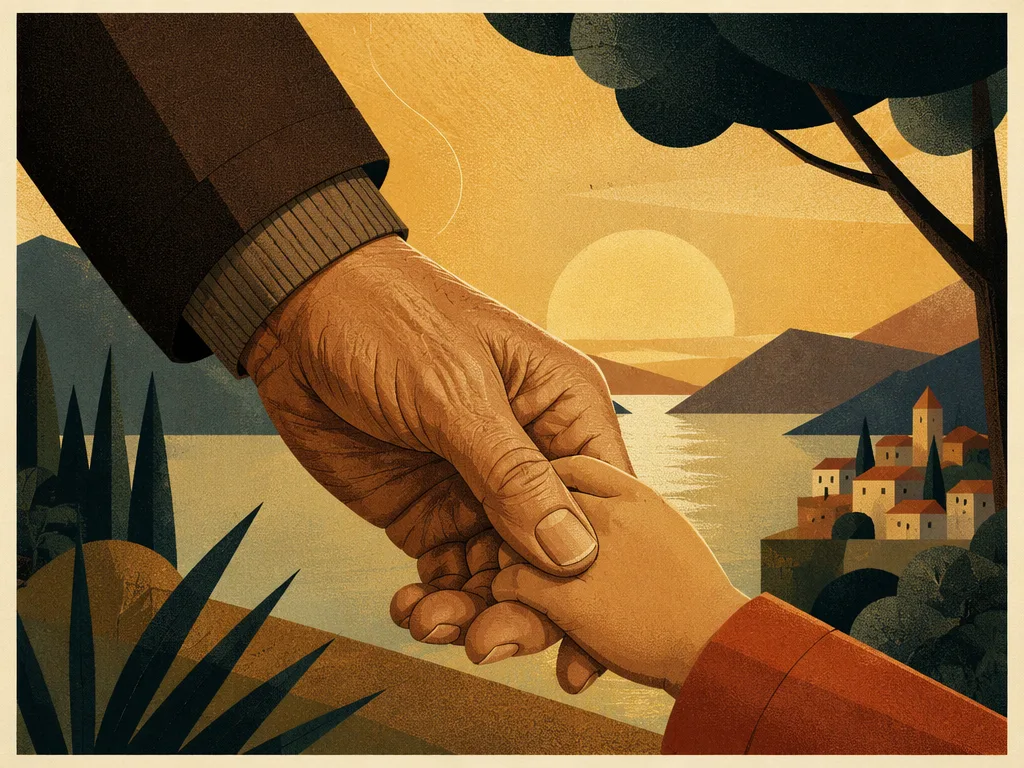
A song about family: parents, siblings, grandparents, aunts, uncles, cousins, and a bride form a tree with roots in the heart. Learn the names of relatives and verbs for spending time together, like sharing, talking, and helping each other.
Manual sync mode
Start playback, then stamp the highlighted next line with Space or the big stamp button.
You can save once all lines are stamped.
0/0
Mia madre e mio padre mi tengono per mano
--:--
My mother and my father hold me by the hand (more naturally: hold my hand)
Mio fratello e mia sorella, andiamo lontano
--:--
My brother and my sister, we go far
Condividiamo la casa e l'affetto
--:--
We share the house and the affection (more naturally: We share a home and affection)
Questo amore profondo è il nostro tetto
--:--
This deep love is our roof
Il mio albero genealogico è così su
--:--
My family tree is so up (more naturally: reaches so high)
Con radici nel cuore, non cado mai giù
--:--
With roots in the heart, I never fall down
È il ritratto più bello di questa mia età
--:--
It is the most beautiful portrait of this age of mine
Uniti per sempre nell'eternità
--:--
United forever in eternity
La nonna mi svela un ricordo lontano
--:--
The grandmother reveals a distant memory to me (more naturally: Grandma shares a distant memory with me)
Il nonno mi parla tenendo la mano
--:--
The grandfather speaks to me holding the hand (more naturally: Grandpa talks to me while holding my hand)
Han capelli d'argento e tanta saggezza
--:--
They have hair of silver and much wisdom (more naturally: They have silver hair and so much wisdom)
Mi regalano sempre una grande dolcezza
--:--
They always gift me a great sweetness (more naturally: They always treat me with great sweetness)
Il mio albero genealogico è così su
--:--
My family tree is so up (more naturally: reaches so high)
Con radici nel cuore, non cado mai giù
--:--
With roots in the heart, I never fall down
È il ritratto più bello di questa mia età
--:--
It is the most beautiful portrait of this age of mine
Uniti per sempre nell'eternità
--:--
United forever in eternity
Lo zio e la zia oggi sono con noi
--:--
The uncle and the aunt today are with us (more naturally: My uncle and aunt are with us today)
I cugini che ridono come degli eroi
--:--
The cousins who laugh like some heroes (more naturally: My cousins laughing like heroes)
Un grande banchetto, si mangia e si beve
--:--
A great banquet, one eats and one drinks (more naturally: A big feast, everyone is eating and drinking)
Il tempo con loro diventa più lieve
--:--
The time with them becomes lighter
Abbiamo gli occhi che guardano il mare
--:--
We have the eyes that look at the sea
Un unico tratto che fa innamorare
--:--
A single trait that makes fall in love (more naturally: A shared feature that makes people fall in love)
Si sa che buon sangue non mente giammai
--:--
It is known that good blood never lies (idiom: 'buon sangue non mente' means good family traits are passed down, similar to 'the apple doesn't fall far from the tree')
Un legame di sangue che non rompi mai
--:--
A bond of blood that you never break
Un nipote che gioca e la mia bella sposa
--:--
A nephew who plays and my beautiful bride (note: 'nipote' can mean nephew, niece, or grandchild, and 'sposa' means bride or wife)
Questa grande famiglia è una splendida cosa
--:--
This big family is a splendid thing
Parliamo, ci aiutiamo in ogni momento
--:--
We talk, we help each other in every moment (more naturally: at all times)
Un affetto speciale, un gran sentimento
--:--
A special affection, a great feeling
Il mio albero genealogico è così su
--:--
My family tree is so up (more naturally: reaches so high)
Con radici nel cuore, non cado mai giù
--:--
With roots in the heart, I never fall down
È il ritratto più bello di questa mia età
--:--
It is the most beautiful portrait of this age of mine
My mother and my father hold me by the hand (more naturally: hold my hand)
Miofratelloemiasorella, andiamolontano
My brother and my sister, we go far
Condividiamolacasael'affetto
We share the house and the affection (more naturally: We share a home and affection)
Questoamoreprofondoèilnostrotetto
This deep love is our roof
Ilmioalberogenealogicoècosìsu
My family tree is so up (more naturally: reaches so high)
Conradicinelcuore, noncadomaigiù
With roots in the heart, I never fall down
Èilritrattopiùbellodiquestamiaetà
It is the most beautiful portrait of this age of mine
Unitipersemprenell'eternità
United forever in eternity
Lanonnamisvelaunricordolontano
The grandmother reveals a distant memory to me (more naturally: Grandma shares a distant memory with me)
Ilnonnomiparlatenendolamano
The grandfather speaks to me holding the hand (more naturally: Grandpa talks to me while holding my hand)
Hancapellid'argentoetantasaggezza
They have hair of silver and much wisdom (more naturally: They have silver hair and so much wisdom)
Miregalanosempreunagrandedolcezza
They always gift me a great sweetness (more naturally: They always treat me with great sweetness)
Ilmioalberogenealogicoècosìsu
My family tree is so up (more naturally: reaches so high)
Conradicinelcuore, noncadomaigiù
With roots in the heart, I never fall down
Èilritrattopiùbellodiquestamiaetà
It is the most beautiful portrait of this age of mine
Unitipersemprenell'eternità
United forever in eternity
Lozioelaziaoggisonoconnoi
The uncle and the aunt today are with us (more naturally: My uncle and aunt are with us today)
Icuginicheridonocomedeglieroi
The cousins who laugh like some heroes (more naturally: My cousins laughing like heroes)
Ungrandebanchetto, simangiaesibeve
A great banquet, one eats and one drinks (more naturally: A big feast, everyone is eating and drinking)
Iltempoconlorodiventapiùlieve
The time with them becomes lighter
Abbiamogliocchicheguardanoilmare
We have the eyes that look at the sea
Ununicotrattochefainnamorare
A single trait that makes fall in love (more naturally: A shared feature that makes people fall in love)
Sisachebuonsanguenonmentegiammai
It is known that good blood never lies (idiom: 'buon sangue non mente' means good family traits are passed down, similar to 'the apple doesn't fall far from the tree')
Unlegamedisanguechenonrompimai
A bond of blood that you never break
Unnipotechegiocaelamiabellasposa
A nephew who plays and my beautiful bride (note: 'nipote' can mean nephew, niece, or grandchild, and 'sposa' means bride or wife)
Questagrandefamigliaèunasplendidacosa
This big family is a splendid thing
Parliamo, ciaiutiamoinognimomento
We talk, we help each other in every moment (more naturally: at all times)
Unaffettospeciale, ungransentimento
A special affection, a great feeling
Ilmioalberogenealogicoècosìsu
My family tree is so up (more naturally: reaches so high)
Conradicinelcuore, noncadomaigiù
With roots in the heart, I never fall down
Èilritrattopiùbellodiquestamiaetà
It is the most beautiful portrait of this age of mine
Unitipersemprenell'eternità
United forever in eternity
Ilmioalbero
My tree
Lamiafamiglia
My family
Amorepersempre
Love forever
20+
10+
5+
4
3
2
1
What it's about
The singer presents his family as a family tree: his parents holding him by the hand, his brother and sister, his grandparents with silver hair, his aunts, uncles, and cousins at a big table, and finally a nephew and his bride. The chorus says that with these roots in the heart, you never fall. It is a declaration of love for family.
Useful words
madre, padre, fratello, sorella: the immediate family
nonno, nonna, zio, zia, cugini: the other relatives
nipote: in Italian this means both a sibling's child and a child's child
sposa: wife, as well as a woman on her wedding day (bride). In everyday language, moglie is used more often.
albero genealogico: the chart of all one's relatives (family tree)
le radici: the underground part of the tree (the roots), used figuratively here
la saggezza, la dolcezza, l'affetto: qualities and feelings
capelli d'argento: a poetic way to say white hair (silver hair)
un banchetto: a big festive meal (a banquet)
lieve: light
Expressions
tenere per mano: "mi tengono per mano"
non cadere mai giù: not to break down, to stay strong
Buon sangue non mente: a proverb meaning that children take after their parents
un legame di sangue: the bond between relatives (a blood tie)
fa innamorare: sparks love, makes one fall in love
Grammar
Possessives with family members: in the singular, they do not take an article (mia madre, mio padre, mio fratello, mia sorella). With other words, the article remains: il mio albero, la mia famiglia, la mia bella sposa.
Indirect object pronouns: mi svela, mi parla, mi regalano (= a me, to me).
Impersonal si: "si mangia e si beve" (= everyone eats and drinks), "si sa" (= everyone knows).
Reciprocal verbs: "ci aiutiamo" (= we help each other).
Gerund: "tenendo la mano" (while holding the hand).
Truncated form: "han" stands for hanno. It is typical of songs and poetry.
Note: choices made for the rhyme
"è così su": this is not said in Italian. It is used to rhyme with giù. Naturally, you would say è così alto or è così grande.
"giammai": this is an old, literary word. The standard proverb is buon sangue non mente, without anything added. In spoken Italian, mai is used.
"ridono come degli eroi": this is an unusual comparison, chosen to rhyme with noi.
"tenendo la mano": naturally, you would say tenendomi la mano.
"che non rompi mai": here the tu is generic. Usually, you would say che non si rompe mai.
"di questa mia età": this is a poetic and uncommon expression.
We do not use third-party advertising cookies or cross-site tracking pixels.
We use cookies and similar technologies to keep our app running smoothly, analyze performance, and improve your experience. You can manage your preferences at any time.