


What it is about
The song describes, step by step, a dinner prepared at home. It is evening and the singer goes into the kitchen, washes his hands, and takes the cutting board. He chops the vegetables and makes a soup, then fries the chicken and tastes the sauce. At the end, he sets the table. For him, cooking is a little kind of magic, accompanied by music: dinner is served, enjoy your meal!
Useful words
Utensils and places
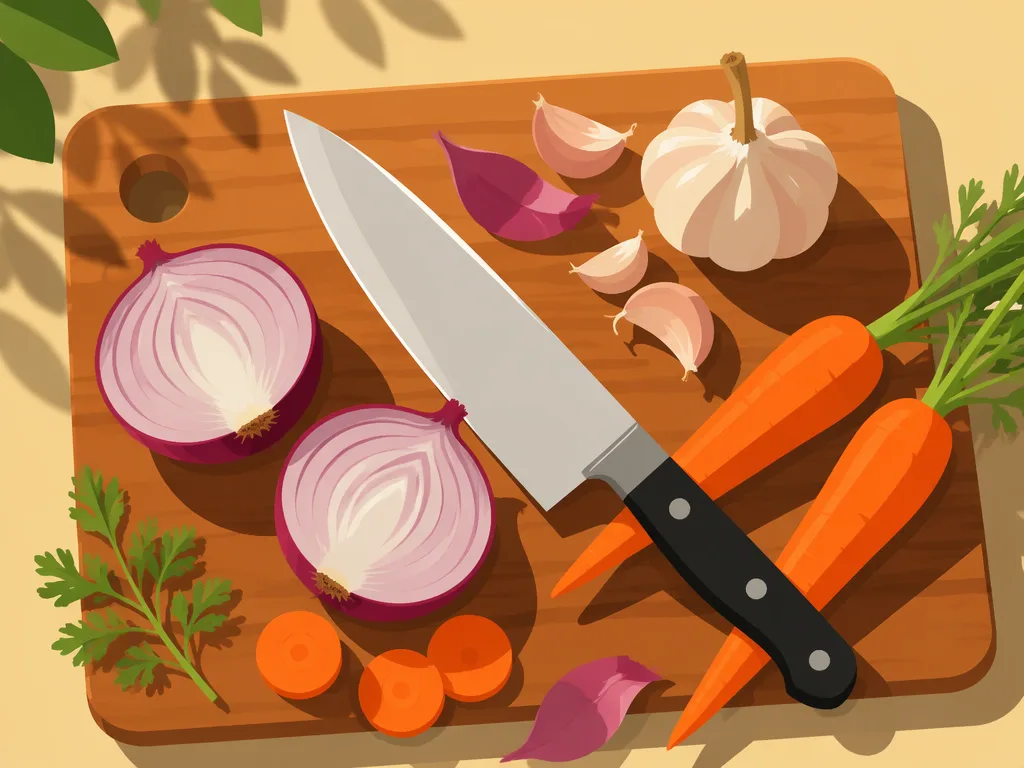
- il tagliere: the board on which you cut
- il banco: the work surface
- il coltello affilato: a knife that cuts well
- la pentola, il tegame, la padella, la ciotola
- il fornello: the stove burner or hotplate
- la spatola
- i piatti di gres: plates made of durable ceramic
- le cipolle, l'aglio, le carote
- la zuppa
- il petto di pollo
- l'olio d'oliva
- il formaggio, il limone
- il sale, il pepe
- la salsa
- tagliare, mescolare, girare
- far bollire, infornare, friggere
- grattugiare, spremere, assaggiare
- sfrigolare: the sound of hot oil
- versare
Expressions
- un pizzico di sale: a tiny amount. In the song also, playfully, «un pizzico di allegria».
- ci vuole un poco: a little is needed. ci vuole is used with the singular and ci vogliono with the plural.
- per bene: carefully, in the right way.
- saziare la fame: to eat until you are no longer hungry.
- sembra una favola: it is wonderful.
- avere le mani in pasta: usually means «to be involved in something». Here there is a play on words with the literal sense, namely kneading dough.
- La cena è servita and Buon appetito: typical phrases for inviting people to the table.
Grammar
- Present indicative, first person: entro, prendo, taglio, giro, accendo, verso, friggo, grattugio, spremo, assaggio, metto, preparo. Watch out for the forms in -co and -go: friggo, but «tu friggi».
- Reflexive verb with body parts: «mi lavo le mani». In Italian you do not say «lavo le mie mani».
- Direct object pronoun lo: «lo metto sul banco», «lo giro con la spatola». Lo replaces the cutting board and the chicken.
- Fare + infinitive: «faccio bollire l'acqua», meaning I put the water on to boil.
- Imperative: in the chorus there are mescola and gira (tu) and inforniamo (noi). The persons are mixed for the rhythm. In a normal recipe only one form is used, for example «mescola… gira… inforna».
- Partitive: «grattugio del formaggio», meaning some cheese.
- Truncation: gran tranquillità, far da solo. It is typical of sung and written language.
- Adverbs in -mente: lentamente, delicatamente.
Note: choices made for the rhyme
- «Faccio bollire l'acqua con belle e calde note» is a poetic image to rhyme with carote. It is not a normal way of talking about water.
- «Il vapore sale in aria, andando sempre su»: salire already means to go up, so it is a repetition. It serves to rhyme with blu.
- «dentro alla pentola» is colloquial. In standard language you say «nella pentola» or «dentro la pentola».
- «assai delicatamente» uses assai (= very), a literary or regional word, chosen for the rhythm. In everyday speech you say «molto delicatamente».
- «non mi sento stanco» is there mainly for the rhyme with banco.
- «senza eguale» is an old-fashioned form. Today «senza pari» or «senza uguali» is more common.