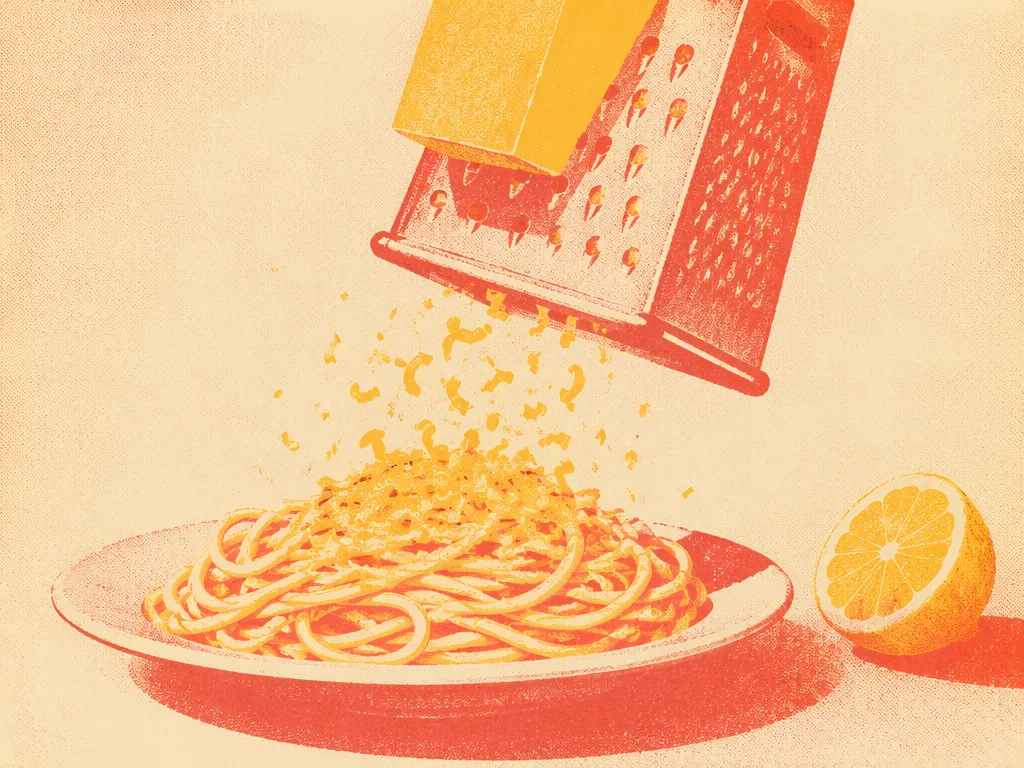
An evening in the kitchen: cutting, stirring, frying, and serving. You will learn kitchen vocabulary, cooking verbs, separable verbs, and idioms like „über den Tellerrand schauen“.
Manual sync mode
Start playback, then stamp the highlighted next line with Space or the big stamp button.
You can save once all lines are stamped.
0/0
Ich gehe in die Küche, der Abend bricht herein
--:--
I go into the kitchen, the evening breaks in (more naturally: I'm going into the kitchen, evening is falling)
Ich wasche meine Hände, so muss es immer sein
--:--
I wash my hands, so must it always be (more naturally: that's how it always has to be)
Ich nehme das Schneidebrett und leg es auf den Tisch
--:--
I take the cutting board and lay it on the table
Ein großes scharfes Messer, das Essen ist so frisch
--:--
A big sharp knife, the food is so fresh
Ich schneide die Zwiebeln und die Karotten klein
--:--
I cut the onions and the carrots small (more naturally: I chop the onions and carrots finely)
Ich koche Wasser auf, das wird sehr lecker sein
--:--
I boil water up, that will be very delicious (more naturally: I bring water to a boil, it's going to be very delicious)
Ich rühre in der Suppe, der Dampf, der steigt empor
--:--
I stir in the soup, the steam, it rises up (more naturally: I stir the soup, the steam rises up)
Ich koche dieses Essen mit ganz viel Humor
--:--
I cook this food with a whole lot of humor
Oh, misch es in der Schüssel, rühr es im Topf herum
--:--
Oh, mix it in the bowl, stir it around in the pot
Wir backen es im Ofen, das ist gar nicht dumm
--:--
We bake it in the oven, that is not dumb at all (here the phrase is an understatement meaning 'that's actually a pretty good idea')
Eine Prise Salz und Pfeffer, etwas Zucker noch dazu
--:--
A pinch of salt and pepper, some sugar added to it too
Wir kochen in der Küche ein herrliches Menü
--:--
We cook in the kitchen a wonderful menu (in German, 'Menü' here refers to a multi-course meal rather than the printed list)
Ich schalte jetzt den Herd an, die Pfanne steht bereit
--:--
I switch on the stove now, the pan stands ready (more naturally: the pan is ready)
Ein bisschen Olivenöl, es ist nun an der Zeit
--:--
A little bit of olive oil, it is time now
Ich brate jetzt das Hähnchen, es zischt so wunderbar
--:--
I fry the chicken now, it sizzles so wonderfully
Ich wende es mit dem Pfannenwender, das ist klar
--:--
I flip it with the spatula, that is clear (more naturally: of course / obviously)
Ich reibe etwas Käse, presse Zitronensaft
--:--
I grate some cheese, squeeze lemon juice
Ich probiere mal die Soße, sie gibt mir neue Kraft
--:--
I taste the sauce, it gives me new strength
Ich stelle nun die Teller in eine schöne Reih'
--:--
I now put the plates in a nice row
Das Essen ist bald fertig, kommst du auch vorbei?
--:--
The food is soon ready, are you coming over too? (more naturally: The food will be ready soon, are you coming by too?)
Die Big Band spielt jetzt auf, der Rhythmus ist charmant
--:--
The big band plays up now, the rhythm is charming (more naturally: The big band starts playing now, the rhythm is charming)
Ich habe hier als Koch das Heft fest in der Hand
--:--
I have here as a cook the handle firmly in my hand (idiom: 'das Heft in der Hand haben' means to be in charge or in control)
Ich kreiere neue Dinge, probiere wirklich viel
--:--
I create new things, really try a lot
Und schaue über den Tellerrand mit großem Stil
--:--
And look over the edge of the plate with great style (idiom: 'über den Tellerrand schauen' means to think outside the box, used here as a pun about cooking)
Oh, misch es in der Schüssel, rühr es im Topf herum
--:--
Oh, mix it in the bowl, stir it around in the pot
Wir backen es im Ofen, das ist gar nicht dumm
--:--
We bake it in the oven, that is not dumb at all (here the phrase is an understatement meaning 'that's actually a pretty good idea')
Eine Prise Salz und Pfeffer, etwas Zucker noch dazu
--:--
A pinch of salt and pepper, some sugar added to it too
Wir kochen in der Küche ein herrliches Menü
--:--
We cook in the kitchen a wonderful menu (in German, 'Menü' here refers to a multi-course meal rather than the printed list)
Das Essen ist serviert...
--:--
The food is served... (more naturally: Dinner is served...)
Guten Appetit...
--:--
Good appetite... (more naturally: Enjoy your meal! / Bon appétit!)
I go into the kitchen, the evening breaks in (more naturally: I'm going into the kitchen, evening is falling)
IchwaschemeineHände, somussesimmersein
I wash my hands, so must it always be (more naturally: that's how it always has to be)
IchnehmedasSchneidebrettundlegesaufdenTisch
I take the cutting board and lay it on the table
EingroßesscharfesMesser, dasEssenistsofrisch
A big sharp knife, the food is so fresh
IchschneidedieZwiebelnunddieKarottenklein
I cut the onions and the carrots small (more naturally: I chop the onions and carrots finely)
IchkocheWasserauf, daswirdsehrleckersein
I boil water up, that will be very delicious (more naturally: I bring water to a boil, it's going to be very delicious)
IchrühreinderSuppe, derDampf, dersteigtempor
I stir in the soup, the steam, it rises up (more naturally: I stir the soup, the steam rises up)
IchkochediesesEssenmitganzvielHumor
I cook this food with a whole lot of humor
Oh, mischesinderSchüssel, rühresimTopfherum
Oh, mix it in the bowl, stir it around in the pot
WirbackenesimOfen, dasistgarnichtdumm
We bake it in the oven, that is not dumb at all (here the phrase is an understatement meaning 'that's actually a pretty good idea')
EinePriseSalzundPfeffer, etwasZuckernochdazu
A pinch of salt and pepper, some sugar added to it too
WirkocheninderKücheeinherrlichesMenü
We cook in the kitchen a wonderful menu (in German, 'Menü' here refers to a multi-course meal rather than the printed list)
IchschaltejetztdenHerdan, diePfannestehtbereit
I switch on the stove now, the pan stands ready (more naturally: the pan is ready)
EinbisschenOlivenöl, esistnunanderZeit
A little bit of olive oil, it is time now
IchbratejetztdasHähnchen, eszischtsowunderbar
I fry the chicken now, it sizzles so wonderfully
IchwendeesmitdemPfannenwender, dasistklar
I flip it with the spatula, that is clear (more naturally: of course / obviously)
IchreibeetwasKäse, presseZitronensaft
I grate some cheese, squeeze lemon juice
IchprobieremaldieSoße, siegibtmirneueKraft
I taste the sauce, it gives me new strength
IchstellenundieTellerineineschöneReih'
I now put the plates in a nice row
DasEssenistbaldfertig, kommstduauchvorbei?
The food is soon ready, are you coming over too? (more naturally: The food will be ready soon, are you coming by too?)
DieBigBandspieltjetztauf, derRhythmusistcharmant
The big band plays up now, the rhythm is charming (more naturally: The big band starts playing now, the rhythm is charming)
IchhabehieralsKochdasHeftfestinderHand
I have here as a cook the handle firmly in my hand (idiom: 'das Heft in der Hand haben' means to be in charge or in control)
IchkreiereneueDinge, probierewirklichviel
I create new things, really try a lot
UndschaueüberdenTellerrandmitgroßemStil
And look over the edge of the plate with great style (idiom: 'über den Tellerrand schauen' means to think outside the box, used here as a pun about cooking)
Oh, mischesinderSchüssel, rühresimTopfherum
Oh, mix it in the bowl, stir it around in the pot
WirbackenesimOfen, dasistgarnichtdumm
We bake it in the oven, that is not dumb at all (here the phrase is an understatement meaning 'that's actually a pretty good idea')
EinePriseSalzundPfeffer, etwasZuckernochdazu
A pinch of salt and pepper, some sugar added to it too
WirkocheninderKücheeinherrlichesMenü
We cook in the kitchen a wonderful menu (in German, 'Menü' here refers to a multi-course meal rather than the printed list)
DasEssenistserviert...
The food is served... (more naturally: Dinner is served...)
GutenAppetit...
Good appetite... (more naturally: Enjoy your meal! / Bon appétit!)
20+
10+
5+
4
3
2
1
What is it about?
In the evening, a man cooks a full meal. Step by step, he describes what he is doing: washing hands, cutting vegetables, stirring soup, frying chicken, tasting sauce, setting out plates. At the end, he invites someone: Kommst du auch vorbei? Then it's time for: Guten Appetit!
Useful Words
Kitchen equipment: das Schneidebrett, das Messer, die Schüssel, der Topf, die Pfanne, der Pfannenwender, der Herd, der Ofen, der Teller
Food: die Zwiebel, die Karotte, das Hähnchen, der Käse, der Zitronensaft, das Olivenöl, das Salz, der Pfeffer, der Zucker, die Soße, die Suppe
eine Prise Salz – a pinch of salt (a tiny bit of salt)
Es ist an der Zeit. – Now is the right moment.
das Heft in der Hand haben – to be in control, to be in charge
über den Tellerrand schauen – to be open to new things, to see beyond the familiar
Das Essen ist serviert. / Guten Appetit! – typical phrases at mealtime
Grammar
Present tense, 1st person:ich gehe, ich wasche, ich nehme, ich schneide, ich brate – ideal for practicing regular and irregular verbs.
Separable verbs:anschalten → Ich schalte den Herd an, aufkochen → Ich koche Wasser auf, vorbeikommen → Kommst du vorbei?, herumrühren → rühr es herum. The prefix goes at the end of the sentence.
Two-way prepositions:Ich gehe in die Küche (where to? Accusative) – Wir kochen in der Küche (where? Dative). Similarly: Ich lege es auf den Tisch, Ich stelle die Teller in eine Reihe.
Imperative (du):Misch es! Rühr es herum!
Note: Poetic License
„leg es“ and „Reih'“ are shortened for rhythm and rhyme. Written correctly: lege es (though leg is normal in spoken language) and in eine Reihe.
„der Dampf, der steigt empor“ repeats the subject, and empor is very elevated. In everyday language, you say: Der Dampf steigt auf.
„das Heft fest in der Hand“ is the idiom das Heft in der Hand haben, expanded here with fest.
„mit ganz viel Humor“ and „das ist gar nicht dumm“ are mainly there for the rhyme.
We do not use third-party advertising cookies or cross-site tracking pixels.
We use cookies and similar technologies to keep our app running smoothly, analyze performance, and improve your experience. You can manage your preferences at any time.