


What is the song about?
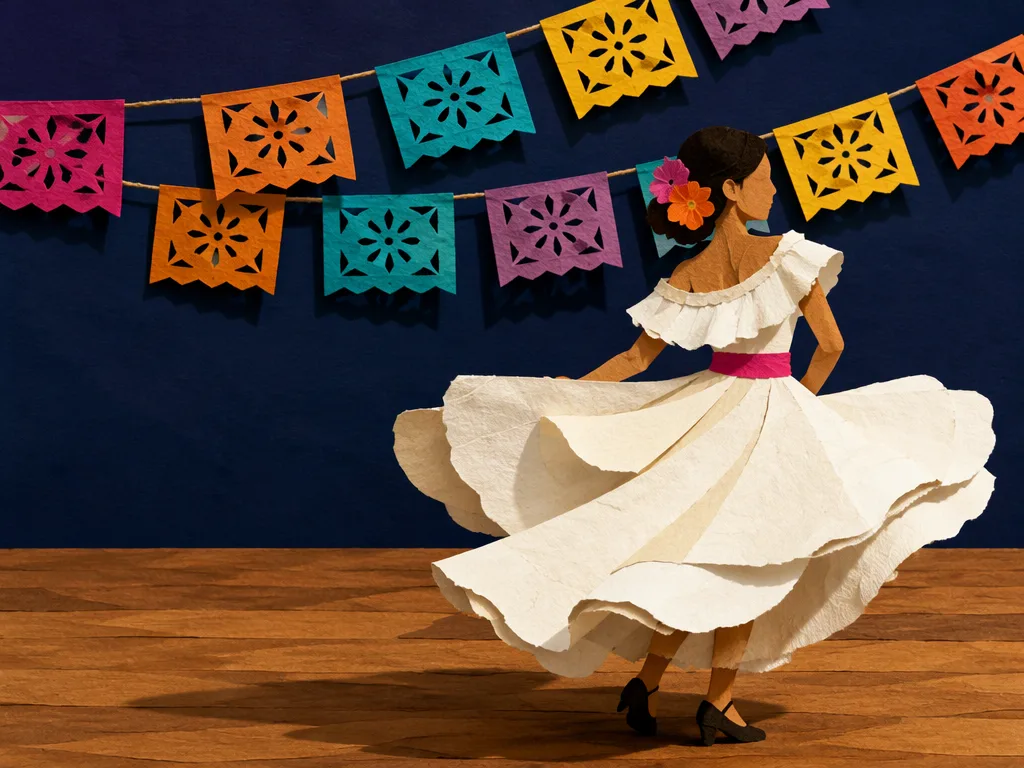
La Bamba is a traditional song from the son jarocho genre, the music of Veracruz (Mexico). It talks about what it takes to dance the bamba: a little bit of grace, that is, style and joy. Then it compares the dance to going up to heaven, for which «una escalera grande y otra chiquita» is needed. At the end, the singer boasts: «Yo no soy marinero, soy capitán». It is a party song, full of energy and cheering shouts like «¡arriba!» and «¡olé!».
Useful words and expressions
- bailar: to move to the rhythm of the music.
- la gracia: a person's charm, style, or joy when moving.
- subir al cielo: to go up, all the way to heaven.
- la escalera: an object with steps for climbing (ladder or stairs).
- chiquita: diminutive of chica (small). Diminutives are used a lot in Mexico: chiquito, chiquita.
- el marinero / el capitán: the sailor works on a ship; the captain is the boss of the ship.
- ¡Arriba!: a shout of joy and encouragement, very typical at Mexican parties.
- ¡Olé!: an exclamation of enthusiasm at the end of a dance or a song.
- pa': colloquial and shortened form of para. It is heard a lot when speaking, but in careful writing para is used: para mí, para ti.
Grammar
- Para + infinitive expresses purpose: Para bailar la bamba…, Para subir al cielo…
- Se necesita + noun is an impersonal construction: it does not say who needs something, only that it is necessary in general. Se necesita una escalera grande.
- Seré is the simple future of the verb ser: yo seré, tú serás, él será. Por ti seré means something like «I will be yours / I will do it for you»; the phrase is left poetically open.
- Ser + profession without an article: in Spanish you say Soy capitán, No soy marinero, without un.
- al = a + el: subir al cielo.
- Pronouns with prepositions: after para and por, mí and ti are used: para mí, por ti.
Watch out: don't copy this
- «una poca de gracia» is a traditional form from folk lyrics, not the standard form. The correct phrase in general Spanish is «un poco de gracia», because un poco de does not change gender.
- «pa'» is colloquial language; in a formal text, write para.