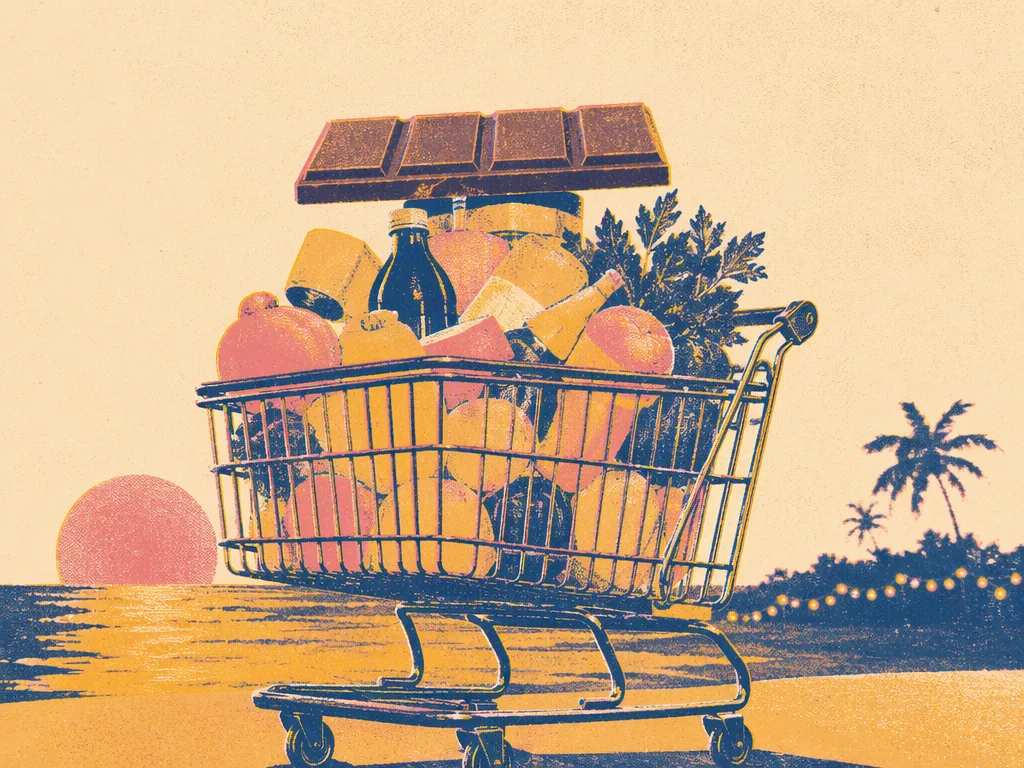
A trip to the supermarket with list in hand: fruit, dairy, bread and pasta, right up to the checkout. Learn food names, packaging phrases like «un pacco di» and the expression «costare un occhio della testa».
Manual sync mode
Start playback, then stamp the highlighted next line with Space or the big stamp button.
You can save once all lines are stamped.
0/0
Passo le porte a vetro, prendo un carrello qua
--:--
I pass the glass doors, I take a cart here (more naturally: I walk through the glass doors and grab a shopping cart here)
Tiro fuori il mio foglio, vedo che cosa mi dà
--:--
I pull out my sheet of paper, I see what it gives me (more naturally: I take out my list to see what is on it)
Il supermercato è grande, la luce splende giù
--:--
The supermarket is big, the light shines down
Voglio comprare la cena, non chiedo niente di più
--:--
I want to buy dinner, I don't ask for anything more
Vado verso la frutta, cerco le mele rosse
--:--
I go towards the fruit, I look for the red apples
Cipolle e poi patate, grandi e belle grosse
--:--
Onions and then potatoes, big and nice and thick (note: 'belle grosse' is a colloquial way to say 'nice and big')
Un casco di banane, le arance col lor succo
--:--
A bunch of bananas, the oranges with their juice (more naturally: A bunch of bananas, and juicy oranges)
Verdura fresca e sana, questo non è un trucco
--:--
Fresh and healthy vegetables, this is not a trick
Ho la lista della spesa, controllo ogni riga
--:--
I have the shopping list, I check every line
Giro per le corsie, non è una gran fatica
--:--
I wander through the aisles, it is not a great effort (more naturally: I walk down the aisles, it's no big chore)
Guardando bene i prezzi, riempiendo il mio carrello
--:--
Looking well at the prices, filling my cart (more naturally: Checking the prices carefully, filling up my cart)
Fare le provviste è un rito molto bello
--:--
Making the provisions is a very nice ritual (more naturally: Stocking up on groceries is a really nice ritual)
Giro dietro l'angolo, al banco dei latticini
--:--
I turn around the corner, at the dairy counter
Latte, burro e formaggio, ce ne son tanti e fini
--:--
Milk, butter and cheese, there are many of them and fine ones (more naturally: Milk, butter, and cheese, there are so many high-quality ones)
Sento il profumo del forno, il pane fresco e caldo
--:--
I smell the scent of the oven, the fresh and warm bread (more naturally: I smell the bakery, the fresh, warm bread)
Prendo un filone croccante, un acquisto molto saldo
--:--
I take a crunchy loaf, a very solid purchase
Mi serve della pasta, e poi un pacco di riso
--:--
I need some pasta, and then a pack of rice
Dell'olio d'oliva buono, che porta un bel sorriso
--:--
Some good olive oil, which brings a nice smile
Il pepe ed il sale, e un po' di cioccolato
--:--
The pepper and the salt, and a bit of chocolate (more naturally: Salt and pepper, and a little bit of chocolate)
Un dolce spuntino che ho sempre desiderato
--:--
A sweet snack that I have always desired (more naturally: A sweet snack that I've always wanted)
Arrivo dritto alla cassa, adesso devo pagare
--:--
I arrive straight at the checkout, now I have to pay (more naturally: I head straight to the register, now I have to pay)
Guardo lo scontrino, non voglio neanche guardare
--:--
I look at the receipt, I don't even want to look
Il conto sale in fretta, per chiudere la festa
--:--
The bill goes up quickly, to close the party (idiom: 'chiudere la festa' is used figuratively here to mean wrapping things up or spoiling the fun mood)
Tutta questa spesa costa un occhio della testa
--:--
All this shopping costs an eye of the head (idiom: 'costare un occhio della testa' means 'to cost an arm and a leg', indicating something is very expensive)
Ho la lista della spesa, controllo ogni riga
--:--
I have the shopping list, I check every line
Giro per le corsie, non è una gran fatica
--:--
I wander through the aisles, it is not a great effort (more naturally: I walk down the aisles, it's no big chore)
Guardando bene i prezzi, riempiendo il mio carrello
--:--
Looking well at the prices, filling my cart (more naturally: Checking the prices carefully, filling up my cart)
Fare le provviste è un rito molto bello
--:--
Making the provisions is a very nice ritual (more naturally: Stocking up on groceries is a really nice ritual)
I pass the glass doors, I take a cart here (more naturally: I walk through the glass doors and grab a shopping cart here)
Tirofuoriilmiofoglio, vedochecosamidà
I pull out my sheet of paper, I see what it gives me (more naturally: I take out my list to see what is on it)
Ilsupermercatoègrande, lalucesplendegiù
The supermarket is big, the light shines down
Vogliocomprarelacena, nonchiedonientedipiù
I want to buy dinner, I don't ask for anything more
Vadoversolafrutta, cercolemelerosse
I go towards the fruit, I look for the red apples
Cipolleepoipatate, grandiebellegrosse
Onions and then potatoes, big and nice and thick (note: 'belle grosse' is a colloquial way to say 'nice and big')
Uncascodibanane, learancecollorsucco
A bunch of bananas, the oranges with their juice (more naturally: A bunch of bananas, and juicy oranges)
Verdurafrescaesana, questononèuntrucco
Fresh and healthy vegetables, this is not a trick
Holalistadellaspesa, controlloogniriga
I have the shopping list, I check every line
Giroperlecorsie, nonèunagranfatica
I wander through the aisles, it is not a great effort (more naturally: I walk down the aisles, it's no big chore)
Guardandobeneiprezzi, riempiendoilmiocarrello
Looking well at the prices, filling my cart (more naturally: Checking the prices carefully, filling up my cart)
Fareleprovvisteèunritomoltobello
Making the provisions is a very nice ritual (more naturally: Stocking up on groceries is a really nice ritual)
Girodietrol'angolo, albancodeilatticini
I turn around the corner, at the dairy counter
Latte, burroeformaggio, cenesontantiefini
Milk, butter and cheese, there are many of them and fine ones (more naturally: Milk, butter, and cheese, there are so many high-quality ones)
Sentoilprofumodelforno, ilpanefrescoecaldo
I smell the scent of the oven, the fresh and warm bread (more naturally: I smell the bakery, the fresh, warm bread)
Prendounfilonecroccante, unacquistomoltosaldo
I take a crunchy loaf, a very solid purchase
Miservedellapasta, epoiunpaccodiriso
I need some pasta, and then a pack of rice
Dell'oliod'olivabuono, cheportaunbelsorriso
Some good olive oil, which brings a nice smile
Ilpepeedilsale, eunpo' dicioccolato
The pepper and the salt, and a bit of chocolate (more naturally: Salt and pepper, and a little bit of chocolate)
Undolcespuntinochehosempredesiderato
A sweet snack that I have always desired (more naturally: A sweet snack that I've always wanted)
Arrivodrittoallacassa, adessodevopagare
I arrive straight at the checkout, now I have to pay (more naturally: I head straight to the register, now I have to pay)
Guardoloscontrino, nonvoglioneancheguardare
I look at the receipt, I don't even want to look
Ilcontosaleinfretta, perchiuderelafesta
The bill goes up quickly, to close the party (idiom: 'chiudere la festa' is used figuratively here to mean wrapping things up or spoiling the fun mood)
Tuttaquestaspesacostaunocchiodellatesta
All this shopping costs an eye of the head (idiom: 'costare un occhio della testa' means 'to cost an arm and a leg', indicating something is very expensive)
Holalistadellaspesa, controlloogniriga
I have the shopping list, I check every line
Giroperlecorsie, nonèunagranfatica
I wander through the aisles, it is not a great effort (more naturally: I walk down the aisles, it's no big chore)
Guardandobeneiprezzi, riempiendoilmiocarrello
Looking well at the prices, filling my cart (more naturally: Checking the prices carefully, filling up my cart)
Fareleprovvisteèunritomoltobello
Making the provisions is a very nice ritual (more naturally: Stocking up on groceries is a really nice ritual)
Good dinner... (more naturally: Enjoy your dinner...)
20+
10+
5+
4
3
2
1
What it's about
The singer walks into a supermarket with his lista della spesa (shopping list) and describes his route step by step: he grabs a cart, goes to the fruit and vegetable section, then to the dairy counter, smells the aroma of bread, picks up pasta, rice, oil and a bit of chocolate. In the end he reaches the checkout and discovers that the bill is high: the whole shop costa un occhio della testa (costs an arm and a leg). The chorus repeats that doing the grocery shopping calmly, looking at the prices, is a pleasant little ritual.
Useful words and expressions
fare la spesa: to buy food and household items; la lista della spesa: the list of things to buy
il carrello (shopping cart), le corsie (aisles, the passages between the shelves), la cassa (checkout), lo scontrino (receipt), il conto (bill)
il banco dei latticini: the dairy counter, the section with milk, butter, cheese
il forno: here, the bakery section where bread is made; un filone: a long loaf of bread
Quantities and packaging: un casco di banane (a bunch of bananas), un pacco di riso (a pack of rice), un po' di cioccolato (a bit of chocolate)
tirare fuori: to take out, to pull out (tiro fuori il mio foglio)
fare le provviste: to buy food to have supplies at home (to stock up)
non è una gran fatica: it's not a big effort, it's not hard or tiring
costare un occhio della testa: to cost a fortune / an arm and a leg (very common expression)
uno spuntino: a snack, a small meal between one meal and the next
Grammar
Present indicative, first person: passo, prendo, vado, cerco, giro, sento, arrivo. The whole song is told in the present tense, as if it were happening right now.
Mi serve / mi servono: Mi serve della pasta (= I need pasta). The verb agrees with the thing needed: mi servono le uova.
Partitive: della pasta, dell'olio d'oliva = a certain, unspecified amount.
Ne: ce ne son tanti = ce ne sono tanti (there are many of them, referring to dairy products).
Gerund: guardando bene i prezzi, riempiendo il mio carrello = while I look, while I fill.
Dovere + infinitive: adesso devo pagare.
Voglio + infinitive: voglio comprare la cena.
Note: forms chosen for the rhyme
col lor succo and ce ne son tanti: lor and son are shortened forms used in songs or poetry; in spoken Italian you say con il loro succo, ce ne sono tanti.
tanti e fini: for cheese, you would more naturally say tanti e buoni or di qualità.
un acquisto molto saldo: this is chosen to rhyme with caldo; it is not a natural expression. Better: un ottimo acquisto.
grandi e belle grosse: belle grosse is colloquial (= really big); it works well in informal speech.
Il pepe ed il sale: usually you say sale e pepe, in that order.
la luce splende giù and che porta un bel sorriso are poetic images, not everyday phrases.
Guardo lo scontrino, non voglio neanche guardare: this is a playful contradiction, meant to say that the total is scary.
We do not use third-party advertising cookies or cross-site tracking pixels.
We use cookies and similar technologies to keep our app running smoothly, analyze performance, and improve your experience. You can manage your preferences at any time.