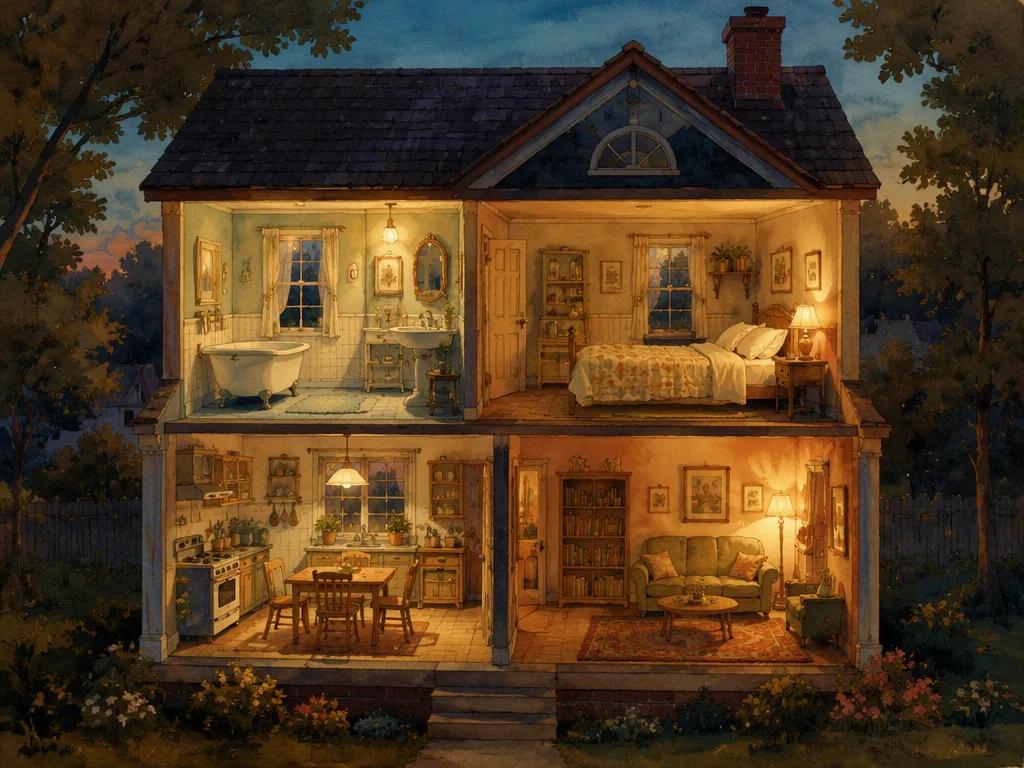
A cheerful tour through the rooms of the house: kitchen, living room, bathroom, and bedroom. Learn the names of rooms and furniture, reflexive verbs, and prepositions of place.
Manual sync mode
Start playback, then stamp the highlighted next line with Space or the big stamp button.
You can save once all lines are stamped.
0/0
Apro la porta e faccio un bel passo
--:--
I open the door and I take a nice step (more naturally: I open the door and step right inside)
Il corridoio è stretto, ma mi rilasso
--:--
The hallway is narrow, but I relax
Vado in cucina, apro il frigorifero
--:--
I go into the kitchen, I open the refrigerator
Mi siedo al tavolo, mi sento libero
--:--
I sit at the table, I feel free
Poi c'è il soggiorno, con il divano
--:--
Then there is the living room, with the sofa
La televisione col telecomando in mano
--:--
The television with the remote control in hand
Ogni stanza ha una storia da raccontare
--:--
Every room has a story to tell
Questo è il posto dove voglio restare
--:--
This is the place where I want to stay
Le stanze della mia casa, calde e accoglienti
--:--
The rooms of my house, warm and welcoming
Riparo dal vento e dai brutti momenti
--:--
A shelter from the wind and from the bad moments (more naturally: from the hard times)
Con mobili e quadri appesi alla parete
--:--
With furniture and paintings hanging on the wall
Amo la mia casa, la mia dolce rete
--:--
I love my house, my sweet net (here 'net' is used metaphorically to mean a safety net or safe haven)
Un posto sicuro dove posso sognare
--:--
A safe place where I can dream
Dove mi fermo e comincio ad amare
--:--
Where I stop and begin to love
Vado in bagno, mi lavo le mani
--:--
I go to the bathroom, I wash my hands
Guardo lo specchio pensando a domani
--:--
I look at the mirror thinking about tomorrow (more naturally: I look in the mirror thinking about tomorrow)
Poi in camera da letto, dove vado a dormire
--:--
Then into the bedroom, where I go to sleep
Un letto comodo per non soffrire
--:--
A comfortable bed so as not to suffer (more naturally: A comfortable bed to rest without pain)
Accendo la lampada e leggo un po'
--:--
I turn on the lamp and read a little
E apro l'armadio che sempre avrò
--:--
And I open the wardrobe that I will always have
Ogni stanza ha una storia da raccontare
--:--
Every room has a story to tell
Questo è il posto dove voglio restare
--:--
This is the place where I want to stay
Le stanze della mia casa, calde e accoglienti
--:--
The rooms of my house, warm and welcoming
Riparo dal vento e dai brutti momenti
--:--
A shelter from the wind and from the bad moments (more naturally: from the hard times)
Con mobili e quadri appesi alla parete
--:--
With furniture and paintings hanging on the wall
Amo la mia casa, la mia dolce rete
--:--
I love my house, my sweet net (here 'net' is used metaphorically to mean a safety net or safe haven)
Un posto sicuro dove posso sognare
--:--
A safe place where I can dream
Dove mi fermo e comincio ad amare
--:--
Where I stop and begin to love
Nessun posto è come casa, è la verità
--:--
No place is like home, it is the truth (more naturally: There's no place like home, that's the truth)
Non contano i muri o l'elettricità
--:--
The walls or the electricity do not count (more naturally: The walls and the electricity don't matter)
È la grande pace alla fine del giorno
--:--
It is the great peace at the end of the day
È l'amore puro che trovo qui intorno
--:--
It is the pure love that I find around here
Le stanze della mia casa, calde e accoglienti
--:--
The rooms of my house, warm and welcoming
Riparo dal vento e dai brutti momenti
--:--
A shelter from the wind and from the bad moments (more naturally: from the hard times)
Con mobili e quadri appesi alla parete
--:--
With furniture and paintings hanging on the wall
Amo la mia casa, la mia dolce rete
--:--
I love my house, my sweet net (here 'net' is used metaphorically to mean a safety net or safe haven)
I open the door and I take a nice step (more naturally: I open the door and step right inside)
Ilcorridoioèstretto, mamirilasso
The hallway is narrow, but I relax
Vadoincucina, aproilfrigorifero
I go into the kitchen, I open the refrigerator
Misiedoaltavolo, misentolibero
I sit at the table, I feel free
Poic'èilsoggiorno, conildivano
Then there is the living room, with the sofa
Latelevisionecoltelecomandoinmano
The television with the remote control in hand
Ognistanzahaunastoriadaraccontare
Every room has a story to tell
Questoèilpostodovevogliorestare
This is the place where I want to stay
Lestanzedellamiacasa, caldeeaccoglienti
The rooms of my house, warm and welcoming
Riparodalventoedaibruttimomenti
A shelter from the wind and from the bad moments (more naturally: from the hard times)
Conmobiliequadriappesiallaparete
With furniture and paintings hanging on the wall
Amolamiacasa, lamiadolcerete
I love my house, my sweet net (here 'net' is used metaphorically to mean a safety net or safe haven)
Unpostosicurodovepossosognare
A safe place where I can dream
Dovemifermoecomincioadamare
Where I stop and begin to love
Vadoinbagno, milavolemani
I go to the bathroom, I wash my hands
Guardolospecchiopensandoadomani
I look at the mirror thinking about tomorrow (more naturally: I look in the mirror thinking about tomorrow)
Poiincameradaletto, dovevadoadormire
Then into the bedroom, where I go to sleep
Unlettocomodopernonsoffrire
A comfortable bed so as not to suffer (more naturally: A comfortable bed to rest without pain)
Accendolalampadaeleggounpo'
I turn on the lamp and read a little
Eaprol'armadiochesempreavrò
And I open the wardrobe that I will always have
Ognistanzahaunastoriadaraccontare
Every room has a story to tell
Questoèilpostodovevogliorestare
This is the place where I want to stay
Lestanzedellamiacasa, caldeeaccoglienti
The rooms of my house, warm and welcoming
Riparodalventoedaibruttimomenti
A shelter from the wind and from the bad moments (more naturally: from the hard times)
Conmobiliequadriappesiallaparete
With furniture and paintings hanging on the wall
Amolamiacasa, lamiadolcerete
I love my house, my sweet net (here 'net' is used metaphorically to mean a safety net or safe haven)
Unpostosicurodovepossosognare
A safe place where I can dream
Dovemifermoecomincioadamare
Where I stop and begin to love
Nessunpostoècomecasa, èlaverità
No place is like home, it is the truth (more naturally: There's no place like home, that's the truth)
Noncontanoimuriol'elettricità
The walls or the electricity do not count (more naturally: The walls and the electricity don't matter)
Èlagrandepaceallafinedelgiorno
It is the great peace at the end of the day
Èl'amorepurochetrovoquiintorno
It is the pure love that I find around here
Lestanzedellamiacasa, caldeeaccoglienti
The rooms of my house, warm and welcoming
Riparodalventoedaibruttimomenti
A shelter from the wind and from the bad moments (more naturally: from the hard times)
Conmobiliequadriappesiallaparete
With furniture and paintings hanging on the wall
Amolamiacasa, lamiadolcerete
I love my house, my sweet net (here 'net' is used metaphorically to mean a safety net or safe haven)
Unpostosicurodovepossosognare
A safe place where I can dream
Dovemifermoecomincioadamare
Where I stop and begin to love
Lamiacucina, lamiacamera
My kitchen, my bedroom
Ilmiosoggiorno
My living room
Benvenutoacasamia
Welcome to my home
20+
10+
5+
4
3
2
1
What it's about
The song is a guided tour of one's home. The singer enters through the door, walks down the hallway, goes into the kitchen, living room, bathroom, and bedroom, and tells what they do in each room. The chorus describes the home as a warm and safe refuge, a place to rest and dream. The bridge says that a home is not made of walls, but of peace and love.
Useful words and expressions
The rooms: il corridoio, la cucina, il soggiorno, il bagno, la camera da letto
Furniture and objects: la porta, il frigorifero, il tavolo, il divano, la televisione, il telecomando, lo specchio, il letto, la lampada, l'armadio, i mobili, i quadri, la parete
accogliente: making you feel good and welcome (calde e accoglienti)
il riparo: a place that protects (riparo dal vento)
appeso alla parete: hanging on the wall, like a picture
Nessun posto è come casa: a very common expression
Benvenuto a casa mia: the phrase used to welcome a guest
Grammar
Present tense, first person: apro, vado, guardo, leggo, accendo. The whole song describes habitual actions.
Reflexive verbs: mi rilasso, mi siedo, mi sento, mi lavo le mani, mi fermo. With body parts, Italian uses the article and not the possessive: mi lavo le mani, not "lavo le mie mani".
Prepositions of place: in cucina, in bagno, in camera da letto (without an article), but al tavolo and alla parete (articulated prepositions).
da + infinitive: una storia da raccontare indicates something that can or should be done.
cominciare a + infinitive: comincio ad amare. Before a vowel, a often becomes ad.
Gerund: guardo lo specchio pensando a domani, meaning while I think.
Future tense: avrò, from the verb avere.
col = con il: col telecomando is the contracted form of con il telecomando.
Note: choices made for the rhyme
la mia dolce rete: used to rhyme with parete. It is not a common Italian expression. Rete means "safety net" or "network of affection". To talk about home, people say casa dolce casa.
l'armadio che sempre avrò: the word order is changed to rhyme with un po'. Usually, people say che avrò sempre. The meaning is also a bit forced.
un letto comodo per non soffrire: this is an exaggeration to rhyme with dormire. Normally, people say per dormire bene or per riposare.
frigorifero / libero: this is just an imperfect rhyme. The sentences are correct.
We do not use third-party advertising cookies or cross-site tracking pixels.
We use cookies and similar technologies to keep our app running smoothly, analyze performance, and improve your experience. You can manage your preferences at any time.