


What is the song about?
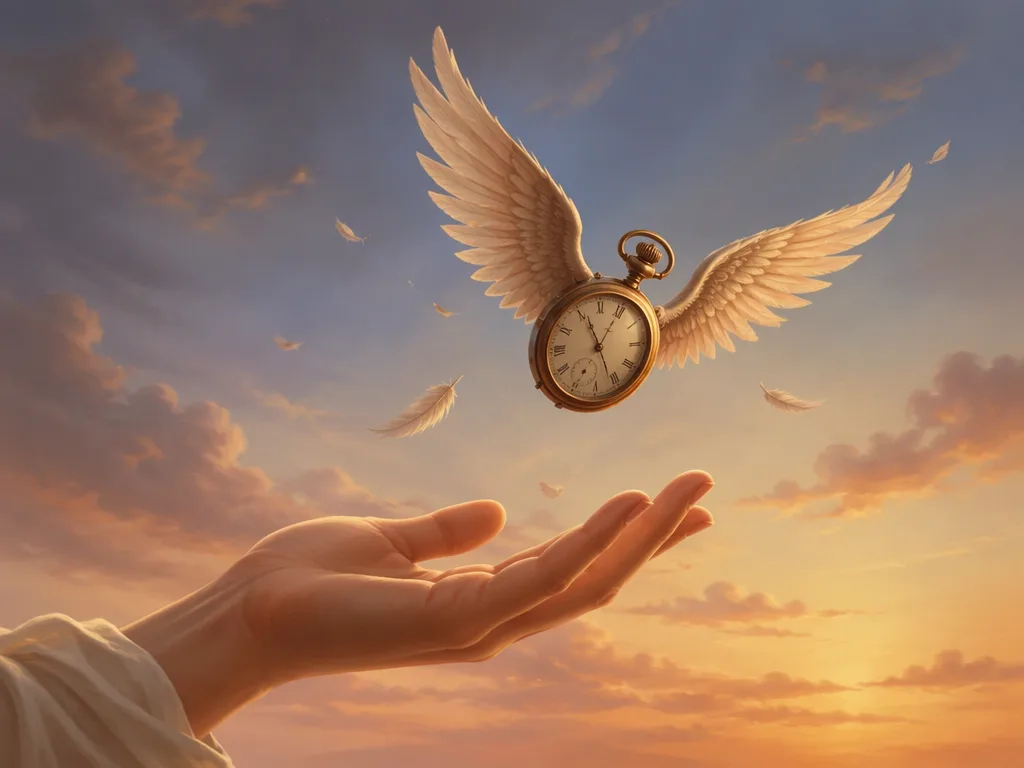
The song follows the passing of time, from the smallest to the largest units: the days of the week, then the months, the seasons, the hours, and finally the years and decades. The message is simple: time flies, but memories remain, so you have to live your life well.
Useful vocabulary
- The days: lundi, mardi, mercredi, jeudi, vendredi, samedi, dimanche. In French, they are written with a lowercase letter (the capital letter in the song is only because it is at the beginning of a line).
- The months mentioned: janvier, avril, août, octobre. They are also written with a lowercase letter.
- The seasons: le printemps, l'été, l'automne, l'hiver.
- le temps s'envole: time passes very quickly.
- les heures filent: here, filer means to pass very quickly.
- en un clin d'œil: in a very short time, in an instant.
- le souvenir reste: we keep the memory of the past.
- un anniversaire, célébrer, une décennie (ten years).
- être en cadence: to have a regular rhythm.
Grammar
- Calendar prepositions: we say lundi matin (without an article for a specific day), le lundi for a habit. With months: en janvier, en avril. With seasons: au printemps, but en été, en automne, en hiver.
- Pronominal verbs: le temps s'envole, tout se déroule, se terminer.
- The recent past with venir de + infinitive: Une autre année vient de se terminer (it ended a very short time ago).
- The near future with aller + infinitive: un anniversaire qu'on va célébrer.
- The pronoun on to talk about people in general: on vit la vie. After que, we sometimes write l'on to make it sound nicer to the ear: que l'on contourne.
Watch out: poetic license
For the sake of rhyme or rhythm, some lines depart from everyday French. Do not copy them as they are:
- « la montre tourne »: a watch does not "turn". You would rather say les aiguilles tournent or le temps passe.
- « Une autre année que l'on contourne »: contourner means to go around an obstacle. The word was chosen to rhyme with tourne. More natural: une autre année qui passe.
- « L'hiver arrive et prend son vol »: prendre son vol is used for a bird taking off. Here, it is used to rhyme with sol. You would rather say l'hiver arrive or l'hiver s'installe.
- « Le printemps fleuri »: the line has no verb. Be careful, fleuri (adjective) and fleurit (verb) are pronounced the same: le printemps fleurit would be a complete sentence.
- « on ne peut arrêter »: without pas, this is a literary phrasing. In spoken French, we say on ne peut pas arrêter.
- « Octobre arrive avec ses cadeaux » is a poetic image (the fruits and colors of autumn), not a common expression.