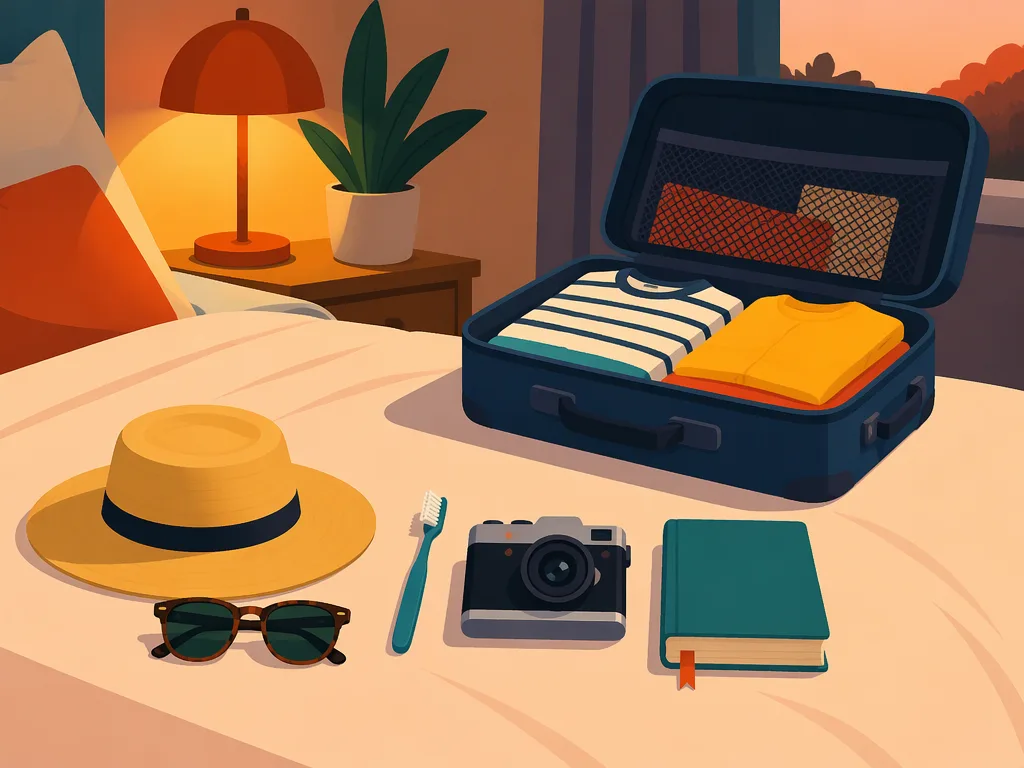
A song about packing before a trip: suitcase, passport, boarding pass, and toothbrush. You practice travel vocabulary, the imperative, and separable verbs like einpacken, mitnehmen, and abschließen.
Manual sync mode
Start playback, then stamp the highlighted next line with Space or the big stamp button.
You can save once all lines are stamped.
0/0
Der Koffer ist offen, hier auf dem Bett
--:--
The suitcase is open, here on the bed
Das Packen für die Reise ist wirklich sehr nett
--:--
The packing for the trip is really very nice (more naturally: Packing for the trip is really quite nice)
Wir falten die Hemden und packen die Schuh'
--:--
We fold the shirts and pack the shoes
Wir suchen ein Abenteuer, ich und auch du
--:--
We look for an adventure, I and also you (more naturally: We're looking for an adventure, both me and you)
Die Sonnenbrille, ein Buch und der Hut
--:--
The sunglasses, a book, and the hat
Ein Plan für die Stadt, das ist wirklich gut
--:--
A plan for the city, that is really good (note: 'Plan für die Stadt' can mean either an itinerary or a city map)
Die Zahnbürste und auch die Creme pack ich ein
--:--
The toothbrush and also the cream I pack in (more naturally: I'm packing the toothbrush and the lotion too)
Die Kamera muss für die Fotos noch rein
--:--
The camera must for the photos still go in (more naturally: The camera still has to go in for the photos)
Pack deine Tasche, das Taxi ist da
--:--
Pack your bag, the taxi is here
Der Reisepass liegt schon bereit, das ist klar
--:--
The passport lies already ready, that is clear (more naturally: The passport is already laid out and ready, of course)
Vergiss nicht die Tickets, die Bordkarte auch
--:--
Don't forget the tickets, the boarding pass too
Ein bisschen Nervosität hab ich im Bauch
--:--
A little nervousness I have in the stomach (more naturally: I have a few butterflies in my stomach)
Das Gepäck ist zwar schwer, doch es rollt wunderbar
--:--
The luggage is indeed heavy, yet it rolls wonderfully (more naturally: Although the luggage is heavy, it rolls wonderfully)
Ich checke den Ausweis, das Datum ist wahr
--:--
I check the ID card, the date is true (more naturally: I check the ID, the date is valid)
Zieh den Reißverschluss zu und schließ es gut ab
--:--
Pull the zipper closed and lock it up well (more naturally: Zip it up and lock it securely)
Die Reise beginnt im nächtlichen Trab
--:--
The journey begins in a nightly trot (here 'im Trab' literally refers to a horse's trot, meaning moving along at a brisk pace through the night)
Ich bin aufgeregt, kann nicht richtig schlafen
--:--
I am excited, cannot sleep properly
Ich träume vom Meer und vom sicheren Hafen
--:--
I dream of the sea and of the safe harbor
Das leckere Essen, die Menschen so neu
--:--
The delicious food, the people so new
Auf dieses Erlebnis, auf das ich mich freu'
--:--
To this experience, to which I look forward (more naturally: This experience that I'm looking forward to)
Ich nehme die Jacken und Pullover mit
--:--
I take the jackets and sweaters along (more naturally: I'm bringing the jackets and sweaters with me)
Ich fülle die Tasche bei jedem Schritt
--:--
I fill the bag with every step
Wir verlassen das Haus, die Koffer, sie knacken
--:--
We leave the house, the suitcases, they creak (more naturally: We leave the house, the suitcases are creaking)
Es wird Zeit, seine Siebensachen zu packen
--:--
It becomes time to pack one's seven things (here the idiom 'seine Siebensachen packen' means to pack up all of one's belongings)
Pack deine Tasche, das Taxi ist da
--:--
Pack your bag, the taxi is here
Der Reisepass liegt schon bereit, das ist klar
--:--
The passport lies already ready, that is clear (more naturally: The passport is already laid out and ready, of course)
Vergiss nicht die Tickets, die Bordkarte auch
--:--
Don't forget the tickets, the boarding pass too
Ein bisschen Nervosität hab ich im Bauch
--:--
A little nervousness I have in the stomach (more naturally: I have a few butterflies in my stomach)
Schließ gut ab...
--:--
Lock up well...
Fertig zum Losgehen...
--:--
Ready for going off... (more naturally: Ready to go...)
The packing for the trip is really very nice (more naturally: Packing for the trip is really quite nice)
WirfaltendieHemdenundpackendieSchuh'
We fold the shirts and pack the shoes
WirsucheneinAbenteuer, ichundauchdu
We look for an adventure, I and also you (more naturally: We're looking for an adventure, both me and you)
DieSonnenbrille, einBuchundderHut
The sunglasses, a book, and the hat
EinPlanfürdieStadt, dasistwirklichgut
A plan for the city, that is really good (note: 'Plan für die Stadt' can mean either an itinerary or a city map)
DieZahnbürsteundauchdieCremepackichein
The toothbrush and also the cream I pack in (more naturally: I'm packing the toothbrush and the lotion too)
DieKameramussfürdieFotosnochrein
The camera must for the photos still go in (more naturally: The camera still has to go in for the photos)
PackdeineTasche, dasTaxiistda
Pack your bag, the taxi is here
DerReisepassliegtschonbereit, dasistklar
The passport lies already ready, that is clear (more naturally: The passport is already laid out and ready, of course)
VergissnichtdieTickets, dieBordkarteauch
Don't forget the tickets, the boarding pass too
EinbisschenNervositäthabichimBauch
A little nervousness I have in the stomach (more naturally: I have a few butterflies in my stomach)
DasGepäckistzwarschwer, dochesrolltwunderbar
The luggage is indeed heavy, yet it rolls wonderfully (more naturally: Although the luggage is heavy, it rolls wonderfully)
IchcheckedenAusweis, dasDatumistwahr
I check the ID card, the date is true (more naturally: I check the ID, the date is valid)
ZiehdenReißverschlusszuundschließesgutab
Pull the zipper closed and lock it up well (more naturally: Zip it up and lock it securely)
DieReisebeginntimnächtlichenTrab
The journey begins in a nightly trot (here 'im Trab' literally refers to a horse's trot, meaning moving along at a brisk pace through the night)
Ichbinaufgeregt, kannnichtrichtigschlafen
I am excited, cannot sleep properly
IchträumevomMeerundvomsicherenHafen
I dream of the sea and of the safe harbor
DasleckereEssen, dieMenschensoneu
The delicious food, the people so new
AufdiesesErlebnis, aufdasichmichfreu'
To this experience, to which I look forward (more naturally: This experience that I'm looking forward to)
IchnehmedieJackenundPullovermit
I take the jackets and sweaters along (more naturally: I'm bringing the jackets and sweaters with me)
IchfülledieTaschebeijedemSchritt
I fill the bag with every step
WirverlassendasHaus, dieKoffer, sieknacken
We leave the house, the suitcases, they creak (more naturally: We leave the house, the suitcases are creaking)
EswirdZeit, seineSiebensachenzupacken
It becomes time to pack one's seven things (here the idiom 'seine Siebensachen packen' means to pack up all of one's belongings)
PackdeineTasche, dasTaxiistda
Pack your bag, the taxi is here
DerReisepassliegtschonbereit, dasistklar
The passport lies already ready, that is clear (more naturally: The passport is already laid out and ready, of course)
VergissnichtdieTickets, dieBordkarteauch
Don't forget the tickets, the boarding pass too
EinbisschenNervositäthabichimBauch
A little nervousness I have in the stomach (more naturally: I have a few butterflies in my stomach)
Schließgutab...
Lock up well...
FertigzumLosgehen...
Ready for going off... (more naturally: Ready to go...)
20+
10+
5+
4
3
2
1
What is it about?
Someone is packing for a trip. The suitcase lies open on the bed; clothes, sunglasses, and a camera go inside. Then the taxi arrives; passport and tickets must come along. The person is excited, can barely sleep, and dreams of the sea.
Useful words
der Koffer, die Tasche, das Gepäck: things you pack into
der Reisepass, der Ausweis, die Bordkarte, das Ticket: documents for the trip
die Zahnbürste, die Sonnenbrille, der Hut, die Creme: typical things in a suitcase
der Reißverschluss: what you use to close the bag
aufgeregt sein: to be nervous and full of anticipation
Expressions
seine Siebensachen packen: to pack up all your things (colloquial idiom)
Nervosität im Bauch haben: to feel a nervous sensation in your stomach, similar to Schmetterlinge im Bauch
sich auf etwas freuen: Ich freue mich auf die Reise.
Das ist klar.: That goes without saying.
Grammar
Imperative (du-form): Pack deine Tasche, Vergiss nicht die Tickets, Zieh den Reißverschluss zu, Schließ gut ab. The du-form of the imperative has no -st: du packst becomes Pack!
Separable verbs: einpacken → Die Creme pack ich ein; mitnehmen → Ich nehme die Jacken mit; zuziehen → Zieh den Reißverschluss zu; abschließen → Schließ es gut ab. The separable part stands at the end of the sentence.
Shortened forms: Schuh' (= Schuhe), freu' (= freue), hab ich (= habe ich) are typical of spoken language and songs.
Note: bent for the rhyme
Das Datum ist wahr sounds wrong. Normally you say Das Datum stimmt.
Die Reise beginnt im nächtlichen Trab: Trab is actually the gait of a horse. It is only used here to rhyme with ab.
Das Packen ist wirklich sehr nett: For an activity, you would rather say Das Packen macht Spaß.
Auf dieses Erlebnis, auf das ich mich freu' is not a complete sentence. A complete sentence would be: Ich freue mich auf dieses Erlebnis.
Die Koffer, sie knacken repeats the subject. This is poetic; in everyday life you say Die Koffer knacken.
We do not use third-party advertising cookies or cross-site tracking pixels.
We use cookies and similar technologies to keep our app running smoothly, analyze performance, and improve your experience. You can manage your preferences at any time.