


What is the song about?
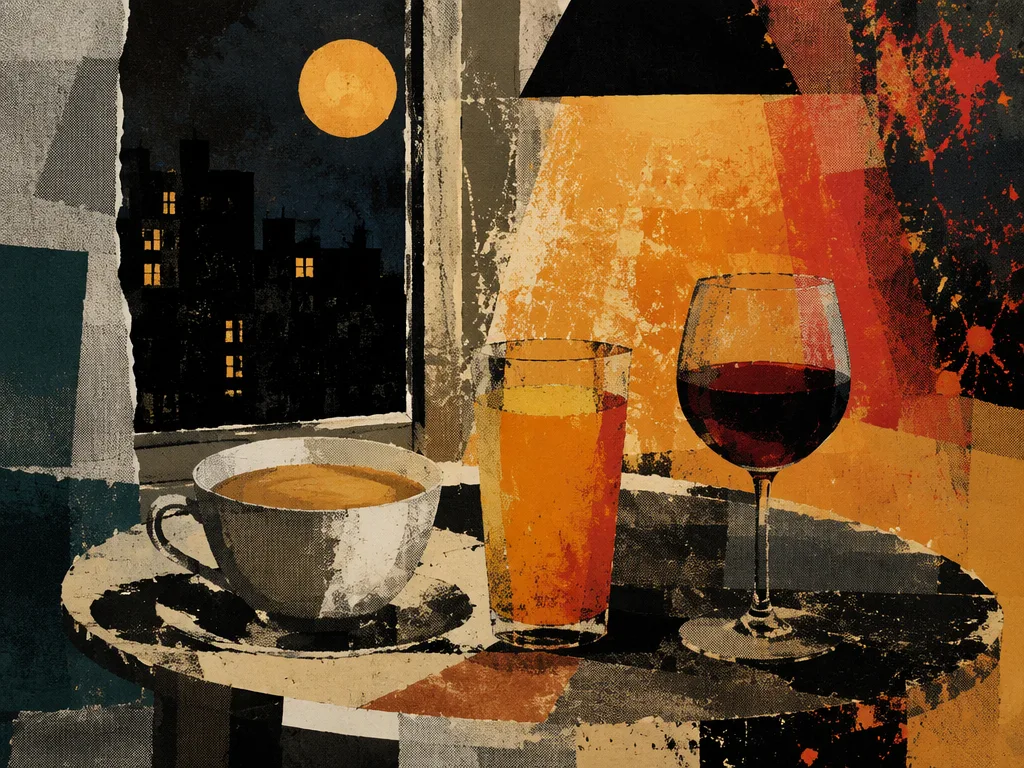
The song follows a day of meals, from morning to evening. In the morning, you have tea or coffee with toast. At noon, you take a break for a sandwich and a soup. In the evening, you eat pasta, fish, or meat, followed by a chocolate dessert. The message is simple: eating together, sharing, and taking your time is important.
Useful words and expressions
- le petit-déjeuner, le déjeuner, le dîner: the three meals in France (also written petit déjeuner without a hyphen). Note: in Belgium, Switzerland, and Quebec, people often say le déjeuner (morning), le dîner (midday), and le souper (evening).
- le matin, le midi, le soir: the times of the day.
- avoir faim / avoir soif: you use avoir, not être: As-tu faim ?
- avoir besoin de: j'ai besoin d'un bon thé.
- une tranche de pain grillé, le beurre, la confiture, un œuf, l'assiette
- un verre de jus d'orange, un bol de soupe chaude: a quantity + de + the food item.
- sucré / salé, lourd / léger: to describe a dish.
- le plat principal, le dessert, la crème au chocolat
- une pause s'impose: a break is necessary.
- avoir les yeux plus gros que le ventre: to want to eat more than you can really eat.
- le soir tombe: night is coming.
Grammar
- Partitive articles for an unspecified quantity: du poisson, de la viande, de l'eau. After a quantity, you only use de: un peu d'eau, un peu de vin.
- Questions with inversion (slightly formal register): As-tu faim ? In everyday spoken French, people usually say Tu as faim ?
- The imperative: Trouvons une table (nous), Bois, sers (tu), Apportez le dessert (vous).
- The infinitive for a general idea: Manger tous ensemble pour tout partager, Prendre notre temps, c'est vraiment divin.
- C'est + adjective: c'est très important, c'est vraiment divin.
Watch out: choices made for the rhyme
Some phrases are worded this way just to rhyme. Do not copy them as they are:
- Un œuf sur l'assiette, la belle aventure rhymes with confiture. Nobody talks about a breakfast egg like this.
- Sans faire aucune fraude is there to rhyme with chaude. It does not really make sense for a meal: you would simply say partager les plats.
- Tant de saveurs à nous faire goûter is an unusual phrasing. People would rather say tant de saveurs à goûter.
- Le soir qui descend is poetic. The common expression is le soir tombe, as in the second verse.
- Ce désir du soir est un vrai gala is a free image chosen to rhyme with chocolat. It is not a French expression.