


What is the song about?
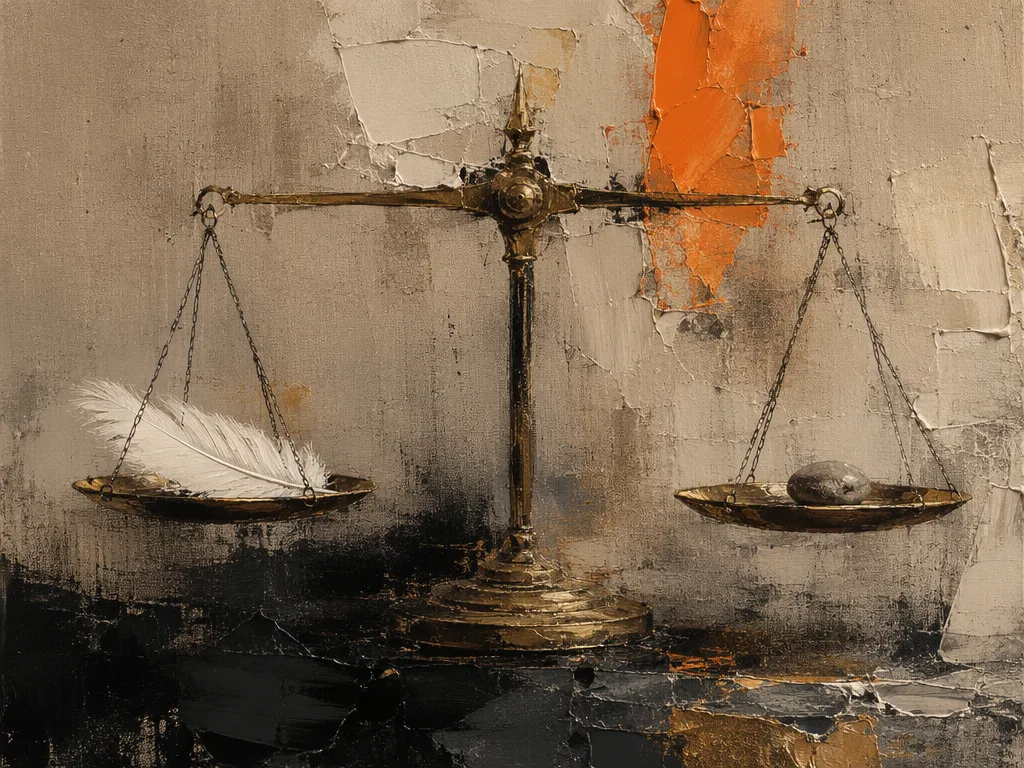
The singer does not yet know if something is going to happen. Verse after verse, he moves along a scale of certainty: first he hesitates (peut-être que oui, ou non), then he guesses (il semble probable, je suppose), and in the end he is sure of himself (j'en suis certain, absolument, évidemment). The chorus sums up this idea: D'un petit doute à une certitude.
Useful words and expressions
Doubt and hypothesis
- Je ne sais pas vraiment: I am not sure.
- peut-être (que): it's possible, but not certain.
- C'est bien possible: here, bien reinforces possible.
- j'hésite un peu: I haven't decided yet.
- Attendons de voir: we will see later what happens.
- en suspens: not yet decided, on hold.
- probablement, il semble probable que…
- Je suppose que…, Je le devine: I think it's true, without being sure of it.
- J'en suis assez sûr: almost certain.
- J'en suis certain, absolument, il n'y a pas d'erreur.
- Sans l'ombre d'un doute: without a shadow of a doubt, a very common expression.
- C'est évident, évidemment, indubitablement (very formal).
- peser le pour et le contre: to compare the advantages and disadvantages before deciding.
- s'appuyer sur quelque chose: to rely on something solid.
- une promesse qui vient du cœur: a sincere promise.
Grammar
- Peut-être que / sûrement que + indicative: Peut-être que demain on verra le jour, sûrement que c'est vrai. With que, the normal word order of the sentence is kept. Without que, at the beginning of a sentence, inversion is used in careful writing: Peut-être viendra-t-il.
- The pronoun en replaces a complement with de: être sûr de quelque chose → j'en suis sûr; penser de quelque chose → qu'en penses-tu ?
- Questions with inversion: qu'en penses-tu ? (= qu'est-ce que tu en penses ?).
- The simple future to talk about the future: on verra, on fera, il fera beau, ce sera.
- The first-person plural imperative: Attendons de voir (= we wait / let's wait, as a suggestion).
- Relative pronoun with a preposition: une vérité sur laquelle on s'appuie (on s'appuie sur cette vérité).
Watch out, do not copy
- Définitivement, il n'y a pas d'erreur: in proper French, définitivement means « for good, in a final way » (il est parti définitivement). The meaning « certainly » comes from the English definitely. To express certainty, say certainement or sans aucun doute instead.
- Sûrement: in everyday language, this word often means « very probably », not « certainly ». In the title, it is therefore weaker than it seems.
- on verra le jour: the expression voir le jour means « to be born, to appear » (ce projet a vu le jour en 2020). Here, it is chosen mainly to rhyme with le tour. Similarly, on fera le tour remains very vague and mainly serves the rhyme.
- Il semble probable qu'il fera beau temps: this is correct, but it is more natural to say il fera beau. The word temps is added to rhyme with charmant.
- Peser le pour et le contre aujourd'hui is a sentence without a conjugated verb, which is normal in a song but not in a text.