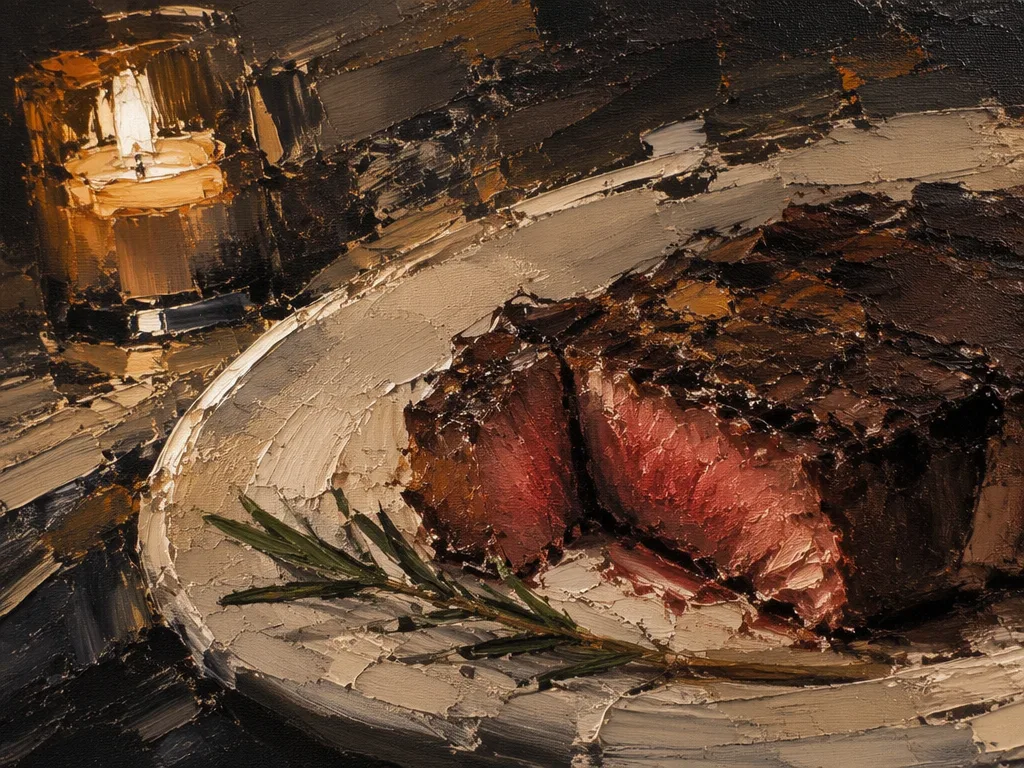
A dinner at a restaurant, from the menu to the bill. Learn how to order food and drinks, ask for the bill using the polite "Lei", and a few idioms about eating.
Manual sync mode
Start playback, then stamp the highlighted next line with Space or the big stamp button.
You can save once all lines are stamped.
0/0
Scusi cameriere, posso vedere il menù?
--:--
Excuse me waiter, can I see the menu?
Abbiamo tanta fame, non ne possiamo più
--:--
We have so much hunger, we can't take it anymore (more naturally: We are so hungry, we can't wait any longer)
Vogliamo cominciare con un bell'antipasto
--:--
We want to start with a nice appetizer
Un'insalata fresca, per aprire il nostro pasto
--:--
A fresh salad, to open our meal (more naturally: to start our meal)
Siamo pronti a ordinare il cibo e da bere
--:--
We are ready to order the food and to drink (more naturally: the food and drinks)
Ci porti i piatti forti, è il nostro piacere
--:--
Bring us the strong dishes, it is our pleasure (here 'piatti forti' is an idiom referring to the house specialties or main courses)
Vogliamo una cena dal sapore eccezionale
--:--
We want a dinner with an exceptional flavor
In questo ristorante, davvero speciale
--:--
In this restaurant, truly special (more naturally: In this truly special restaurant)
Per le bevande, un buon bicchiere di vino
--:--
For the drinks, a good glass of wine
Rosso o bianco, il gusto è sopraffino
--:--
Red or white, the taste is superfine (more naturally: the taste is exquisite)
Dell'acqua frizzante con fetta di limone
--:--
Some sparkling water with a slice of lemon
E magari un caffè, per la digestione
--:--
And maybe a coffee, for the digestion (more naturally: to help with digestion)
Siamo pronti a ordinare il cibo e da bere
--:--
We are ready to order the food and to drink (more naturally: the food and drinks)
Ci porti i piatti forti, è il nostro piacere
--:--
Bring us the strong dishes, it is our pleasure (here 'piatti forti' is an idiom referring to the house specialties or main courses)
Vogliamo una cena dal sapore eccezionale
--:--
We want a dinner with an exceptional flavor
In questo ristorante, davvero speciale
--:--
In this restaurant, truly special (more naturally: In this truly special restaurant)
Per il piatto principale, io prendo la bistecca
--:--
For the main dish, I take the steak (more naturally: For the main course, I'll have the steak)
Cotta al punto giusto, che in bocca non si secca
--:--
Cooked to the right point, that in the mouth does not dry out (more naturally: Cooked just right, so it doesn't feel dry in the mouth)
Il mio amico prova il pollo, ben rosolato
--:--
My friend tries the chicken, well browned (more naturally: My friend is trying the nicely roasted chicken)
Con un purè di patate, un piatto prelibato
--:--
With a puree of potatoes, a delicious dish (more naturally: With mashed potatoes, a delicious dish)
Tutto sembra ottimo, che grande tentazione
--:--
Everything looks great, what a big temptation
Voglio assaggiare tutto, in ogni porzione
--:--
I want to taste everything, in every portion
Mangerò a quattro palmenti, svuoterò il mio piatto
--:--
I will eat with four millstones, I will empty my plate (the idiom 'mangiare a quattro palmenti' means to eat voraciously or stuff one's face)
Ma ho gli occhi più grandi dello stomaco, è un dato di fatto
--:--
But I have the eyes bigger than the stomach, it is a given fact (more naturally: But my eyes are bigger than my stomach, that's a matter of fact)
Siamo pronti a ordinare il cibo e da bere
--:--
We are ready to order the food and to drink (more naturally: the food and drinks)
Ci porti i piatti forti, è il nostro piacere
--:--
Bring us the strong dishes, it is our pleasure (here 'piatti forti' is an idiom referring to the house specialties or main courses)
Vogliamo una cena dal sapore eccezionale
--:--
We want a dinner with an exceptional flavor
In questo ristorante, davvero speciale
--:--
In this restaurant, truly special (more naturally: In this truly special restaurant)
Il conto, per favore...
--:--
The bill, please...
Tenga pure il resto...
--:--
Keep indeed the rest... (more naturally: Please keep the change...)
We have so much hunger, we can't take it anymore (more naturally: We are so hungry, we can't wait any longer)
Vogliamocominciareconunbell'antipasto
We want to start with a nice appetizer
Un'insalatafresca, peraprireilnostropasto
A fresh salad, to open our meal (more naturally: to start our meal)
Siamoprontiaordinareilciboedabere
We are ready to order the food and to drink (more naturally: the food and drinks)
Ciportiipiattiforti, èilnostropiacere
Bring us the strong dishes, it is our pleasure (here 'piatti forti' is an idiom referring to the house specialties or main courses)
Vogliamounacenadalsaporeeccezionale
We want a dinner with an exceptional flavor
Inquestoristorante, davverospeciale
In this restaurant, truly special (more naturally: In this truly special restaurant)
Perlebevande, unbuonbicchieredivino
For the drinks, a good glass of wine
Rossoobianco, ilgustoèsopraffino
Red or white, the taste is superfine (more naturally: the taste is exquisite)
Dell'acquafrizzanteconfettadilimone
Some sparkling water with a slice of lemon
Emagariuncaffè, perladigestione
And maybe a coffee, for the digestion (more naturally: to help with digestion)
Siamoprontiaordinareilciboedabere
We are ready to order the food and to drink (more naturally: the food and drinks)
Ciportiipiattiforti, èilnostropiacere
Bring us the strong dishes, it is our pleasure (here 'piatti forti' is an idiom referring to the house specialties or main courses)
Vogliamounacenadalsaporeeccezionale
We want a dinner with an exceptional flavor
Inquestoristorante, davverospeciale
In this restaurant, truly special (more naturally: In this truly special restaurant)
Perilpiattoprincipale, ioprendolabistecca
For the main dish, I take the steak (more naturally: For the main course, I'll have the steak)
Cottaalpuntogiusto, cheinboccanonsisecca
Cooked to the right point, that in the mouth does not dry out (more naturally: Cooked just right, so it doesn't feel dry in the mouth)
Ilmioamicoprovailpollo, benrosolato
My friend tries the chicken, well browned (more naturally: My friend is trying the nicely roasted chicken)
Conunpurèdipatate, unpiattoprelibato
With a puree of potatoes, a delicious dish (more naturally: With mashed potatoes, a delicious dish)
Tuttosembraottimo, chegrandetentazione
Everything looks great, what a big temptation
Voglioassaggiaretutto, inogniporzione
I want to taste everything, in every portion
Mangeròaquattropalmenti, svuoteròilmiopiatto
I will eat with four millstones, I will empty my plate (the idiom 'mangiare a quattro palmenti' means to eat voraciously or stuff one's face)
Mahogliocchipiùgrandidellostomaco, èundatodifatto
But I have the eyes bigger than the stomach, it is a given fact (more naturally: But my eyes are bigger than my stomach, that's a matter of fact)
Siamoprontiaordinareilciboedabere
We are ready to order the food and to drink (more naturally: the food and drinks)
Ciportiipiattiforti, èilnostropiacere
Bring us the strong dishes, it is our pleasure (here 'piatti forti' is an idiom referring to the house specialties or main courses)
Vogliamounacenadalsaporeeccezionale
We want a dinner with an exceptional flavor
Inquestoristorante, davverospeciale
In this restaurant, truly special (more naturally: In this truly special restaurant)
Ilconto, perfavore...
The bill, please...
Tengapureilresto...
Keep indeed the rest... (more naturally: Please keep the change...)
20+
5+
4
3
2
1
What the song is about
Two hungry friends walk into a restaurant and experience a full dinner: they ask for the menu, choose the starter, drinks, and main course, let themselves be tempted by everything, and finally ask for the bill and leave a tip.
Useful words and expressions
Scusi, posso vedere il menù?: the classic phrase for asking for the menu.
l'antipasto, il piatto principale, le bevande: the parts of a meal.
un bicchiere di vino rosso / bianco, l'acqua frizzante: common drinks at a restaurant.
la bistecca cotta al punto giusto: cooked just right. Rosolato means browned in a pan or in the oven.
il purè di patate: mashed potatoes.
sopraffino, prelibato, eccezionale: adjectives for praising food.
un caffè per la digestione: in Italy, coffee often closes the meal.
Il conto, per favore and Tenga pure il resto: for paying and leaving a tip.
Non ne possiamo più: we can't take it anymore (here, because of hunger).
Mangiare a quattro palmenti: to eat ravenously. It is a playful idiom.
Avere gli occhi più grandi dello stomaco: to order more than you can eat. People also often say gli occhi più grandi della pancia.
È un dato di fatto: it is a sure thing, a fact.
Grammar
The polite Lei: with the waiter, you use the third person: Scusi, Ci porti i piatti, Tenga il resto. These are formal imperatives.
We do not use third-party advertising cookies or cross-site tracking pixels.
We use cookies and similar technologies to keep our app running smoothly, analyze performance, and improve your experience. You can manage your preferences at any time.