


What is the song about?
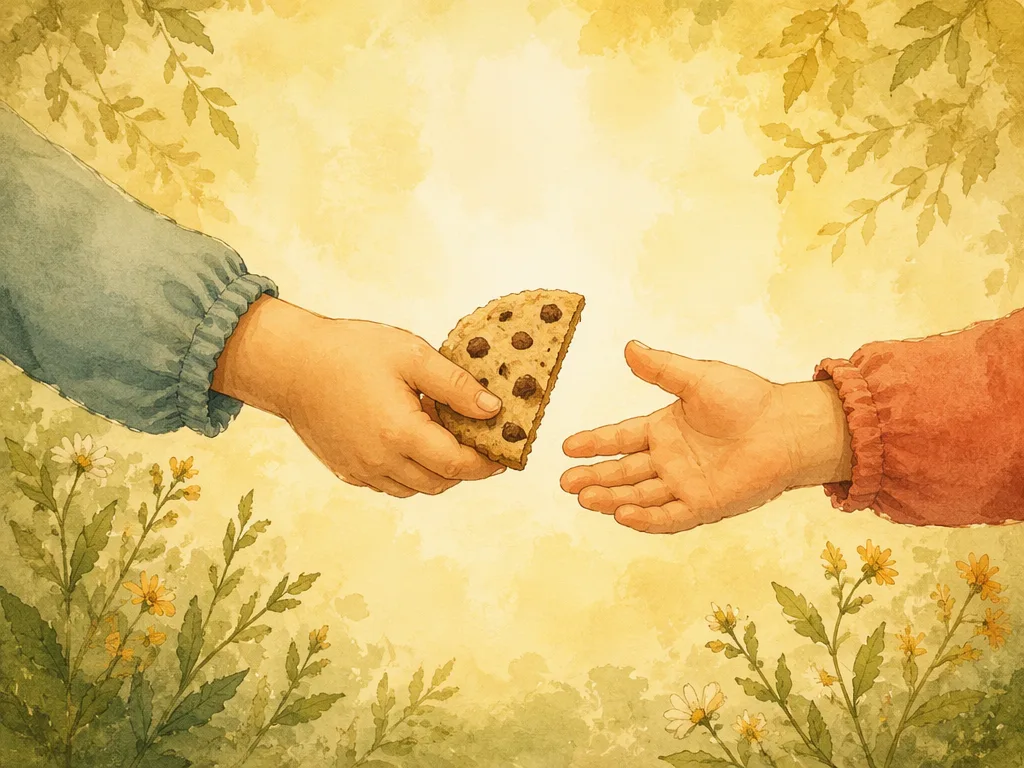
The song introduces three very important little words: s'il te plaît, merci, and pardon. It explains when to use them: to ask for help, to thank someone who gives us something, and to apologize when we have hurt someone or made a mistake. The bridge tells us that after an argument, a simple apology makes friendship stronger.
Useful words and expressions
- S'il te plaît: to ask a friend, a child, or a family member politely. With an adult you don't know or a teacher, you say s'il vous plaît.
- Merci beaucoup: to thank someone very much.
- Pardon / Je suis désolé(e): to apologize. A girl says désolée.
- Peux-tu m'aider ?: to ask for help.
- tendre la main: to help someone, or to offer one's friendship.
- tisser un lien: to build a relationship, to become close.
- passer l'éponge: to forgive and forget an argument.
- se disputer: to disagree and get angry with each other.
- un mensonge: a lie, something that is not true.
- l'humeur: mood, how one feels (in a good or bad mood).
- C'est réglé: it's settled, the problem is solved.
Grammar
- Questions with inversion: Que dois-tu dire ?, Peux-tu m'aider ? The verb goes before the subject and a hyphen is added. In spoken French, people also often say Tu peux m'aider ?
- The imperative: Dis s'il te plaît, dis merci. In the imperative, you say dis without the pronoun tu.
- On meaning nous (we): les mots qu'on dit, quand on fait une faute.
- Il vaut mieux + infinitive: Il vaut beaucoup mieux passer l'éponge = it is a much better idea to forgive.
- Pour que + subjunctive: pour que notre amitié soit plus forte. After pour que, the verb is in the subjunctive (soit, and not est).
- The near future: Une simple excuse va ouvrir la porte (aller + infinitive).
- S'en aller: Le petit problème s'en va = it goes away / disappears.
Watch out for phrasing used for the rhyme
- Tu demandes bien pour faire un sourire: this sentence is a bit unusual, used to rhyme with dire. You would rather say Tu demandes gentiment pour faire sourire.
- Quand quelqu'un te donne: the verb donner normally needs an object. You say Quand quelqu'un te donne quelque chose.
- Si tu fais mal: it is more natural to say si tu fais du mal à quelqu'un or si tu fais une bêtise.
- Ils mettent beaucoup de paix dans le cœur: this is a poetic image, not a common expression.