


What the song is about
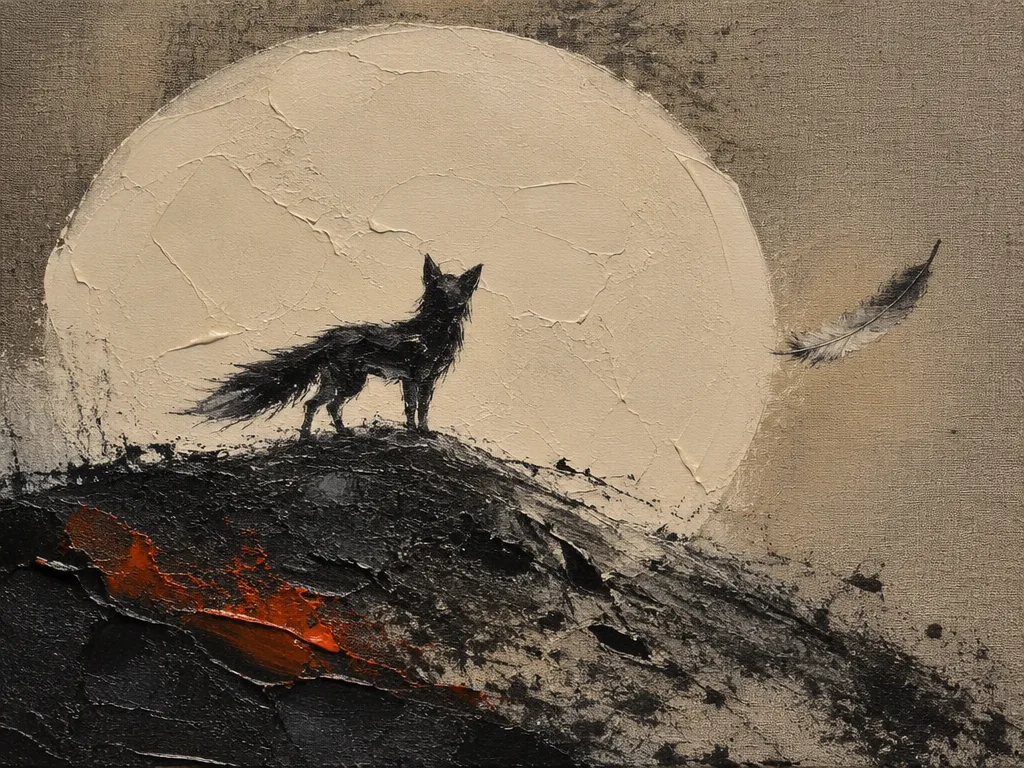
This is a moody version of a traditional English folk song. On a cold night, a fox asks the moon for light because he has a long way to go to reach the town. He comes to a farmer's pen full of ducks and geese and decides to eat a couple of them. He grabs a grey goose by the neck, throws a duck over his back, and runs off while the duck quacks and the birds' legs hang down.
Useful words and expressions
- a chilly night: a cold night. Chilly means unpleasantly cool.
- to pray for the moon to give him light: pray for someone to do something means to ask hard, as if in a prayer, for it to happen.
- many a mile: an old, poetic way to say many miles. Many a is followed by a singular noun: many a time, many a day.
- a pen: a small fenced area where farm animals are kept.
- therein: a formal, old word for in there or in it. You will rarely hear it in everyday speech.
- to grease my chin: an old expression meaning to eat something rich and fatty, so the fat gets on your chin. Here the fox means he will eat the birds.
- to grab someone by the neck: to take hold of them suddenly and roughly at the neck.
- to not mind something: to not be bothered by it. He didn't mind the "quack, quack, quack" means the noise did not worry him.
- dangling down: hanging loosely and swinging.
- quack: the sound a duck makes.
Grammar
- Past simple for storytelling: went out, prayed, ran, came, grabbed, threw. Note the irregular forms: go → went, run → ran, come → came, throw → threw.
- Old "had" + noun: he'd many a mile to go means he had many miles to go. Modern English would say he had many miles to go or he had a long way to go. Do not copy the short form he'd + noun in everyday speech. It sounds old-fashioned.
- Time clauses with before and till: before he reached the town, he ran till he came to the farmer's pen. Till is an informal form of until.
- Future with will: A couple of you will grease my chin is the fox's prediction about what is going to happen.
- A phrase without a verb: And the legs all dangling down has no main verb. It describes a scene, like with the legs all dangling down. This is common in songs and stories, but in a normal sentence you would add with.
Changes for rhyme and rhythm
- town-o, down-o: the extra -o is not a real word ending. It is a traditional folk song filler that adds a beat and helps the rhyme. Do not add -o to words when you speak.
- therein: this formal word is used mainly because it rhymes (loosely) with pen and chin. In normal English you would say where the ducks and geese were kept.
- neck / back: these words do not fully rhyme. Songs often use near rhymes like this.