


What is the song about?
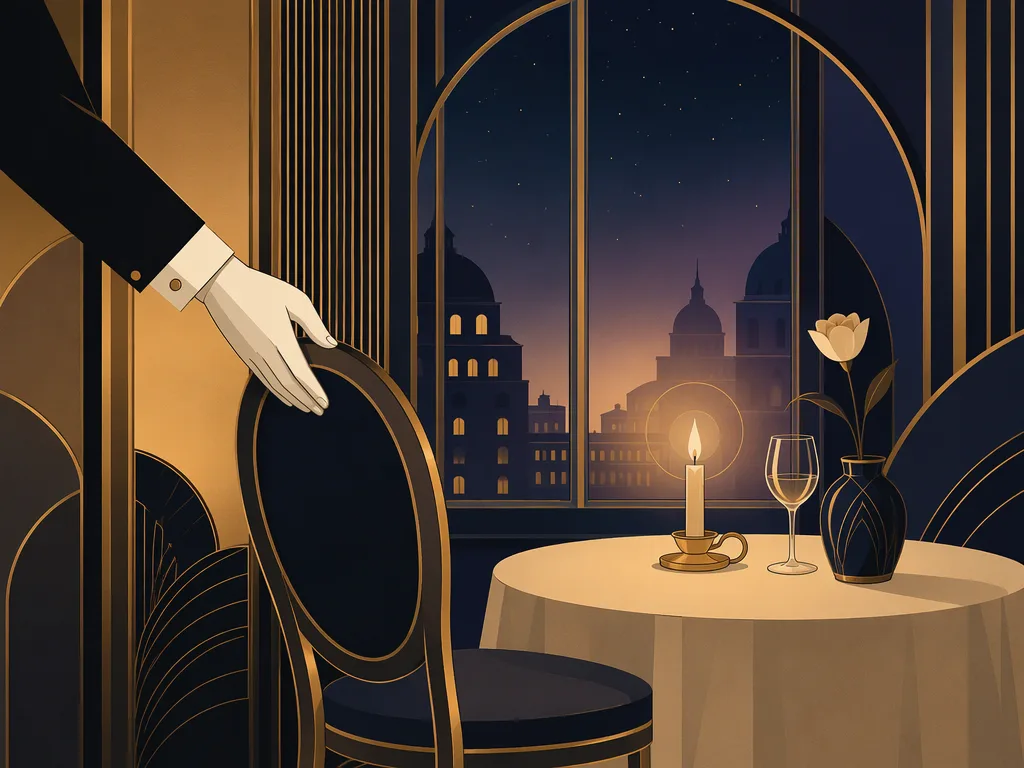
A man calls a restaurant to book a table for two under the name Dupont. When evening comes, he arrives with his partner, confirms the reservation, asks for the menu, and looks forward to the meal. The song thus follows the steps of a night out at a restaurant, from the phone call right up to the « merci beaucoup ».
Useful words and expressions
- faire une réservation / réserver: to ask for a seat or a table in advance.
- J'appelle pour…: a handy phrase to explain the reason for a call.
- au nom de Dupont: you give your last name for the reservation.
- une table pour deux, s'il vous plaît: the key phrase for asking for a table.
- près de la fenêtre: to specify where you want to sit.
- Nous venons d'arriver: venir de + infinitive expresses an action that has just happened.
- J'ai appelé plus tôt: to remind them that you have already booked.
- la carte: the list of dishes at a restaurant (and not the menu, which in French is often a fixed-price set meal).
- les plats: the different dishes that you can order.
- avoir l'air parfait: to seem perfect.
- mettre l'eau à la bouche: to make your mouth water (to make you really want to eat).
- l'ambiance: the atmosphere of a place.
Grammar
- The present tense to describe the scene: j'appelle, nous voulons, la soirée commence.
- The passé composé: j'ai appelé, for a completed action.
- The recent past with venir de: nous venons d'arriver.
- The polite imperative: Donnez-nous la carte. At a restaurant, people more often say Pourriez-vous nous apporter la carte ?
- The conditional to soften a wish: c'est ce qui nous plairait.
Watch out for the phrasing in the song
For the sake of the rhyme, the lyrics take a few liberties that are best not copied:
- « Nous voulons passer un très bon repas »: you do not say passer un repas. Instead, you say faire un bon repas or passer une bonne soirée. The word repas was chosen to rhyme with cela.
- « c'est ce qu'il nous plairait »: the standard form is c'est ce qui nous plairait. The phrasing with qu'il was chosen for the rhythm.
- « le temps nous pousse »: a poetic and somewhat vague image, used mainly to rhyme with douce. It is not a common expression.
- « Ça me met vraiment l'eau à la bouche, j'espère »: the final j'espère is added to rhyme with lumière and does not make much sense here. Simply say Ça me met l'eau à la bouche.
- « Avec précision » after the time is not natural. You would say à huit heures précises instead.