


What it's about
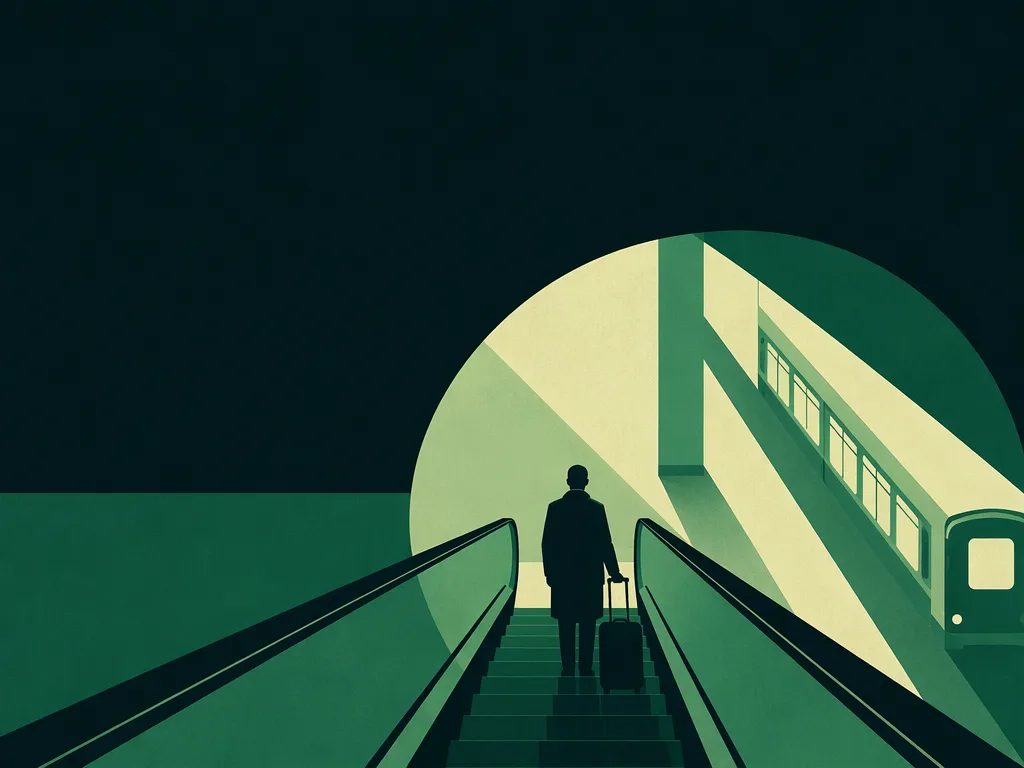
A person is at a train station at night. They look at the monitor with the schedules, check their destination and departure time, and hear over the loudspeaker that the train is going to arrive. There is a short fifteen-minute delay (retraso), but they don't mind: they buy a coffee and wait. In the end, they board the car, find their seat, and the train leaves the city. The chorus talks about track number five (vía número cinco) and a short transfer (transbordo, changing trains) that they have to make.
Useful vocabulary
- la estación, la vía, el vagón, los rieles: parts of the train world (the station, the track, the train car, the rails)
- el horario, la hora de salida, el destino: what you read on the board (schedule, departure time, destination)
- el boleto: ticket; this is used mainly in Latin America, while in Spain people say el billete
- el equipaje: luggage (suitcases and bags)
- el altavoz anuncia: the loudspeaker announces (the message over the PA system)
- un leve retraso: a slight delay (a small delay)
- el transbordo: transfer (changing from one train to another)
- la próxima parada: the next stop (the next station)
- subirse al vagón: to board the car (getting on the train)
- al anochecer: at nightfall (when night begins)
- ir sobre rieles: an expression that literally means the train is running on the rails, and figuratively that everything is going smoothly, without problems
Grammar
- Ir a + infinitive for the near future: el tren va a llegar, ya pronto va a parar, me voy a comprar un café.
- Obligation: tengo un transbordo que debo hacer, tuvimos que esperar (tener que + infinitive).
- Gerund: estoy… mirando el monitor, bajando la escalera.
- Present tense to tell a story: almost the entire song is narrated in the present tense (reviso, tomo, me subo).
- Preterite (simple past) in the bridge: tuvimos, se sintió, comenzó.
- Se + verb without a specific person: el motor ya se oye, las puertas se abren, el retraso se olvida.
- Hacer que + subjunctive: hace que yo me apoye.
Note: changes made for the rhyme
- en un verde color: the normal phrasing is de color verde; the adjective is placed before the noun to rhyme with monitor.
- Un buen café caliente me voy a comprar: the word order is inverted to rhyme with esperar; the usual order is voy a comprarme un buen café caliente.
- hace que yo me apoye: the meaning of this phrase is unclear (lean on what?) and the pronoun yo is unnecessary; it was chosen to rhyme with oye.
- cruzamos los niveles: a vague expression included to rhyme with rieles; it is not a usual way to talk about a train journey.
- el vagón se cierra: normally you would say las puertas se cierran.
- la tabla parpadea: for the schedule board, people usually say la pantalla or el panel.