


Meeting Someone New

Public
•
November 9, 2026
Generating pronunciation audio...
This might take a moment. Feel free to explore other parts of the set in the meantime.
0
Listen & review
Add at least 2 Voca cards to unlock Listen & review and practice with audio.
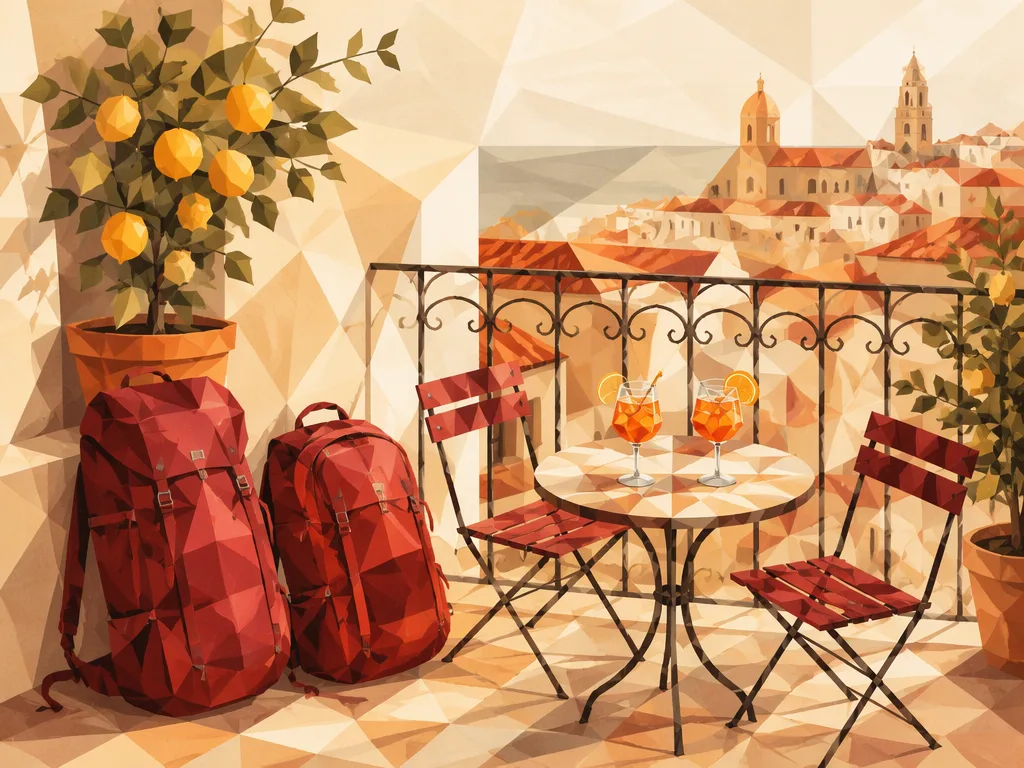
First conversations in Italian when meeting people your own age at a language course, a hostel, or a party, alongside a few polite phrases for a host or an older neighbor.
- Greeting someone and asking their name with informal tu and polite Lei
- Saying where you come from and where you live with essere di, venire da, abitare, and vivere
- Talking about work, studies, why you are in Italy, and how much Italian you speak
Voca cards
1.
Ciao!
Hi!, Hello!
Ciao! Sei qui anche tu per la festa di Giulia?
Hi! Are you here for Giulia's party too?
Used for both 'hello' and 'goodbye' with friends, people your age, and children.
2.
Buongiorno.
Good morning., Hello.
Buongiorno, signora Conti, sono il nuovo vicino.
Good morning, Mrs. Conti, I'm the new neighbor.
The standard daytime greeting, especially when being polite with a host, a neighbor, or someone older.
3.
Come ti chiami?
What's your name?
Come ti chiami? Io sono Marco.
What's your name? I'm Marco.
The informal way to ask someone's name using 'tu'. You can answer with either 'Mi chiamo...' or simply 'Sono...'.
4.
chiamarsi
→ chiamare
to be called
Mi chiamo Sara, e tu?
My name is Sara, what about you?
Literally 'to call oneself': 'mi chiamo' (I'm called), 'ti chiami' (you're called), 'si chiama' (he/she is called, or polite 'you').
5.
Come si chiama?
What is your name?
Scusi, Lei come si chiama?
Excuse me, what is your name?
The polite question used with 'Lei' for older people, hosts, or strangers in formal situations.
6.
Piacere.
Nice to meet you.
Piacere, io sono Lorenzo!
Nice to meet you, I'm Lorenzo!
Short for 'Piacere di conoscerti' ('Nice to meet you'). Unlike in English, Italians say 'Piacere' rather than 'How are you?' when meeting for the first time.
7.
presentare
to introduce
Ti presento Luca, un mio amico di Bologna.
Let me introduce you to Luca, a friend of mine from Bologna.
With 'Lei', say 'Le presento...' to introduce someone politely.
8.
Di dove sei?
Where are you from?
Di dove sei? Sei di Roma?
Where are you from? Are you from Rome?
To answer with your hometown, use 'Sono di' plus the city: 'Sono di Londra'. With 'Lei', the question is 'Di dov'è?'.
9.
venire
to come
Vengo dal Brasile, ma la mia famiglia è di origine italiana.
I come from Brazil, but my family is of Italian origin.
When naming the place you come from with 'venire', use 'da': 'Vengo da Madrid'.
10.
abitare
to live
Dove abiti adesso? Io abito qui vicino, in via Verdi.
Where do you live now? I live nearby, on Via Verdi.
11.
vivere
to live
Vivo a Milano da un anno, ma sono di Napoli.
I've been living in Milan for a year, but I'm from Naples.
'Vivere' and 'abitare' both mean 'to live' in a place. Use 'a' before a city ('a Milano') and 'in' before a country ('in Italia').
12.
il vicino
neighbor
Buonasera, sono il nuovo vicino del secondo piano.
Good evening, I'm the new neighbor on the second floor.
For a female neighbor, use 'la vicina'.
13.
in vacanza
on vacation
Sei in Italia in vacanza o per studio?
Are you in Italy on vacation or to study?
14.
Che lavoro fai?
What do you do?, What do you do for a living?
Che lavoro fai? Lavori qui a Firenze?
What do you do for a living? Do you work here in Florence?
Literally 'What work do you do?'. You will also hear 'Cosa fai nella vita?'.
15.
lavorare
to work
Lavoro in un ufficio in centro, e tu?
I work in an office downtown, what about you?
16.
studiare
to study
Studio architettura all'università di Venezia.
I'm studying architecture at the University of Venice.
17.
il corso
course, class
Faccio un corso di italiano tre volte alla settimana.
I'm taking an Italian course three times a week.
18.
parlare
to speak
Parli già bene l'italiano! Da quanto tempo studi?
You already speak Italian well! How long have you been studying?
19.
un po'
a little, a bit
Parlo solo un po' d'italiano, ma capisco quasi tutto.
I only speak a little Italian, but I understand almost everything.
Short for 'un poco' ('a little'). Before a noun, add 'di': 'un po' d'italiano'.
20.
l'amico
friend
Sono in ostello con due amici, ti va di uscire con noi stasera?
I'm staying at a hostel with two friends, do you want to go out with us tonight?
The feminine is 'l'amica', and the plurals are 'gli amici' and 'le amiche'.
21.
A presto!
See you soon!
È stato un piacere conoscerti, a presto!
It was nice meeting you, see you soon!
A warm goodbye when you hope or expect to see the person again soon.
22.
Arrivederci.
Goodbye.
Grazie di tutto, signor Conti, arrivederci!
Thank you for everything, Mr. Conti, goodbye!
The standard polite 'goodbye', used when leaving a host, an older neighbor, or a shop.