


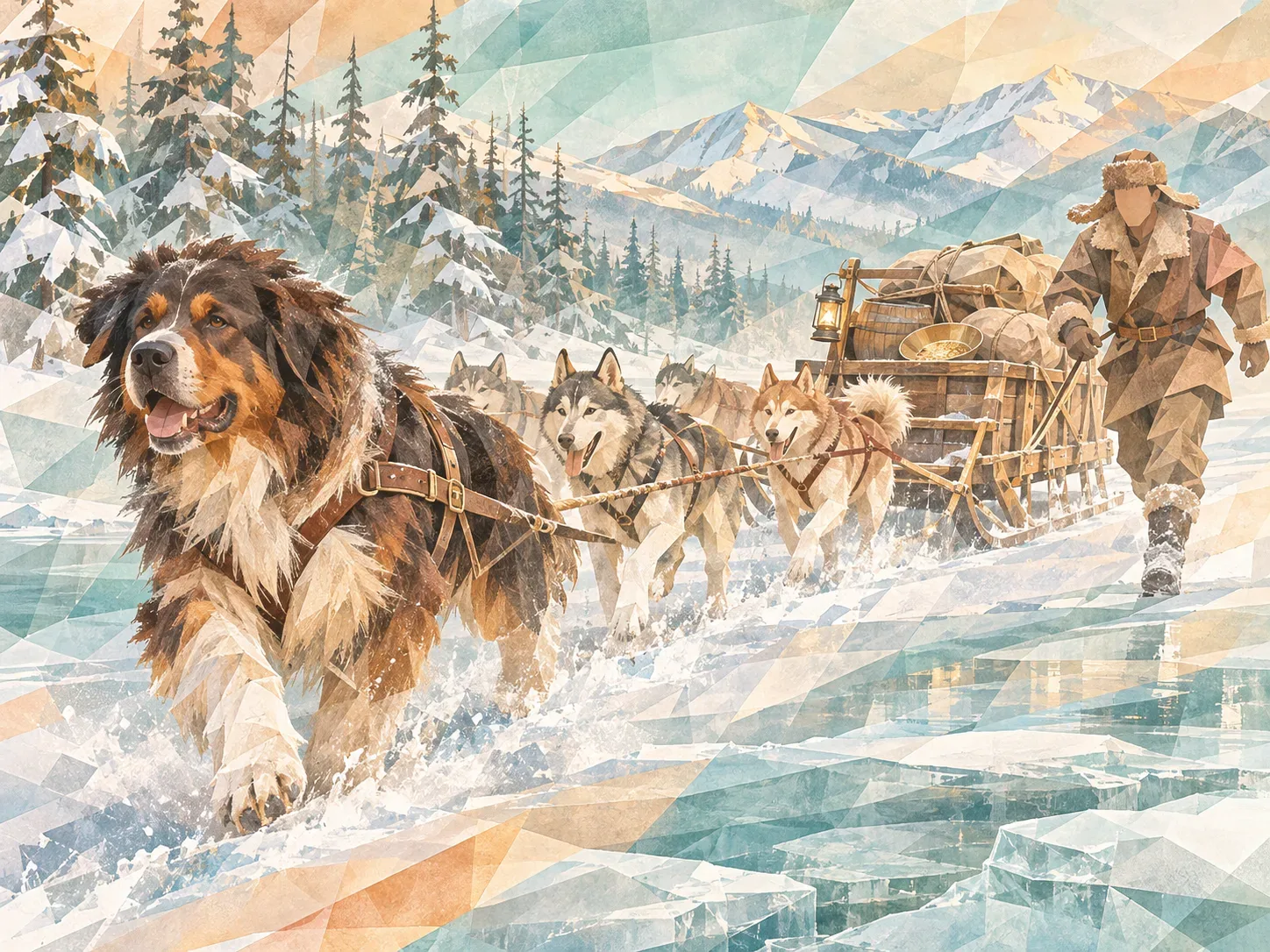
Late the next morning, Buck led the long team up the street. There was no energy in him or his mates. Four times he had covered the long trail between Skagway and Dawson, and facing it again while dead tired made him bitter. Neither the frightened new dogs nor the tired huskies trusted their new masters.
Buck sensed they could not depend on these two men and the woman. As the days went by, it became clear the three could not learn. They had no order and no plan. It took them half the night to put up a messy camp and half the morning to pack the sled, and they packed it so poorly that they spent the rest of the day stopping to fix the load. Some days they made less than ten miles; some days they never moved at all. They never covered even half the daily distance the men had written in their food plan.
The dog food soon ran short, because they gave the dogs far too much at first. The dogs from the South had huge appetites, and when the tired huskies pulled weakly, Hal doubled their normal meals. When he finally refused to give more, Mercedes begged with tears in her eyes, and then stole fish from the sacks behind his back to feed the dogs. Yet Buck and the huskies needed rest, not extra food, and the heavy sled drained their strength.
Then hunger came. Hal woke up one day to find half the dog food gone while only a quarter of the trip lay behind them, and no more food could be bought anywhere along the trail. So he cut their meals below a normal share and tried to drive them faster. Still, because the three people could not wake early or load the sled quickly, they only starved the dogs more without covering any more miles.
Dub was the first to go. Though a clumsy thief, he had always been a faithful worker. Without rest, his hurt shoulder grew worse until Hal shot him with the big revolver. People in the North say a dog from the South starves on a husky's normal meal, so on half that food the six new dogs starved to death one by one. The Newfoundland died first, then the three hunting dogs, and finally the two mixed-breeds.
By now, all the polite ways of the South had left the three travelers. Cold, stiff, and aching, they never gained the quiet patience that comes to tough trail men. Instead, they turned sharp and bitter, always ready to quarrel. Charles and Hal argued constantly over who did more work while Mercedes sided first with one and then with the other. A small argument over who should chop firewood soon dragged in their whole family—parents, aunts, uncles, and cousins thousands of miles away, even dead ones. What Hal thought about art, or what Charles's sister liked to gossip about, had nothing to do with making a fire. Yet they shouted endlessly while the fire stayed unbuilt, the camp half-pitched, and the dogs unfed.
Mercedes had her own complaint. She had always been pretty, soft, and waited on by men, and now her husband and brother were rough and worn out. She stopped caring about the dogs and insisted on riding on the sled, adding 120 pounds to the load. She rode for days until the starving animals dropped in the snow. Hal and Charles begged her to walk while she cried to heaven about how cruel they were. Once they lifted her off by force. She let her legs go limp like a spoiled child and sat down right on the trail. After driving three miles without her, they had to unload the sled, go back for her, and lift her on again.
In their own misery, they stopped caring about the dogs' pain. Hal believed a person had to get tough, and since he could not make his sister or Charles tough, he beat the dogs with a club instead. At Five Fingers, the dog food gave out completely, and a toothless old woman traded them a few pounds of frozen horse skin for Hal's revolver. The skin had come from starved horses months earlier. Frozen, it was as hard as iron, and in the dogs' stomachs it turned into thin, hairy strips that gave almost no nourishment.
Through it all, Buck stumbled forward at the head of the team as if in a nightmare. He pulled when he could, and when he fell, blows from the whip or club drove him up again. His thick, shiny coat hung dull and dirty, matted with dried blood where Hal's club had bruised him. His muscles had shrunk to thin cords, and every rib and bone stood out clearly under his loose skin. It was heartbreaking, but Buck's heart could not be broken. The man in the red sweater had proved that.
His mates were walking skeletons too—seven dogs in all. Too weak to feel much pain, they saw and heard everything as if from far away. At every stop they dropped down like dead dogs, and when the club struck, a faint spark flickered up and carried them forward again.
One day friendly Billee fell and could not rise. Having traded away his revolver, Hal killed Billee with an axe as he lay in the harness, cut him loose, and dragged him aside. Buck and the others watched and knew death was close behind them. The next day Koona died. Only five were left: Joe, too weak to be angry; Pike, limping and barely awake; one-eyed Sol-leks, still loyal though nearly empty of strength; Teek, beaten harder because he was fresher; and Buck, leading half blind with weakness and keeping the trail by the dim feel of his paws.
Around them, spring was waking across the land, though neither dogs nor humans noticed. The sun rose by three in the morning, and twilight lasted until nine at night. Warm sunshine filled the long days, and green buds opened on the trees and bushes. Crickets sang at night, birds filled the woods with song, and wild geese flew north overhead. Water trickled down every hill. Deep under the ice, the Yukon pushed to break free while the sun melted it from above, opening cracks where sheets of ice dropped into the water. Under the blazing sun and gentle breeze, like ghosts walking toward death, staggered the two men, the woman, and the huskies.