


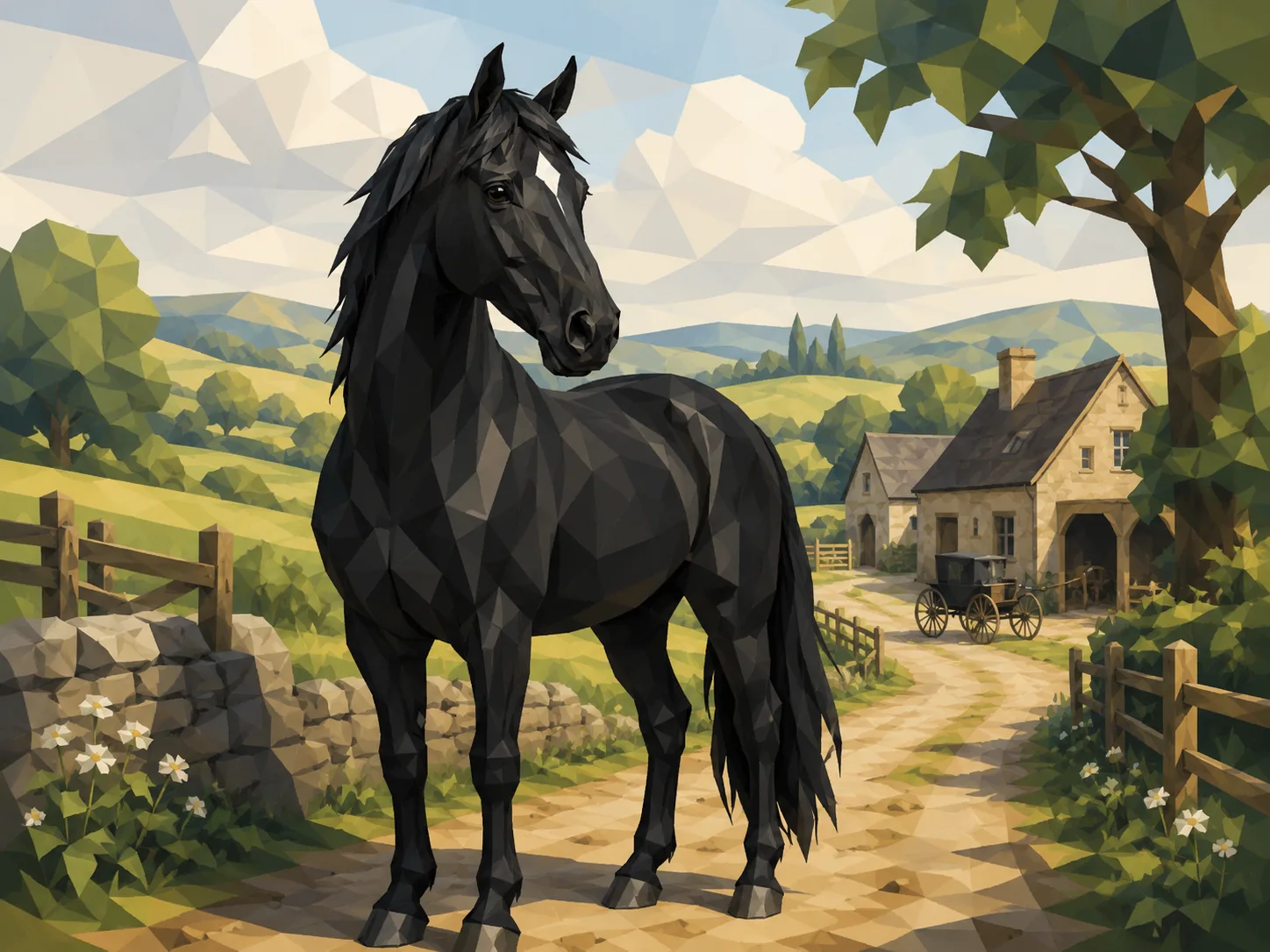
Joe learned quickly, and John began to trust him with many things. One morning, when John was out, the master needed a note taken to a house about three miles away, and he told Joe to saddle me and ride steadily.
On the way home we came to the brickfield. There we saw a cart full of bricks, with its wheels stuck in deep mud. The two horses were pulling with all their strength, but they could not move it, and the carter was shouting and whipping them without mercy.
“Stop!” said Joe. “Don’t whip the horses like that. The wheels are stuck. I’ll help you to make the cart lighter.”
“Mind your own business, you cheeky young rascal, and I’ll mind mine!” The man had been drinking, and he went on with the whip.
Joe turned my head, and we galloped off to the house of Mr Clay, the master brickmaker. We were both too angry to go slowly.
“There’s a man in your brickyard whipping two horses to death, sir,” said Joe, his voice shaking. “I told him to stop and he wouldn’t. Please go!”
“Thank you, my lad,” said Mr Clay, running in for his hat. “If I take the man to court, will you tell the magistrate what you saw?”
“That I will, and gladly,” said Joe.
At home he told John everything.
“You did right, my boy,” said John. “Many people would have ridden by and said it was not their business. But when they see cruelty, it is everybody’s business to stop it.”
That same day the carter was brought before the master, who was a magistrate, and Joe was called to tell what he had seen. His face went red and his eyes shone. When he came back, he gave me a friendly slap. “We won’t let such things be done, will we, old fellow?” He had told his story so clearly that the carter had to go to trial, and he might be sent to prison for two or three months.
It was wonderful how Joe changed. John laughed and said he had grown an inch taller that week. He was as kind and gentle as before, but now he did everything with more purpose, as if he had grown from a boy into a man all at once.