


Explaining Rough Amounts and Shares

Публичен
•
26 октомври 2026 г.
Генерира се аудио за произношение...
Може да отнеме малко. Междувременно разгледайте и останалите части на сета.
0
Слушане и преговор
Добавете поне 2 Voca карти, за да отключите „Слушане и преговор“ и да се упражнявате с аудио.
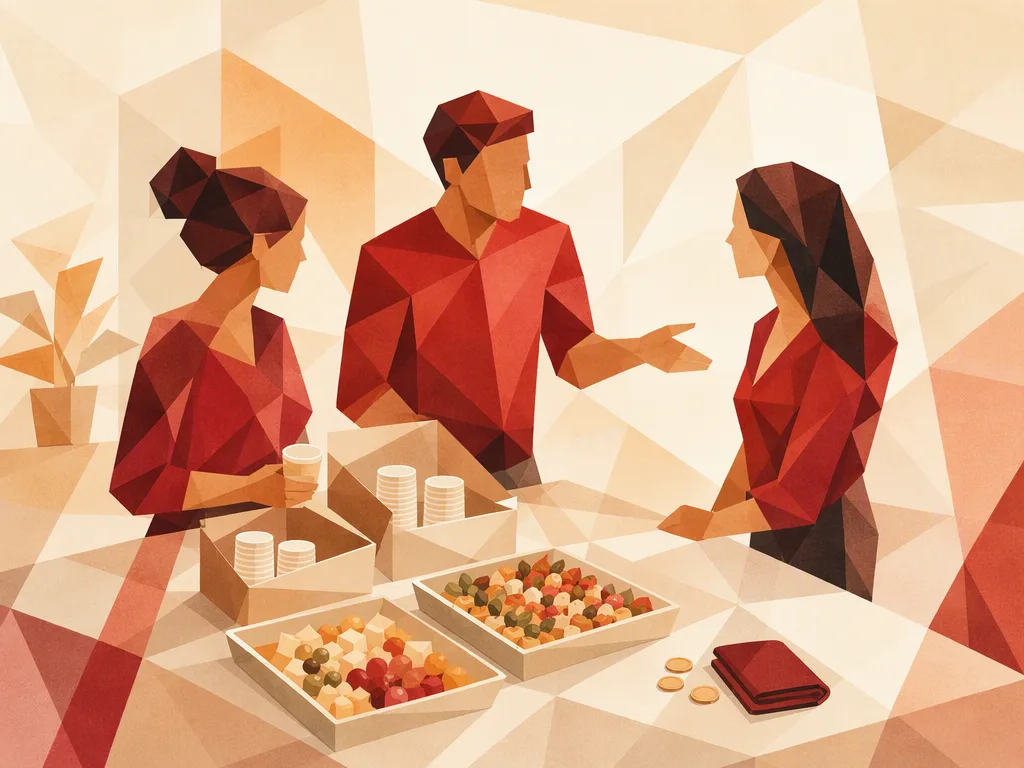
Everyday Spanish phrases describe rough costs, quantities and shares. A small event connects conversations with a coworker and a customer. The cards use chunks for amounts just below or above a figure, fractions and comparisons, with tú and usted.
Картички Voca
1.
más o menos
more or less, roughly, about
Ana, el almuerzo cuesta más o menos lo que pagamos la última vez.
Ana, lunch costs about as much as we paid last time.
'Más o menos' can go before or after the amount. It sounds natural in everyday conversation.
2.
unos cien pesos
about a hundred pesos
Señora, el envío le cuesta unos cien pesos.
Ma'am, shipping will cost you about a hundred pesos.
'Unos' agrees with the following noun; use 'unas' with a feminine noun.
3.
un par de cajas
a couple of boxes
Ana, necesito un par de cajas para llevar los vasos.
Ana, I need a couple of boxes to carry the glasses.
'Un par de' is informal; it can mean exactly two or a small, approximate number.
4.
unas cuantas cajas
a few boxes
Ana, tengo unas cuantas cajas vacías para las bebidas.
Ana, I have a few empty boxes for the drinks.
'Cuantas' agrees with the noun; with masculine nouns, use 'unos cuantos'.
5.
alrededor de veinte personas
around twenty people
Señora, esperamos alrededor de veinte personas en su reunión.
Ma'am, we're expecting around twenty people at your gathering.
6.
casi cien pesos
almost a hundred pesos
Ana, ya gasté casi cien pesos en vasos.
Ana, I've already spent almost a hundred pesos on glasses.
'Casi' places the amount below the figure, not above it.
7.
poco más de cien pesos
a little over a hundred pesos
Señora, las bebidas le van a costar poco más de cien pesos.
Ma'am, the drinks will cost you a little over a hundred pesos.
Keep 'de' before the amount after 'poco más'.
8.
cerca de la mitad
close to half, about half
Señora, ya preparé cerca de la mitad de los pedidos.
Ma'am, I've already prepared close to half of the orders.
'Cerca de' does not tell you whether the amount is slightly higher or lower.
9.
poco menos de la mitad
a little less than half, just under half
Ana, usamos poco menos de la mitad de los vasos que trajiste.
Ana, we used just under half of the glasses you brought.
'Poco' stays singular here, even when the things being counted are plural.
10.
poco más de la mitad
a little more than half, just over half
Ana, tú pagaste poco más de la mitad del total.
Ana, you paid just over half of the total.
11.
una buena parte
a good portion, a sizable share
Ana, ya guardé una buena parte de las bebidas en tu caja.
Ana, I've already put a good portion of the drinks in your box.
This need not be more than half; the speaker treats the share as substantial.
12.
la mayor parte
most, the largest share
Ana, la mayor parte del dinero se fue en comida.
Ana, most of the money went toward food.
13.
la gran mayoría
the vast majority
Señora, la gran mayoría de sus invitados ya llegó.
Ma'am, the vast majority of your guests have already arrived.
'La gran mayoría' is for countable groups, not amounts such as water or money.
14.
casi todo
almost all, nearly everything
Ana, ya usamos casi todo el hielo que trajiste.
Ana, we've already used almost all the ice you brought.
'Todo' changes to 'toda', 'todos' or 'todas' when it refers to a specific noun.
15.
alrededor de una tercera parte
about a third, roughly one-third
Señora, todavía nos queda alrededor de una tercera parte de la comida.
Ma'am, we still have about a third of the food left.
The fraction stays feminine as 'una tercera parte', even when the following noun is masculine.
16.
menos de una cuarta parte
less than a quarter
Ana, usamos menos de una cuarta parte de las servilletas.
Ana, we used less than a quarter of the napkins.
17.
apenas una mínima parte
only a tiny fraction
Ana, los vasos representan apenas una mínima parte del gasto total.
Ana, the glasses account for only a tiny fraction of the total cost.
'Apenas' adds emphasis; the speaker presents the share as surprisingly small.
18.
casi el doble
almost double, nearly twice as much
Señora, usted necesita casi el doble de mesas que la última vez.
Ma'am, you need almost twice as many tables as last time.
'Casi' rules out a value above double, unlike 'alrededor del doble'.
19.
algo más del doble
a little more than double, slightly more than twice as much
Ana, hoy compré algo más del doble de pan que ayer.
Ana, today I bought a little more than twice as much bread as yesterday.
'Del' combines 'de' and 'el'; do not say 'de el doble'.
20.
aproximadamente el triple
approximately triple, about three times as much
Ana, hoy gasté aproximadamente el triple que ayer en bebidas.
Ana, today I spent about three times as much on drinks as I did yesterday.
The reference amount can be left unstated when both people already know it.
21.
en partes más o menos iguales
in roughly equal shares
Ana, tú y yo pagamos el hielo en partes más o menos iguales.
Ana, you and I split the cost of the ice roughly equally.
This describes how a whole is divided, not a comparison with a previous amount.
22.
en una proporción similar
in a similar proportion, in similar amounts relative to each other
Señora, en ambas mesas repartí pan y queso en una proporción similar.
Ma'am, I put out bread and cheese in similar proportions on both tables.
Use this when comparing the balance between things, not just their total amounts.