


Theme & Story
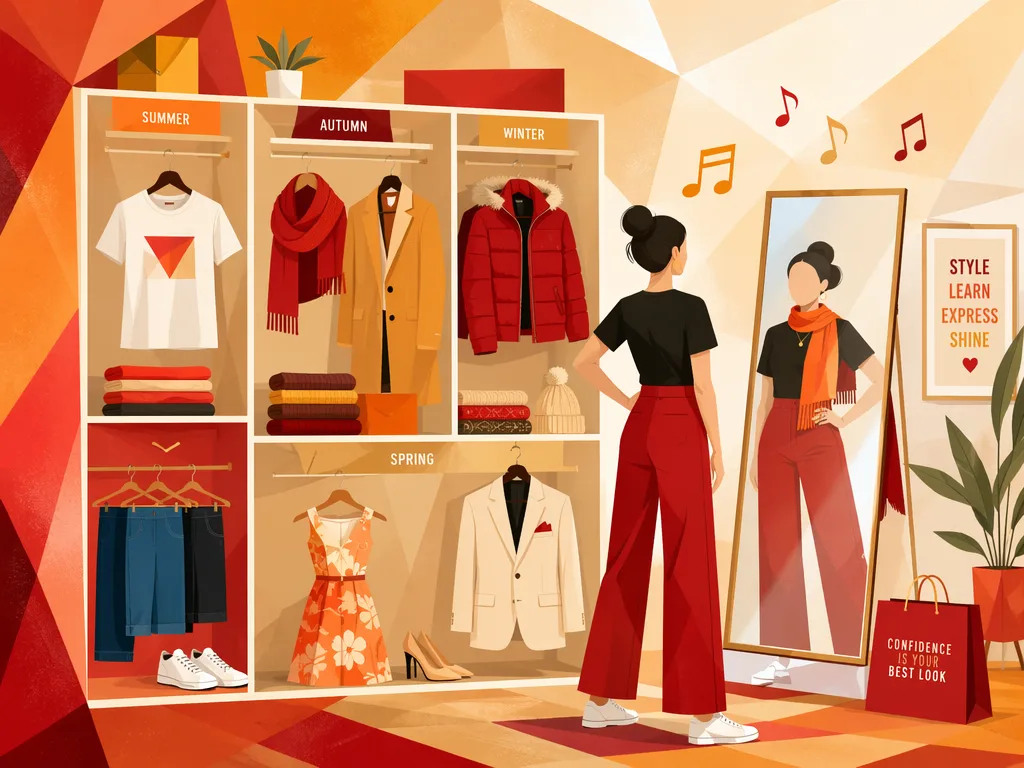
“Dress to Impress (The Wardrobe Groove)” is a cheerful, practical song about choosing clothes and getting dressed. The story begins with opening a wardrobe and deciding what to wear, then moves step by step through everyday clothing: underwear, T-shirts, trousers, jeans, socks, shoes, belts, and sneakers. Later, the song introduces seasonal clothes for winter and summer, and finally more formal outfits for a special evening.
For language learners, this song is especially useful because it teaches clothing vocabulary in a natural order: from basic items to accessories, from casual wear to elegant fashion, and from warm-weather to cold-weather clothing.
Metaphors & Meaning
The song is mostly literal and educational, but it includes a few playful expressions:
- “Dress to impress” means to wear nice clothes so that other people notice you positively. It is a common English phrase connected to confidence, style, and presentation.
- “Let the music play” gives the act of getting dressed a fun, dance-like feeling. It suggests that fashion can be joyful and creative.
- “Looking so sharp” means looking very stylish, neat, or elegant. It does not mean physically sharp like a knife.
- “Reaching for the sky” suggests confidence, ambition, and feeling great about yourself.
- “From your head down to your toes” means your whole body or complete outfit.
- “Fashion is fun, it’s a matter of taste” means style is personal. Different people like different clothes, and that is okay.
- wardrobe: a closet or piece of furniture where clothes are kept.
- fit: to be the right size for your body.
- loose / tight: too big and relaxed / too small and close to the body.
- underwear: clothes worn under outer clothes.
- trousers: pants; more common in British English.
- jeans: trousers made of denim.
- sneakers: casual sports shoes; common in American English.
- belt: worn around the waist to hold trousers up or as fashion.
- scarf: worn around the neck, often for warmth.
- coat: outer clothing for cold weather.
- gloves: clothing for your hands.
- boots: strong shoes that cover the ankle or more.
- shorts: short trousers for warm weather.
- skirt: clothing worn from the waist down, not divided into legs.
- dress: one-piece clothing, often associated with formal or feminine style.
- suit: formal jacket and trousers or skirt, often worn for business or elegant events.
- collar: the part of a shirt around the neck.
- tie: a long piece of cloth worn around the neck with formal clothes.
- lace: delicate decorative fabric.
- “put on”: to dress yourself in something. Example: “Put on your coat.”
- “take off”: to remove clothing. Example: “Take off your shoes.”
- “try it on”: to put on clothing to see if it fits or looks good.
- “for size”: to check whether something fits correctly.
- “Does it match?”: Are the colors or styles good together?
- “Does it suit you?”: Does it look good on you or fit your personality/body/style?
- “shopping sack”: a shopping bag; “sack” can sound casual or old-fashioned depending on context.
- “you can never lose”: here it means sneakers are always a good choice.
- Imperatives: The song uses many command forms, which are common in instructions and songs: “Open the wardrobe,” “Put on your socks,” “Check the mirror,” “Fold your clothes.” In English, imperatives usually start with the base verb and do not need a subject.
- Questions for checking: Lines like “Does it match?” and “Does it suit you well?” use the auxiliary verb does because the subject is it. This is a useful pattern for everyday English.
- Phrasal verbs: The song teaches important clothing phrasal verbs: put on, take off, try on, button up, and zip up. These are very common in spoken English.
- Adjective pairs: “Not too loose, and not too tight” shows a balanced structure. The phrase not too + adjective means the amount is acceptable or comfortable.
- Seasonal contrast: “When the winter comes...” and “But in the summer heat...” show how English can organize ideas by time and contrast. But introduces a change from winter clothes to summer clothes.
- Ellipsis in lyrics: “Size medium or large, does it fit alright?” is shortened and conversational. A fuller sentence might be: “Is it size medium or large, and does it fit alright?” Songs often remove words to keep rhythm.
There is also a small cultural idea in the lyrics: checking yourself in the mirror before going out. In many English-speaking contexts, this is associated with making sure your outfit matches, fits well, and suits the occasion.
Vocabulary & Slang
Key clothing and fashion words:
Useful phrases: