


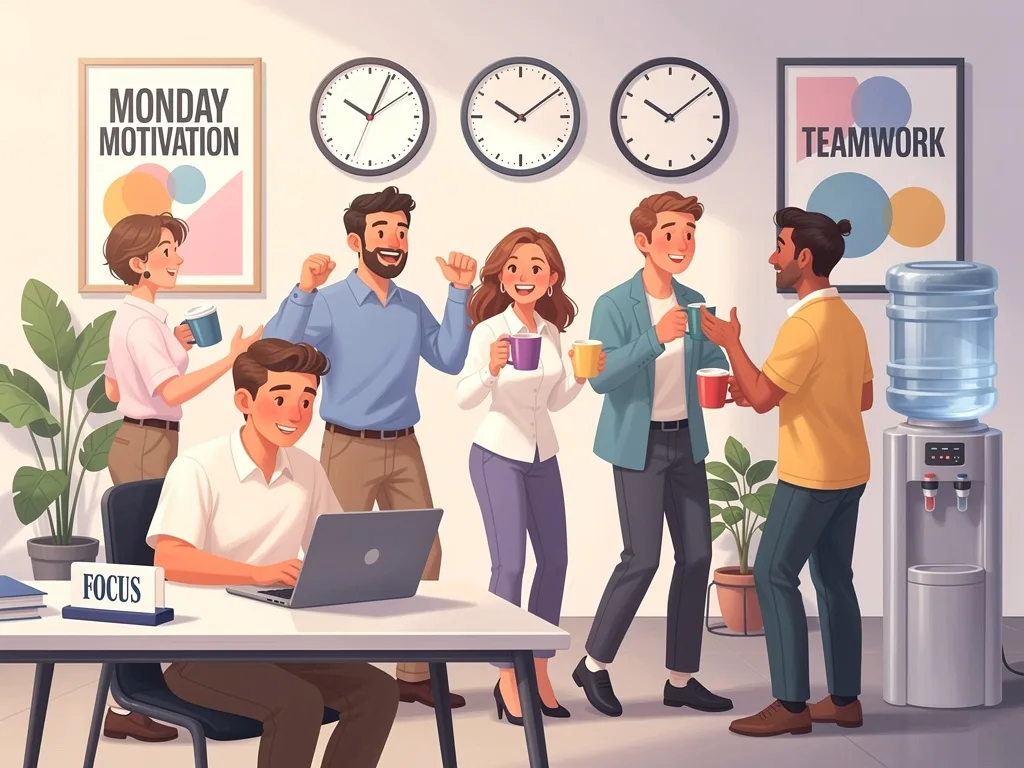
Theme & Story
“The 9 to 5 Groove (Office Life)” is a fun, upbeat song about a typical workday in an office. The story begins with coffee and clocking in at nine, then moves through meetings, deadlines, teamwork, office tasks, short breaks, and finally logging off at five o’clock.
For language learners, the song is useful because it presents everyday workplace vocabulary in a simple, rhythmic way. It describes both the routine side of office life—emails, phones, meetings, contracts—and the social side, such as chatting with colleagues and working as a team.
Metaphors & Meaning
- “The 9 to 5 groove”: “9 to 5” refers to a standard full-time office schedule, from 9 a.m. to 5 p.m. “Groove” suggests rhythm, music, or a repeated pattern. Together, the phrase makes office routine sound like a dance or musical beat.
- “Punch the clock”: This originally meant using a time clock to record when you arrive at work. Here it means starting the workday.
- “Full-time grind”: “Grind” means hard, repetitive work. The phrase suggests that full-time work can be tiring but regular and necessary.
- “Climbing up the ladder”: This means trying to advance in your career, usually by getting promotions or better positions.
- “Teamwork makes the dream work”: A popular motivational saying. It means success is easier when people cooperate.
- “The deadline is coming”: The deadline is almost here, creating pressure and urgency.
- coffee mug: a cup, usually with a handle, used for coffee or tea.
- colleague: someone you work with; a coworker.
- full-time: working the normal or maximum number of hours for a job.
- part-time: working fewer hours or fewer days than a full-time employee.
- boss: a manager or supervisor.
- meeting: a planned discussion at work.
- deadline: the final time or date when work must be finished.
- salary: regular payment for a job, often yearly or monthly.
- bills: payments for things like rent, electricity, internet, or phone service.
- promotion: moving to a higher job position, often with more pay.
- get fired: lose your job because your employer decides to dismiss you.
- contract: a legal agreement.
- water cooler chat: casual conversation at work, often about simple topics like weather, sports, or gossip.
- log off: disconnect from a computer account or system.
- Imperatives / commands: The song uses many command forms, such as “Grab your coffee mug,” “Don’t be late,” “Keep your focus sharp,” “Pack your bag,” and “Log off the computer.” Imperatives are common in workplace instructions.
- Present continuous for ongoing action: Phrases like “Walking in the office,” “Typing on the laptop,” and “answering the phone” describe actions happening during the workday. Lyrics often use these shortened forms without a full subject and verb, such as “I am walking.”
- Informal “we got”: The line “We got a meeting at ten” is informal spoken English. In standard grammar, you might say “We have a meeting at ten.”
- Future possibility with “might” and “maybe”: “Maybe next month you will get a promotion” and “you might get fired” show possible future results.
- Conditionals with “if”: “If you do a great job…” introduces a condition. The result is “maybe… you will get a promotion.” This is useful for talking about cause and effect.
- Contractions and casual speech: “It’s five o’clock” and “don’t be late” sound natural and conversational, matching the friendly workplace tone of the song.
The song is lighthearted, but it also shows real pressures of office life: being on time, meeting deadlines, avoiding mistakes, and working hard for a salary.