


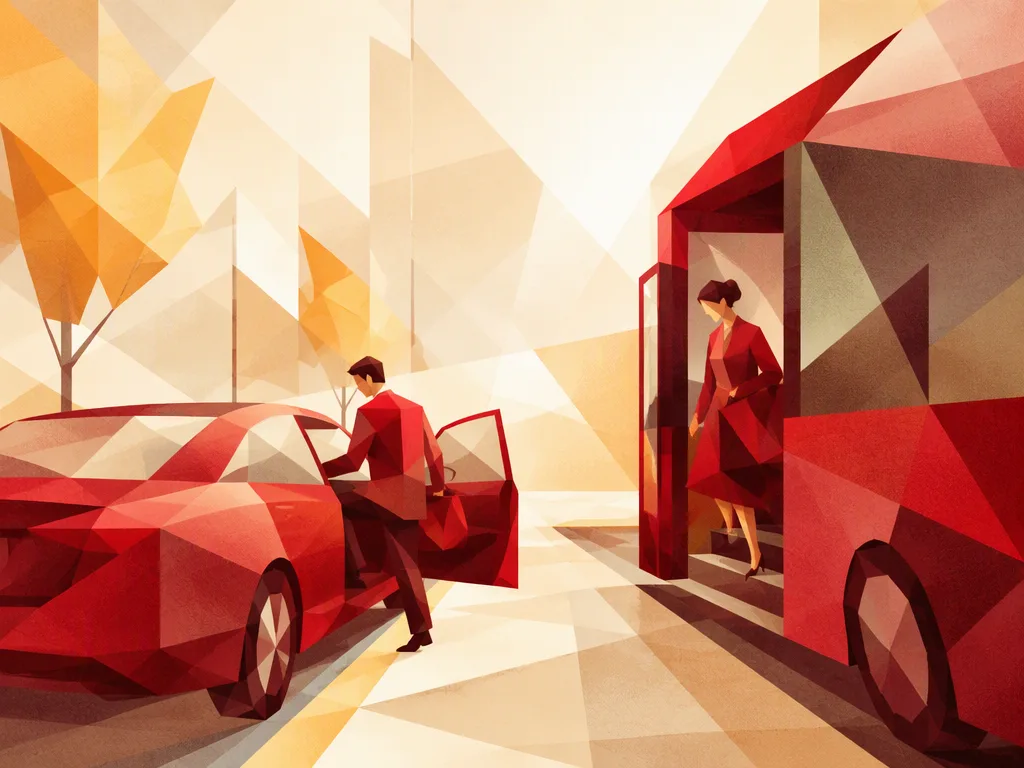
Get In, Get Out, Get On, Get Off
Entdecke kurze Reisesituationen und lerne, wie du über das Ein- und Aussteigen bei Autos und Bussen sprichst.
Preview
Questions with solutions-
1. Fülle die Lücke aus.
Open the car door, get ___, and sit next to the driver.
- in
- on
- out
Dein Sitzplatz ist im Auto.
Show solution
Open the car door, get in, and sit next to the driver.
Bei Autos und Taxis sagen wir normalerweise “get in”, wenn wir einsteigen.
-
2. Fülle die Lücke aus.
Du wartest an einer Bushaltestelle.
Here comes our bus! Let's get ___ the bus and find seats.
- off
- on
- out of
Du beginnst deine Busfahrt.
Show solution
Here comes our bus! Let's get on the bus and find seats.
Wir verwenden “get on” für Busse, Züge und Flugzeuge.
-
3. Wähle die richtige Antwort aus.
Welche Bewegung meint der Sprecher?
The car is parked beside the sidewalk. Please get out of the car.
- From the sidewalk into the car
- From one car seat to another
- From inside the car to the sidewalk
Show solution
- From inside the car to the sidewalk
Auf “Get out of” folgt der Name des Ortes oder Fahrzeugs, den bzw. das du verlässt.
-
4. Wähle die richtige Antwort aus.
Was müssen die Reisenden an der Bibliothek tun?
We need to get off the bus at the library.
- Leave the bus
- Board the bus
- Stay on the bus
Show solution
- Leave the bus
Wenn du dir nicht sicher bist, an welcher Haltestelle du aussteigen sollst, kannst du fragen: “Where should I get off?”
-
5. Fülle die Lücke aus.
Deine Taxifahrt ist zu Ende.
The driver says, “Here we are! You can get ___ now.”
- out of
- out
- from
Nach der Lücke steht keine Fahrzeugbezeichnung.
Show solution
The driver says, “Here we are! You can get out now.”
“Get out” kann allein stehen, wenn beide Personen wissen, welches Auto oder Taxi sie meinen.
-
6. Wähle die richtige Antwort aus.
Du bist in einem Bus. Die nächste Haltestelle ist die Bank. Wo solltest du aussteigen?
Get off at the stop after the bank.
- At the bank
- At the stop before the bank
- At the stop just past the bank
Der Bus fährt zuerst an der Bank vorbei.
Show solution
- At the stop just past the bank
Die Wörter nach “get off” können dir sagen, wo du aussteigen sollst: “at the station” oder “at the next stop”.
-
7. Wähle die richtige Antwort aus.
Wer sollte zuerst durch die Bustür gehen?
Wait before you get on. Let these passengers get off first.
- The passengers entering the bus
- The passengers leaving the bus
- Both groups at the same time
Show solution
- The passengers leaving the bus
Wenn man die Leute zuerst aussteigen lässt, entsteht in der Nähe der Tür Platz für die Einsteigenden.
-
8. Wähle die richtige Antwort aus.
Du fährst mit dem Bus zum Krankenhaus. Was solltest du jetzt tun?
Don't get off here. The hospital is two stops away.
- Stay on the bus
- Leave the bus now
- Change to another bus now
Deine Haltestelle liegt noch vor dir.
Show solution
- Stay on the bus
“Don't get off” sagt dir, dass du noch nicht aussteigen sollst. Du bist bereits im Bus.
-
9. Wähle die richtige Antwort aus.
Welche Rolle hat die sprechende Person bei dieser Taxifahrt?
I got in the taxi and told the driver my address.
- The person driving the taxi
- A person waiting outside the taxi
- A passenger riding in the taxi
Show solution
- A passenger riding in the taxi
“Got” ist die Vergangenheitsform von “get”. “I got in” beschreibt, dass die Person zuvor in das Taxi eingestiegen ist.
-
10. Fülle die Lücke aus.
Du sitzt in einem geparkten Auto.
Please get out ___ the car. I need to clean the seats.
- from
- of
- on
Hier braucht “out” ein weiteres Wort vor “the car”.
Show solution
Please get out of the car. I need to clean the seats.
Verwende “out of” vor einer Fahrzeugbezeichnung als Einheit: “out of the car” oder “out of the taxi”.
-
11. Wähle die richtige Antwort aus.
Welche Fahrt fand zuerst statt?
We got off the bus before we got in the taxi.
- The bus ride
- The taxi ride
- Neither ride has started yet
Achte auf das Wort “before”.
Show solution
- The bus ride
“Before” macht deutlich, dass die Busfahrt früher stattfand. Die Reisenden beendeten eine Fahrt und begannen dann eine andere.
-
12. Fülle die Lücke aus.
Du bist gerade aus dem Auto deines Freundes ausgestiegen, aber es fängt an zu regnen.
Your friend says, “Get ___ in. You can wait here until the rain stops.”
- away
- off
- back
Du warst vor einem Moment im Auto.
Show solution
Your friend says, “Get back in. You can wait here until the rain stops.”
“Back” drückt zusätzlich die Idee der Rückkehr aus. “Get back in” bedeutet, wieder einzusteigen.
-
13. Wähle die richtige Antwort aus.
Was solltest du an der nächsten Haltestelle tun, um den Bus zu wechseln?
You got on the wrong bus. This bus goes to the zoo, not the beach. You want to go to the beach.
- Stay on this bus until it reaches the beach.
- Get off and wait for a bus to the beach.
- Get off and then get on the same bus again.
Du musst aus diesem Bus aussteigen, bevor du einen anderen nimmst.
Show solution
- Get off and wait for a bus to the beach.
“The wrong bus” bezeichnet einen Bus, der dich nicht dorthin bringt, wo du hinmöchtest.
-
14. Fülle die Lücken aus.
Deine Autofahrt endet am Busbahnhof. Deine nächste Fahrt ist mit dem Bus.
Get ___ the car, then get ___ the bus to the airport.
- in
- out of
- off
- on
Du verlässt das erste Fahrzeug und steigst in das zweite ein.
Show solution
Get out of the car, then get on the bus to the airport.
Ein Wechsel des Verkehrsmittels kann bedeuten, aus einem Auto auszusteigen und dann in einen Bus einzusteigen.
-
15. Fülle die Lücken aus.
Dein Bus kommt gerade am Bahnhof an. Papa wartet dort in seinem Auto, um dich nach Hause zu fahren.
Don't get ___ the bus until it stops. Then get ___ Dad's car.
- on
- out of
- in
- off
Beende die Busfahrt sicher, bevor du die Autofahrt beginnst.
Show solution
Don't get off the bus until it stops. Then get in Dad's car.
“Until it stops” sagt dir, dass du warten sollst. Sobald der Bus hält, kannst du aussteigen und ins Auto einsteigen.