


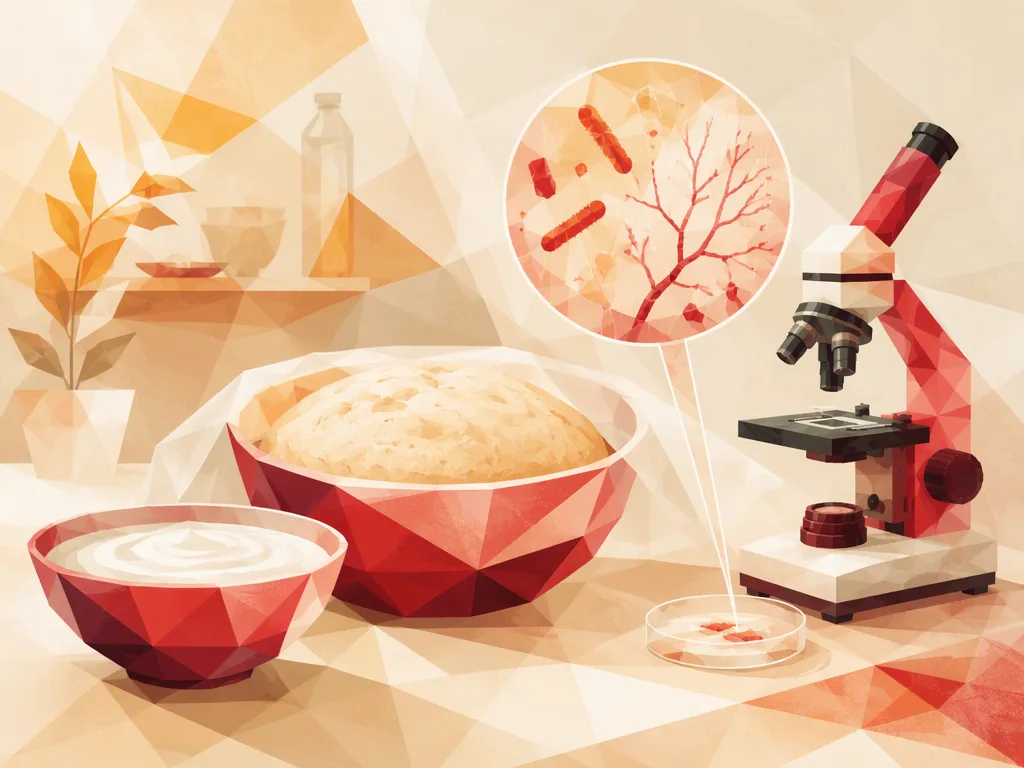
Mikroben: Die unsichtbare Welt
Entdecke, wie Mikroben Lebensmittel, Gesundheit und Umwelt prägen – vom Aufgehen des Brotteigs bis zur Antibiotikaresistenz.
Preview
Questions with solutions-
1. Wähle die richtige Antwort aus.
Wie tragen die Bakterien dazu bei, dass Joghurt sauer wird und eindickt?
When certain live bacterial cultures are added to milk under suitable conditions, yogurt forms.
- They turn milk sugar into acid.
- They release gas that makes the milk rise.
- They remove fat from the milk.
Überlege, was Joghurt seinen sauren Geschmack verleiht.
Show solution
- They turn milk sugar into acid.
Die Bakterien produzieren Milchsäure. Diese Säure verändert auch, wie die Milchproteine miteinander interagieren, und trägt so dazu bei, dass der Joghurt eindickt.
-
2. Wähle die richtige Antwort aus.
Zu welcher Gruppe gehört Brotschimmel?
A fuzzy patch of mold has appeared on a slice of bread.
- Bacteria
- Fungi
- Viruses
Schimmel gehört zur gleichen übergeordneten Gruppe wie Hutpilze.
Show solution
- Fungi
Schimmelpilze sind Pilze, die oft als Netzwerke aus winzigen Fäden wachsen. Der sichtbare Fleck enthält viele dieser Fäden.
-
3. Wähle die richtige Antwort aus.
Wie hilft diese Routine dabei, die Anzahl der Mikroben auf deinen Händen zu reduzieren?
You rub your hands thoroughly with soap and water, then rinse them under running water.
- It kills every microbe and makes the hands completely sterile.
- It removes visible dirt but cannot reduce the number of microbes.
- It loosens dirt and microbes so the water can carry them away.
Überlege, was beim Abspülen passiert.
Show solution
- It loosens dirt and microbes so the water can carry them away.
Händewaschen muss nicht jede Mikrobe abtöten, um zu helfen. Auch das Entfernen von Mikroben verringert die Wahrscheinlichkeit, sie zu verbreiten.
-
4. Wähle die richtige Antwort aus.
Was führt hauptsächlich dazu, dass sich der Teig ausdehnt?
Bread dough containing yeast rises while resting, before it goes into the oven.
- Gas released by the yeast becomes trapped in the dough.
- Heat from the yeast turns the dough's water into steam.
- Yeast cells absorb water and become large enough to stretch the dough.
Denk an die kleinen Lufteinschlüsse im Inneren einer Brotscheibe.
Show solution
- Gas released by the yeast becomes trapped in the dough.
Hefe produziert Kohlendioxid, während sie Zucker verwertet. Der Teig schließt dieses Gas ein, wodurch Bläschen entstehen, die ihn aufgehen lassen.
-
5. Wähle die richtige Antwort aus.
Wie helfen diese Mikroben dabei, Nährstoffe in den Boden zurückzuführen?
A compost pile contains fallen leaves, food scraps, bacteria, and fungi.
- They turn the dead material into seeds for new plants.
- They break down the dead material, releasing nutrients.
- They preserve the dead material, keeping its nutrients sealed inside.
Überlege, warum die ursprünglichen Blätter schwer zu erkennen sind.
Show solution
- They break down the dead material, releasing nutrients.
Durch Zersetzung werden Nährstoffe aus ehemals lebendem Material wiederverwertet. Ohne Zersetzer würde sich abgestorbenes Material ansammeln, und viele Nährstoffe blieben nicht verfügbar.
-
6. Wähle die richtige Antwort aus.
Welche Aussage erklärt, warum gekühlte Lebensmittel nur für eine begrenzte Zeit sicher gelagert werden können?
Leftovers are cooled promptly and stored in a refrigerator.
- Refrigeration kills all microbes, but the food creates new ones.
- Refrigeration makes all bacteria harmless without affecting their growth.
- Refrigeration slows microbial growth but does not stop every microbe from growing.
Einen Prozess zu verlangsamen ist etwas anderes, als ihn vollständig zu stoppen.
Show solution
- Refrigeration slows microbial growth but does not stop every microbe from growing.
Einige Mikroorganismen können bei Kühlschranktemperaturen wachsen. Lebensmittel kühl zu halten verringert das Risiko, macht sie aber nicht keimfrei.
-
7. Wähle die richtige Antwort aus.
Which environment would allow a virus to multiply?
Unlike bacteria, viruses cannot make copies of themselves using nutrients alone.
- Living cells that the virus can infect
- A sterile sugar solution containing no cells
- An empty container supplied with warmth and oxygen
A virus needs more than food and suitable temperatures.
Show solution
- Living cells that the virus can infect
Viruses depend on machinery inside suitable host cells to produce new viruses. They cannot multiply independently.
-
8. Wähle die richtige Antwort aus.
Warum würden Antibiotika die Ursache dieser Erkältung nicht behandeln?
A clinician diagnoses a cold caused by a virus and finds no bacterial infection.
- Antibiotics work against this virus only after a fever develops.
- Antibiotics target bacteria, not the virus causing the cold.
- Antibiotics work against this virus only after symptoms become severe.
Die Art des Krankheitserregers ist wichtiger als die Schwere der Symptome.
Show solution
- Antibiotics target bacteria, not the virus causing the cold.
Viele Antibiotika greifen bakterielle Strukturen oder Prozesse an, die bei Viren nicht vorhanden sind. Eine separate bakterielle Infektion müsste gesondert beurteilt werden.
-
9. Wähle die richtige Antwort aus.
Was zeigt dieses Beispiel über Bakterien im Körper?
A healthy adult's gut contains a large community of bacteria. Some help break down dietary fiber.
- Bacteria are useful only after they have caused an infection.
- A healthy gut must eventually remove all its bacteria.
- The presence of bacteria does not automatically mean someone is ill.
Denke an den Unterschied zwischen einer im Körper ansässigen Mikrobe und einer krankheitserregenden Mikrobe.
Show solution
- The presence of bacteria does not automatically mean someone is ill.
Viele Mikroben leben normalerweise im oder auf dem Körper. Ihre Auswirkungen hängen von Faktoren wie ihrer Art, ihrem Aufenthaltsort und dem Gesundheitszustand der Person ab.
-
10. Wähle die richtige Antwort aus.
What does the normal smell tell you about the chicken's safety?
Some cooked chicken smells normal, but no one knows how long it has been left at room temperature.
- It does not rule out harmful microbes or their toxins.
- It confirms that cooking killed every harmful bacterium.
- It guarantees the chicken will be safe after reheating.
Not every food safety problem produces an obvious warning.
Show solution
- It does not rule out harmful microbes or their toxins.
Some harmful microbes and toxins cause no noticeable change in smell or appearance. Reheating also does not reliably destroy every toxin.
-
11. Wähle die richtige Antwort aus.
Wie kann diese Vorbereitung bei einer späteren Infektion helfen?
A vaccine prepares the immune system to recognize a particular virus before a person encounters that virus.
- The vaccine stays in the blood and directly kills every future virus.
- Immune memory can help the body respond more quickly.
- The body no longer needs an immune response because exposure is blocked.
Denk an den Vorteil, etwas wiederzuerkennen, dem du schon einmal begegnet bist.
Show solution
- Immune memory can help the body respond more quickly.
Eine Impfung kann das Risiko einer schweren Erkrankung verringern, auch wenn sie nicht jede Infektion verhindert. Für den Schutz muss der Impfstoff selbst nicht im Blut verbleiben.
-
12. Wähle die richtige Antwort aus.
Warum machten resistente Bakterien einen größeren Anteil der Bakterienpopulation aus?
A bacterial population contains a few bacteria that are already resistant to an antibiotic. After treatment and further growth, most bacteria in the population are resistant.
- The antibiotic taught every bacterium how to survive.
- The medicine weakened each time a bacterium encountered it.
- Resistant bacteria were more likely to survive and produce new bacteria.
Achte darauf, welche Bakterien bereits vorhanden waren und welche überlebt haben.
Show solution
- Resistant bacteria were more likely to survive and produce new bacteria.
Die Behandlung kann Bakterien mit bereits vorhandener Resistenz begünstigen und gleichzeitig diejenigen ohne diese Resistenz abtöten. Die Bakterienpopulation wird resistenter; die Person wird nicht resistent gegen das Medikament.