


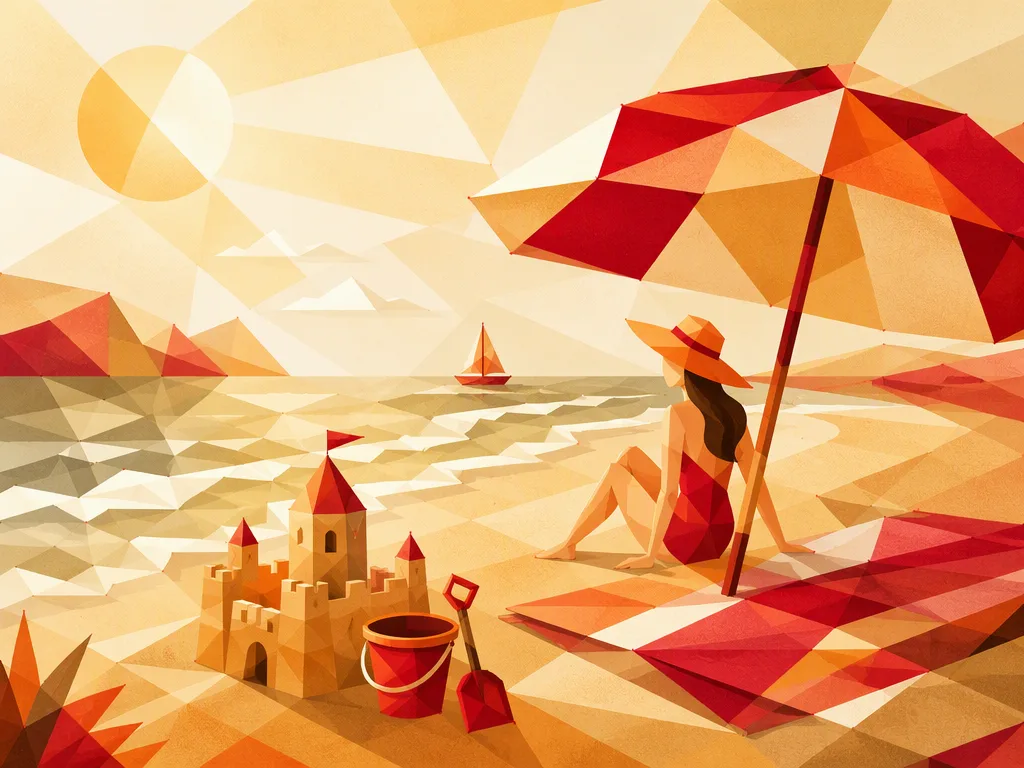
Am Strand
Entdecke Aktivitäten am Strand, nützliche Dinge zum Mitnehmen und einfache Möglichkeiten, sicher zu bleiben.
Preview
Questions with solutions-
1. Wähle die richtige Antwort aus.
Was bauen die Kinder?
“Bring the bucket and shovel! Let's build something with this sand.”
- A sandcastle
- A beach umbrella
- A surfboard
Sie bauen mit Sand.
Show solution
- A sandcastle
Ein wenig Wasser hilft dabei, dass der Sand zusammenhält, wenn du eine Sandburg baust.
-
2. Fülle die Lücke aus.
“I'm wet after my swim. Can you pass me my ___ so I can dry myself?”
- bucket
- towel
- ball
Du kannst dieses weiche Ding um dich wickeln.
Show solution
“I'm wet after my swim. Can you pass me my towel so I can dry myself?”
Ein Strandhandtuch ist auch praktisch, um auf dem Sand zu sitzen.
-
3. Fülle die Lücke aus.
“Let's sit under the beach ___. It gives us shade.”
- shovel
- ball
- umbrella
Es öffnet sich über dir und hält die Sonne ab.
Show solution
“Let's sit under the beach umbrella. It gives us shade.”
Schatten ist ein Ort, an dem etwas das direkte Sonnenlicht abschirmt.
-
4. Wähle die richtige Antwort aus.
Über welche Aktivität sprechen sie?
“Let's play on the sand. We can hit this volleyball over the net.”
- Swimming
- Beach volleyball
- Surfing
Show solution
- Beach volleyball
Beim Volleyball benutzen die Spieler ihre Hände oder Arme, um den Ball zu schlagen.
-
5. Wähle die richtige Antwort aus.
Was möchte der Sprecher tun?
“I'd like to stand on a board and ride the waves. Can I rent a surfboard here?”
- Go snorkeling
- Build a sandcastle
- Go surfing
Der Sprecher möchte auf der Wasseroberfläche fahren.
Show solution
- Go surfing
Surfer nutzen Wellen, um sich in Richtung Ufer tragen zu lassen.
-
6. Fülle die Lücke aus.
“Before we go into the sun, let's put ___ on our skin to help prevent sunburn.”
- sunscreen
- shampoo
- soap
Das schützt deine Haut vor der Sonne.
Show solution
“Before we go into the sun, let's put sunscreen on our skin to help prevent sunburn.”
Du musst nach dem Schwimmen erneut Sonnencreme auftragen. Befolge die Anweisungen auf der Flasche.
-
7. Wähle die richtige Antwort aus.
Kann der Besucher einen Strandstuhl benutzen, ohne dafür zu bezahlen?
“Are these beach chairs free?”
“No, but you can rent one for the afternoon.”- Yes, all the chairs are free.
- No, the visitor must pay to use one.
- Yes, if the visitor returns it today.
Denk darüber nach, was “rent” bedeutet.
Show solution
- No, the visitor must pay to use one.
Wenn du etwas mietest, bezahlst du dafür, es für eine begrenzte Zeit zu nutzen.
-
8. Fülle die Lücke aus.
“The sand is very hot! I'll put on my ___ to protect my feet before I walk across it.”
- goggles
- sunglasses
- sandals
Du trägst sie an den Füßen.
Show solution
“The sand is very hot! I'll put on my sandals to protect my feet before I walk across it.”
Sand kann bei direkter Sonneneinstrahlung sehr heiß werden.
-
9. Fülle die Lücke aus.
“The water only comes up to my knees. It's ___ here.”
- shallow
- deep
- dry
Die sprechende Person kann in diesem Wasser problemlos stehen.
Show solution
“The water only comes up to my knees. It's shallow here.”
“Shallow” bedeutet nicht tief. Weiter vom Ufer entfernt kann das Wasser tiefer werden.
-
10. Wähle die richtige Antwort aus.
Wo kann der Besucher Wasser bekommen, das bedenkenlos getrunken werden kann?
“Can I drink the water from this tap?”
“No. Use the drinking water tap beside the cafe.”- From the ocean
- From the tap beside the cafe
- From the tap the visitor is using now
Ein Wasserhahn ist für Trinkwasser vorgesehen.
Show solution
- From the tap beside the cafe
Nicht jeder Wasserhahn liefert Wasser, das bedenkenlos getrunken werden kann.
-
11. Fülle die Lücken aus.
Die Familie möchte den Strand sauber hinterlassen.
“We'll ___ our trash home and ___ it in the trash can.”
- put
- take
Nimm zuerst den Müll mit nach Hause. Dann gehört er in einen Abfallbehälter.
Show solution
“We'll take our trash home and put it in the trash can.”
Wenn du deinen Müll mit nach Hause nimmst, hilft das, den Sand und das Wasser sauber zu halten.
-
12. Wähle die richtige Antwort aus.
Was bedeutet dieses Schild am Strand?
“Red flag: No swimming today.”
- Swim only near the shore.
- Swim if you use a float.
- Stay out of the water.
Der Hinweis gilt für alle, die schwimmen möchten.
Show solution
- Stay out of the water.
Beachte die Sicherheitsschilder am Strand, auch wenn das Wasser ruhig aussieht.
-
13. Wähle die richtige Antwort aus.
Was ist der sicherste nächste Schritt?
“There's broken glass on the sand beside our towels.”
- Keep people away and tell the beach staff.
- Bury the glass under more sand.
- Pick it up with bare hands.
Schütze Menschen, ohne die scharfen Stücke zu berühren.
Show solution
- Keep people away and tell the beach staff.
Glas kann Schnittwunden an den Füßen verursachen, auch wenn es unter dem Sand verborgen ist.
-
14. Wähle die richtige Antwort aus.
Wie kann man am sichersten helfen?
A child says, “I can't find my parents.” A lifeguard station is nearby.
- Send the child along the beach to search alone.
- Stay with the child and ask the lifeguard for help.
- Leave the child there and continue your walk.
Das Kind sollte nicht allein gelassen werden.
Show solution
- Stay with the child and ask the lifeguard for help.
Ein Rettungsschwimmer oder ein anderer Mitarbeiter am Strand kann einem verirrten Kind helfen, seine Familie wiederzufinden.
-
15. Wähle die richtige Antwort aus.
Was muss der gute Schwimmer auf diesem Boot tun?
“I'm a good swimmer. Do I need a life jacket?”
“Yes. Everyone must wear a life jacket on this boat.”- Wear a life jacket only when the boat stops.
- Keep a life jacket on the seat.
- Wear a life jacket during the boat trip.
Die Regel auf dem Boot macht keine Ausnahme für gute Schwimmer.
Show solution
- Wear a life jacket during the boat trip.
Eine Rettungsweste hilft dir, über Wasser zu bleiben, wenn du ins Wasser fällst.