


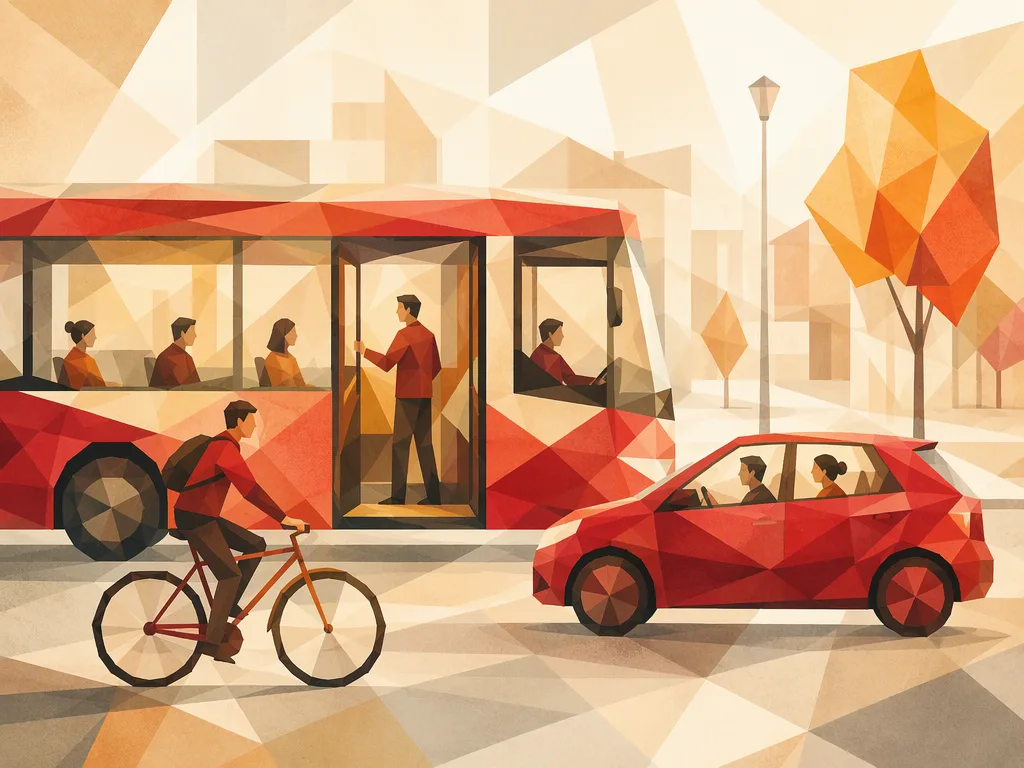
On the Bus oder In the Car?
Entdecke “on” und “in” in kurzen Nachrichten über Busse, Autos und andere Arten der Fortbewegung.
Preview
Questions with solutions-
1. Fülle die Lücke aus.
I'm ___ the bus to school. I'll get off at the next stop.
- on
- by
Show solution
I'm on the bus to school. I'll get off at the next stop.
“By bus” gibt an, wie du reist. “On the bus” sagt, wo du bist.
-
2. Fülle die Lücke aus.
I'm ___ the car, sitting next to Mom. She's driving.
- on
- in
Show solution
I'm in the car, sitting next to Mom. She's driving.
Verwende “in the car” für einen Mitfahrer auf dem Vorder- oder Rücksitz.
-
3. Wähle die richtige Antwort aus.
Wo ist der Fahrgast?
The train is moving. A passenger sends a message from her seat.
- I'm by the train.
- I'm on the train.
Show solution
- I'm on the train.
“On the train” passt für Fahrgäste, die während der Fahrt sitzen oder stehen.
-
4. Fülle die Lücke aus.
I'm ___ a taxi, wearing my seat belt. The driver is taking me home.
- in
- on
Show solution
I'm in a taxi, wearing my seat belt. The driver is taking me home.
Sag “in a taxi” für ein beliebiges Taxi oder “in the taxi”, wenn die andere Person weiß, welches gemeint ist.
-
5. Fülle die Lücke aus.
Eine Nachricht von zwei Passagieren während ihres Fluges.
We're ___ the plane now. I can see clouds through the window.
- at
- on
Show solution
We're on the plane now. I can see clouds through the window.
Für einen Passagier bedeutet “on the plane”, dass er sich im Flugzeug befindet – nicht auf dessen Dach.
-
6. Fülle die Lücke aus.
I'm ___ my bike, riding through the park.
- on
- in
Show solution
I'm on my bike, riding through the park.
“On” bleibt in “on my bike”, “on your bike” und “on a bike” unverändert.
-
7. Wähle die richtige Antwort aus.
Wo ist Alex jetzt?
Alex: “I left the subway station. I'm riding to the next stop.”
- Alex is at the subway station.
- Alex is on the subway.
Show solution
- Alex is on the subway.
Verwende “on the subway” während der Fahrt und “at the station” für den Ort, an dem du wartest.
-
8. Fülle die Lücke aus.
Leo is ___ his motorcycle. He puts on his helmet before he starts riding.
- in
- on
Show solution
Leo is on his motorcycle. He puts on his helmet before he starts riding.
Ein Motorradfahrer sitzt auf dem Fahrzeug und nicht darin.
-
9. Fülle die Lücke aus.
We're ___ our family van. Dad is driving, and I'm sitting in the back seat.
- in
- on
Show solution
We're in our family van. Dad is driving, and I'm sitting in the back seat.
Bei einem Familienvan verwendet man wie bei einem Auto “in”, obwohl er mehr Platz bietet.
-
10. Fülle die Lücke aus.
Eine Nachricht von einem Fährpassagier.
We're ___ the ferry to the island. It has just left, and we're watching the water from our seats.
- by
- on
Show solution
We're on the ferry to the island. It has just left, and we're watching the water from our seats.
Eine Fähre befördert Menschen über Wasser. Die übliche Formulierung für Fahrgäste lautet “on the ferry”.
-
11. Wähle die richtige Antwort aus.
Wo ist Ben?
A truck driver is giving Ben a ride. Ben sits beside her with his seat belt on.
- Ben is in the truck.
- Ben is on the truck.
Show solution
- Ben is in the truck.
Hier beschreibt “in” die Sitze im Inneren des Lastwagens, nicht den offenen Bereich hinten.
-
12. Wähle die richtige Antwort aus.
Wo ist Rosa während der Fahrt?
An ambulance is taking Rosa to the hospital. She is lying on a bed with a nurse beside her.
- Rosa is on the ambulance.
- Rosa is in the ambulance.
Show solution
- Rosa is in the ambulance.
Ein Krankenwagen bringt kranke oder verletzte Menschen ins Krankenhaus. Menschen, die darin mitfahren, verwenden “in”.
-
13. Fülle die Lücke aus.
I'm not walking along the path. I'm riding ___ a horse, sitting in the seat on its back.
- on
- in
Show solution
I'm not walking along the path. I'm riding on a horse, sitting in the seat on its back.
Im Englischen verwendet man “on” bei Tieren, auf denen man reitet, zum Beispiel bei Pferden.
-
14. Fülle die Lücke aus.
Mia leaves her car at home. The store is close, so she goes there ___ foot.
- in
- on
Show solution
Mia leaves her car at home. The store is close, so she goes there on foot.
“On foot” bedeutet, zu Fuß zu gehen. Bei diesem Ausdruck verwendet man weder “a” noch “the”.
-
15. Wähle die richtige Antwort aus.
Wo sind die Taschen?
The bags are fixed to the roof, outside the car. There is no space for them beside the passengers.
- They are on the car.
- They are in the car.
Show solution
- They are on the car.
Die Bedeutung bestimmt die Wortwahl: Fahrgäste sind “in the car”, aber Taschen auf dem Autodach sind “on the car”.