


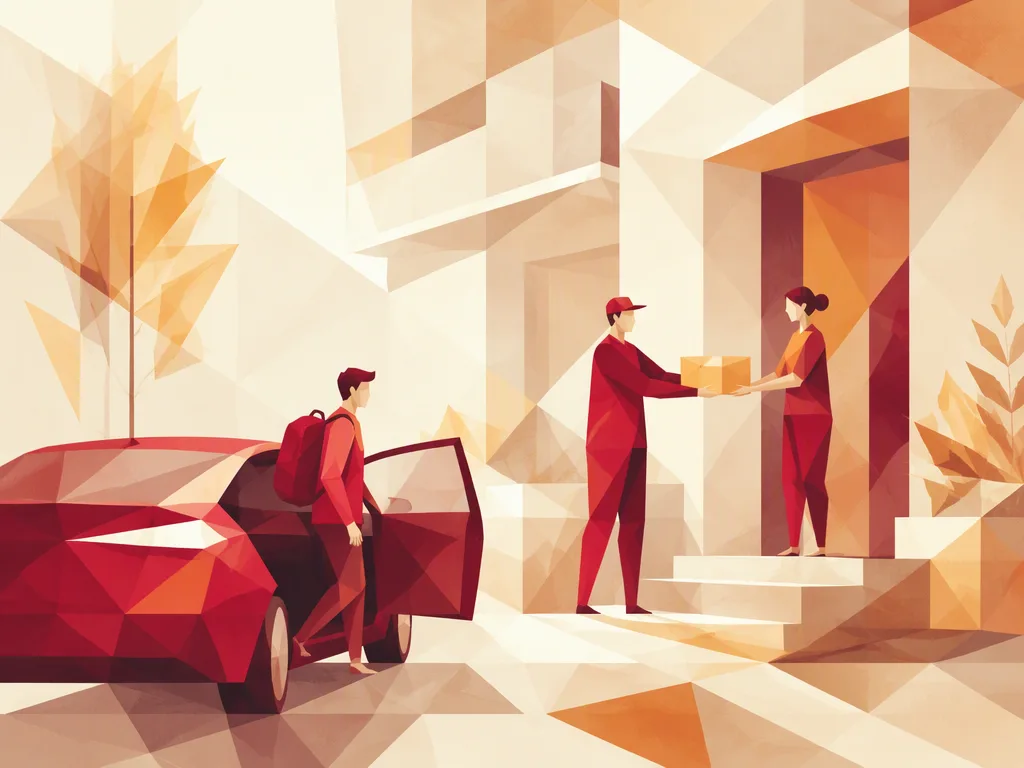
Pick Up oder Drop Off?
Entdecke, wie du “pick up” und “drop off” verwendest, wenn du Fahrten, Pakettransporte und alltägliche Besorgungen planst.
Preview
Questions with solutions-
1. Wähle die richtige Antwort aus.
Was wird Mama tun?
Mom will pick me up from school today.
- Collect the speaker at school.
- Take the speaker to school.
- Meet the speaker at home.
Die sprechende Person wird bereits in der Schule sein.
Show solution
- Collect the speaker at school.
Bei Personen bedeutet “pick up”, zu kommen, um jemanden abzuholen und irgendwohin zu bringen, oft mit dem Auto.
-
2. Wähle die richtige Antwort aus.
Was ist mit den Büchern passiert?
I dropped the books off at the library on my way to work.
- They were collected from the library.
- They were left at the library.
- They were left at the workplace.
Die Bibliothek war ein Zwischenstopp auf der Reise.
Show solution
- They were left at the library.
Das Abgeben von etwas kann bei einem kurzen Zwischenstopp erfolgen, während du auf dem Weg zu einem anderen Ort bist.
-
3. Wähle die richtige Antwort aus.
Welcher Satz hat dieselbe Bedeutung?
Could you pick up the tickets after work?
- Could you pick the tickets after work?
- Could you pick the tickets off after work?
- Could you pick the tickets up after work?
Behalte beide Teile des Ausdrucks bei: “pick” und “up”.
Show solution
- Could you pick the tickets up after work?
Ein Substantiv kann zwischen “pick” und “up” stehen: Sowohl “pick up the tickets” als auch “pick the tickets up” sind korrekt.
-
4. Fülle die Lücke aus.
These bags need to go to Jo's house. Can you ___ there on your way to work?
- drop them off
- drop off them
“Them” ersetzt “these bags”.
Show solution
These bags need to go to Jo's house. Can you drop them off there on your way to work?
Ein Pronomen wie “them” muss zwischen dem Verb und der Partikel stehen: “drop them off”.
-
5. Fülle die Lücke aus.
Yesterday, I ___ my new glasses from the store.
- pick up
- picked up
- picking up
“Yesterday” verortet die Handlung in der Vergangenheit.
Show solution
Yesterday, I picked up my new glasses from the store.
Für die Vergangenheitsform hänge “-ed” an das Verb an. Die Partikel “up” bleibt unverändert.
-
6. Fülle die Lücke aus.
I can't talk right now. I'm ___ my daughter at school.
- droping off
- dropped off
- dropping off
Die Handlung findet gerade statt. Überprüfe die Schreibweise des Verbs.
Show solution
I can't talk right now. I'm dropping off my daughter at school.
Verdopple das letzte “p”, bevor du “-ing” anhängst: Aus “drop” wird “dropping”.
-
7. Fülle die Lücke aus.
My suit is ready. I'll pick it up ___ the dry cleaner's after work.
- from
- to
- into
Der Anzug ist zurzeit in der Reinigung.
Show solution
My suit is ready. I'll pick it up from the dry cleaner's after work.
“From” bezeichnet den Ort, an dem du etwas abholst, bevor du es mitnimmst.
-
8. Fülle die Lücke aus.
Mein Nachbar wird den Schlüssel sicher aufbewahren, während ich weg bin.
I'll drop the spare key off ___ my neighbor before I leave.
- at
- with
- from
Der Nachbar ist die Person, die den Schlüssel erhält und aufbewahrt.
Show solution
I'll drop the spare key off with my neighbor before I leave.
Verwende “with”, um die Person zu nennen, die etwas erhält: “drop it off with my neighbor”.
-
9. Fülle die Lücke aus.
Please drop me off ___ the main entrance, not in the parking lot.
- from
- of
- at
Der Eingang ist genau der Ort, an dem die Fahrt enden soll.
Show solution
Please drop me off at the main entrance, not in the parking lot.
Verwende “at” für einen bestimmten Ort zum Aussteigen, zum Beispiel einen Eingang oder eine Bushaltestelle.
-
10. Wähle die richtige Antwort aus.
Was erwartet die sprechende Person?
I'll get picked up outside my building.
- Someone will come to collect the speaker.
- The speaker will collect someone else.
- The speaker will leave a package outside.
Die sprechende Person ist von der Handlung betroffen, statt sie selbst auszuführen.
Show solution
- Someone will come to collect the speaker.
“Get picked up” ist eine gängige Formulierung dafür, dass jemand anderes kommt, um dich abzuholen.
-
11. Wähle die richtige Antwort aus.
Was hat sich am Plan geändert?
Don't pick me up after class. I'll take the bus home instead.
- The speaker wants a ride to class.
- The speaker no longer needs a ride home.
- The speaker wants to be collected at the bus stop.
Der Bus ersetzt den ursprünglichen Reiseplan.
Show solution
- The speaker no longer needs a ride home.
“Instead” zeigt, dass der Bus eine Alternative zur geplanten Abholung ist und nicht zusätzlich dazu kommt.
-
12. Wähle die richtige Antwort aus.
Was hat der Fahrer vor?
“Can you stay for dinner?”
“Sorry, I can only drop you off. I have to get back to work.”- Stay until dinner is over.
- Return to collect the other person after dinner.
- Leave after taking the other person there.
Der Fahrer muss noch woanders hin.
Show solution
- Leave after taking the other person there.
Jemanden abzusetzen bedeutet nicht, nach der Ankunft bei dieser Person zu bleiben.
-
13. Wähle die richtige Antwort aus.
Wo beginnt die Fahrt des Fahrgasts?
Please pick me up at the office and drop me off at the gym.
- At the office.
- At the gym.
Folge den beiden Handlungen in der Reihenfolge, in der sie stattfinden.
Show solution
- At the office.
Das Abholen und das Absetzen können den Anfang und das Ende derselben Fahrt beschreiben.
-
14. Wähle die richtige Antwort aus.
Wo ist der Mantel, während er gereinigt wird?
I dropped off my coat at the cleaner's on Monday. They said it would be ready to pick up on Friday.
- At the owner's home.
- At the cleaner's.
- In the owner's car.
Der Besitzer gibt den Mantel zuerst ab und holt ihn später wieder ab.
Show solution
- At the cleaner's.
Bei Dienstleistungen wie Reinigung oder Reparaturen gibst du einen Gegenstand oft erst ab, bevor du ihn wieder abholst.
-
15. Wähle die richtige Antwort aus.
Was wird Nina mit dem Fahrrad machen?
Nina: I can pick up your repaired bike, but I can't drop it off at your place.
Owen: No problem. I'll collect it from your garage tonight.- Take the broken bike to the repair shop.
- Bring the repaired bike to Owen's home.
- Bring the repaired bike from the shop to her garage.
Achte darauf, wo Owen das Fahrrad später abholen will.
Show solution
- Bring the repaired bike from the shop to her garage.
Etwas abzuholen bedeutet nicht unbedingt, es auch zum Besitzer nach Hause zu bringen.