


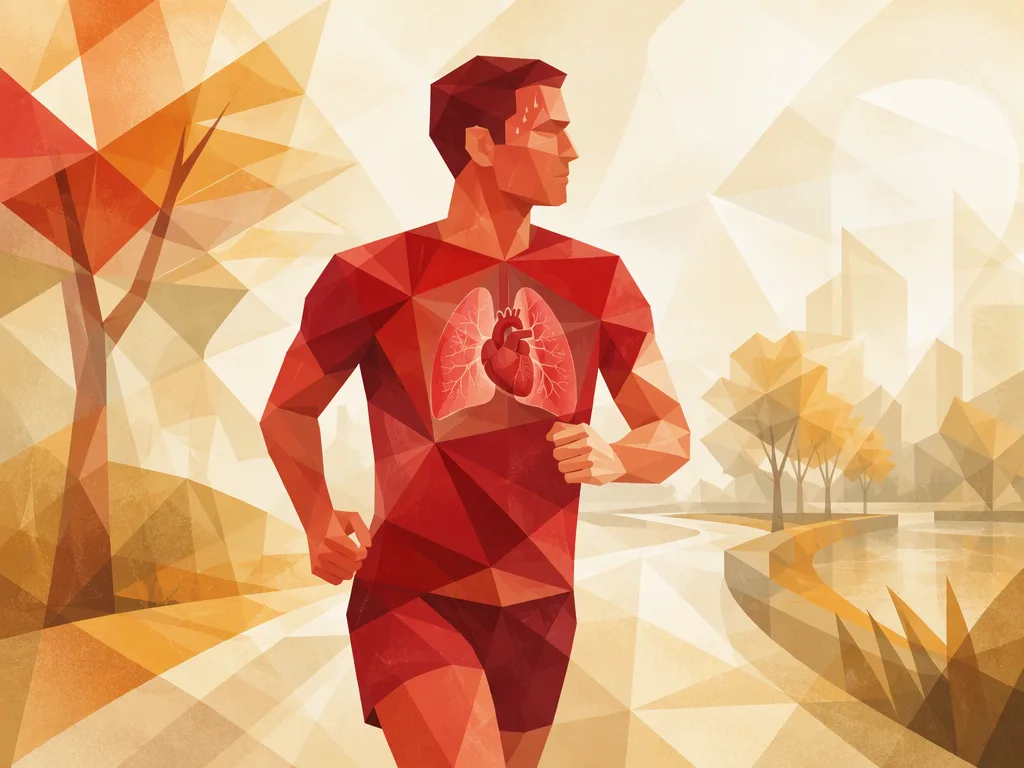
Entdecke, wie dein Körper Luft nutzt, Blut transportiert, Nahrung verarbeitet und dich schützt.
Preview
Questions with solutions-
1. Wähle die richtige Antwort aus.
Was macht dein Herz?
You can feel your heart beating even when you sit quietly.
- Moving air into and out of your lungs.
- Pumping blood around your body.
- Breaking food into smaller pieces.
Überlege, was durch deine Blutgefäße fließt.
Show solution
- Pumping blood around your body.
Dein Blut transportiert Sauerstoff und Nährstoffe zu verschiedenen Teilen deines Körpers.
-
2. Fülle die Lücke aus.
Air enters your lungs when you breathe in. Your body takes ___ from this air to help release energy from food.
- carbon dioxide
- water vapor
- oxygen
Denke an das Gas, das die Zellen deines Körpers brauchen.
Show solution
Air enters your lungs when you breathe in. Your body takes oxygen from this air to help release energy from food.
Sauerstoff gelangt aus deiner Lunge in dein Blut, das ihn zu deinen Zellen transportiert.
-
3. Wähle die richtige Antwort aus.
Wie hilft Speichel?
As you chew, saliva mixes with your food.
- It makes food wet and starts breaking down some of it.
- It takes nutrients directly from your mouth into your blood.
- It does all the work of digestion before you swallow.
Die Verdauung beginnt, bevor die Nahrung deinen Magen erreicht.
Show solution
- It makes food wet and starts breaking down some of it.
Speichel beginnt, Stärke abzubauen, die in Lebensmitteln wie Brot und Reis enthalten ist.
-
4. Wähle die richtige Antwort aus.
Warum blinzeln wir regelmäßig?
Your eyelids briefly close many times during the day.
- To let more light enter the eyes.
- To make the eyes focus on distant objects.
- To spread tears over the surface of the eyes.
Die Oberfläche deiner Augen muss feucht bleiben.
Show solution
- To spread tears over the surface of the eyes.
Tränen helfen auch dabei, kleine Staubpartikel aus deinen Augen zu spülen.
-
5. Fülle die Lücke aus.
Your kidneys remove waste and extra water from your blood. These leave your body as ___.
- sweat
- urine
- saliva
Diese Flüssigkeit wird in deiner Blase gespeichert.
Show solution
Your kidneys remove waste and extra water from your blood. These leave your body as urine.
Deine Nieren helfen auch dabei, zu regulieren, wie viel Wasser in deinem Körper bleibt.
-
6. Wähle die richtige Antwort aus.
Wo gelangen die meisten Nährstoffe ins Blut?
Digestion breaks food down into useful parts called nutrients. These can then pass into your blood.
- In the stomach.
- In the large intestine.
- In the small intestine.
Der größte Teil dieser Arbeit findet statt, nachdem die Nahrung den Magen verlassen hat.
Show solution
- In the small intestine.
Die Innenseite des Dünndarms hat viele Falten, die ihm helfen, Nährstoffe aufzunehmen.
-
7. Wähle die richtige Antwort aus.
How can sleep help you learn?
You practice a new skill, then get a good night's sleep.
- It helps your brain strengthen new memories.
- It stops all brain activity until morning.
- It removes the need to practice the skill again.
Your brain stays active during sleep.
Show solution
- It helps your brain strengthen new memories.
Sleep supports learning, but regular practice is still important.
-
8. Wähle die richtige Antwort aus.
How does sweat drying on your skin help cool you down?
On a warm day, sweat on your skin slowly changes from liquid into gas.
- It prevents your body from losing water.
- It takes heat away from your skin.
- It creates extra heat under your skin.
Changing liquid into gas needs energy.
Show solution
- It takes heat away from your skin.
In humid air, sweat dries more slowly, so this cooling process works less well.
-
9. Wähle die richtige Antwort aus.
Warum kann Zittern helfen, wenn dir kalt ist?
When you shiver, your muscles make quick, repeated movements.
- Your muscles stop working to save energy.
- Your skin loses extra heat as it shakes.
- Your muscles produce heat as they move.
Muskelaktivität verbraucht Energie.
Show solution
- Your muscles produce heat as they move.
Zittern geschieht automatisch; du musst dich nicht dafür entscheiden, diese Bewegungen auszuführen.
-
10. Wähle die richtige Antwort aus.
Was machen deine Pupillen normalerweise?
You walk from a dark room into bright sunlight. Your pupils are the dark openings in the center of your eyes.
- Become smaller to let in less light.
- Become larger to let in more light.
- Stay the same size in every kind of light.
Deine Augen brauchen an einem hellen Ort nicht so viel Licht.
Show solution
- Become smaller to let in less light.
Der farbige Teil jedes Auges reguliert die Größe der Pupille.
-
11. Fülle die Lücke aus.
A small cut usually stops bleeding after a while. Your blood forms a ___ that helps close the cut.
- bruise
- clot
- blister
Das Blut bildet eine kleine Barriere, statt vollständig flüssig zu bleiben.
Show solution
A small cut usually stops bleeding after a while. Your blood forms a clot that helps close the cut.
Ein Blutgerinnsel wirkt wie ein vorübergehender Pfropf, während dein Körper die beschädigte Stelle repariert.
-
12. Wähle die richtige Antwort aus.
Warum ist ein schnellerer Herzschlag hier nützlich?
You run up a hill. Your leg muscles work harder, and your heart beats faster.
- It stores extra oxygen inside your heart.
- It allows your muscles to work without oxygen.
- It delivers more oxygen to your working muscles.
Arbeitende Muskeln benötigen mehr Energie als ruhende Muskeln.
Show solution
- It delivers more oxygen to your working muscles.
Auch deine Atmung wird normalerweise schneller und hilft so, deine Muskeln mit dem zusätzlichen Sauerstoff zu versorgen, den sie benötigen.
-
13. Wähle die richtige Antwort aus.
Warum braucht man Muskeln mit gegensätzlichen Aufgaben?
To bend your elbow, one muscle pulls on your bones. To straighten your elbow, another muscle pulls in the opposite direction.
- Muscles can pull on bones, but they cannot push them.
- Muscles can push bones, but they cannot pull them.
- Bones move only when both muscles are completely relaxed.
Ein Muskel wird kürzer, wenn er arbeitet.
Show solution
- Muscles can pull on bones, but they cannot push them.
Viele Muskeln arbeiten paarweise zusammen, sodass sich ein Körperteil in entgegengesetzte Richtungen bewegen kann.
-
14. Wähle die richtige Antwort aus.
What can these cells do throughout your life?
Bones may feel like hard, unchanging objects, but they contain living cells.
- Repair damaged bones only during childhood.
- Replace old bone material with new bone material.
- Keep all bone material unchanged after you become an adult.
Living bone is not like stone.
Show solution
- Replace old bone material with new bone material.
Regular activity that puts weight on your bones, such as walking, helps keep them strong.
-
15. Wähle die richtige Antwort aus.
Why can you still feel as if you are turning?
You stop spinning, but you still feel dizzy. Fluid inside your inner ears can keep moving for a short time after you stop.
- Your brain stops receiving all information about movement.
- Your eyes take control of the fluid inside your ears.
- The moving fluid makes your ears keep sending movement signals.
Your body can stop moving while part of its balance system keeps moving.
Show solution
- The moving fluid makes your ears keep sending movement signals.
Your brain combines information from your eyes and inner ears to help you keep your balance.