


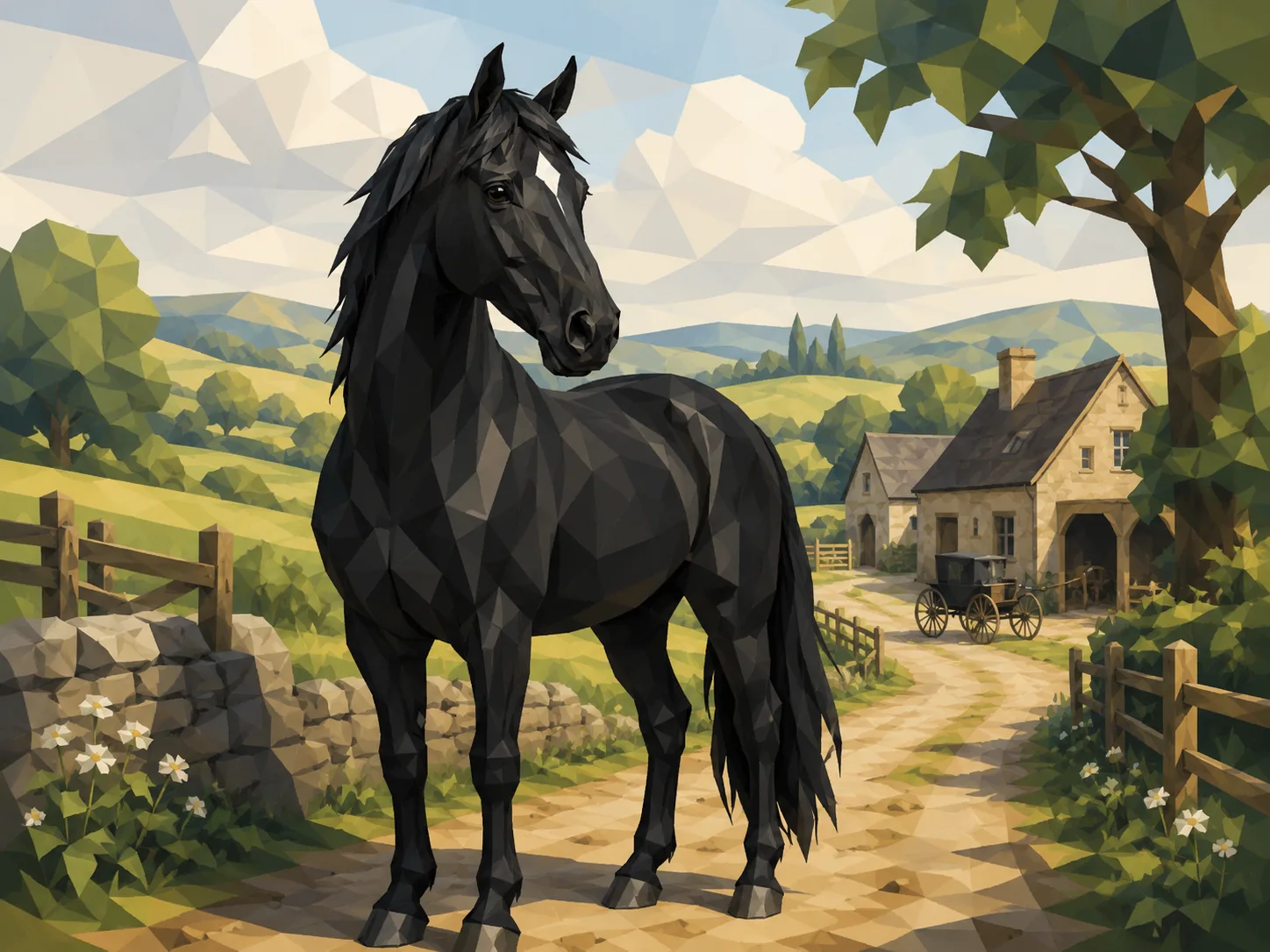
I was now growing handsome. My coat was soft, shiny and black, and I had one white foot and a pretty white star on my forehead. My master would not sell me until I was four. He said colts should not work like horses until they were quite grown up.
When I was four, Squire Gordon came to look at me. He looked me over and watched me walk, trot and gallop. “When he has been well broken in, he will do very well,” he said. My master said he would break me in himself, because he did not want me to be frightened or hurt.
Breaking in means teaching a horse to carry a person and to pull a carriage, fast or slow, just as the driver wishes. He must never bite or kick, and once his harness is on, he may not jump for joy or lie down when he is tired.
First came the bit. Nobody who has never had a bit in their mouth can know how bad it feels: a piece of cold, hard steel pushed in between your teeth and over your tongue, and held there by straps round your head. But all grown-up horses wore one, and with some oats and my master’s kind words, I learned to wear it.
The saddle was not half so bad. My master put it on very gently every day until, one morning, he got on my back and rode me round the meadow. It felt strange, but I was rather proud to carry him. Then the blacksmith nailed iron shoes onto my feet, and after that came the harness: a heavy collar, and blinkers at the sides of my eyes, so that I could only see straight in front of me. I often felt like kicking, but I could not kick such a good master, and in time I got used to everything.
My master also sent me for two weeks to a meadow next to the railway. I shall never forget the first train. With a roar and clouds of smoke, a long black thing flew past and was gone. I galloped away, shaking with fear. But the cows went on eating, and soon I found that the terrible thing never came into the field. Before long I cared as little about trains as the cows did.
My master often drove me with my mother, because she was steady and could teach me well.
“There are many kinds of men,” she said. “There are good, thoughtful men like our master, whom any horse can be proud to serve. There are bad, cruel men, who should never have a horse or a dog. And there are many foolish men who never stop to think. They spoil more horses than all the others, just because they have no sense. A horse never knows who may buy him or who may drive him. But still I say: do your best wherever you are, and keep up your good name.”