


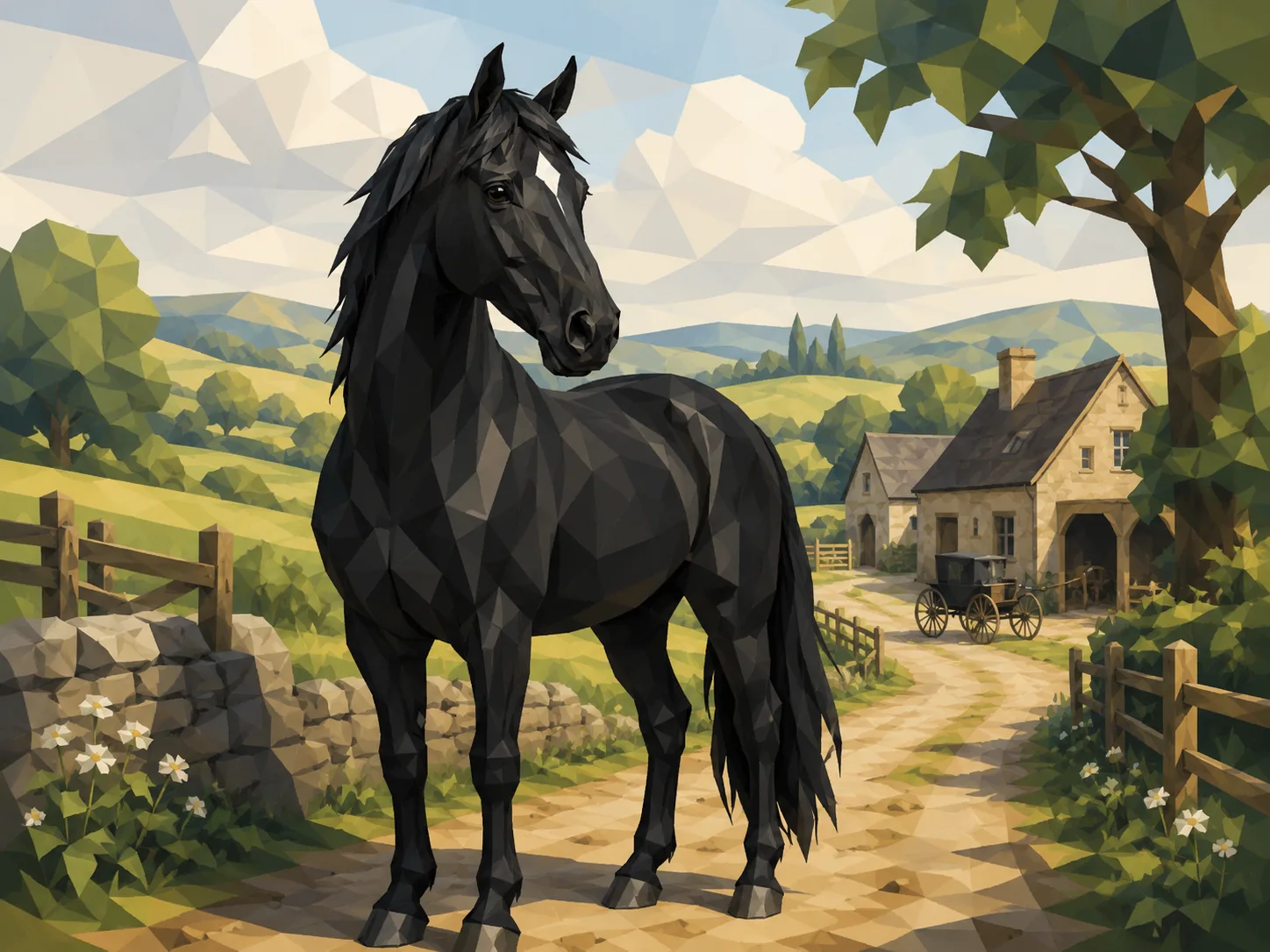
For a cab horse, I was very lucky: my driver was my owner, and it was in his own interest to treat me well. But many horses belonged to big cab owners, who rented them out to drivers for so much money a day. These drivers had to get that money out of the horses before they could earn anything for themselves, and some of the horses had a dreadful time.
One day a poor, shabby driver whom everyone called Seedy Sam brought in his horse, looking terribly tired.
“If the police saw that horse, they would take you to the police station,” said the Governor.
Sam threw his old rug over the horse and turned to the Governor. His voice sounded almost desperate.
“If the police have any business here, it’s with the owners who charge us so much. I pay Skinner eighteen shillings a day for a cab and two horses, and I must earn that before I earn a penny for myself. If the horses don’t work, we starve, and my children have known what hunger is. I have six of them, and only one earns anything. I’m on the stand fourteen or sixteen hours a day, and I haven’t had a Sunday for ten or twelve weeks. Skinner never gives a day off if he can help it.”
Some of the other drivers nodded and said he was right. Sam went on.
“You who have your own horses, or drive for good masters, have a chance of doing right. I haven’t. People tell me not to overwork my horse, but when a beast is really tired, only the whip keeps his legs going. What can I do? I must put my wife and children before the horse. Something is wrong somewhere: never a day’s rest, never a quiet hour with my family. I often feel like an old man, and I’m only forty-five.”
Jerry said nothing, but I had never seen his face look so sad. The Governor stood with his hands in his pockets. Then he took out his handkerchief and wiped his forehead.
“You’ve beaten me, Sam,” he said, “for it’s all true, and I won’t talk about the police again. It was the look in that horse’s eye that made me say it. It’s hard for man and hard for beast, and who can put it right, I don’t know. But you might tell the poor beast you’re sorry. Sometimes a kind word is all we can give them, and it’s wonderful how much they understand.”
A few mornings later a new man came on the stand with Sam’s cab.
“Hello!” said one of the drivers. “What’s wrong with Seedy Sam?”
“He’s ill in bed. He was taken ill in the yard last night and could hardly get home. He has a high fever.”
The next morning the same man came again.
“How is Sam?” asked the Governor.
“He’s gone.”
“What, gone? You don’t mean he’s dead?”
“He died at four o’clock this morning. All yesterday he was talking wildly about Skinner and about having no Sundays. ‘I never had a Sunday’s rest’: those were his last words.”
Nobody spoke for a while. Then the Governor said, “I’ll tell you what, mates, this is a warning for us.”