


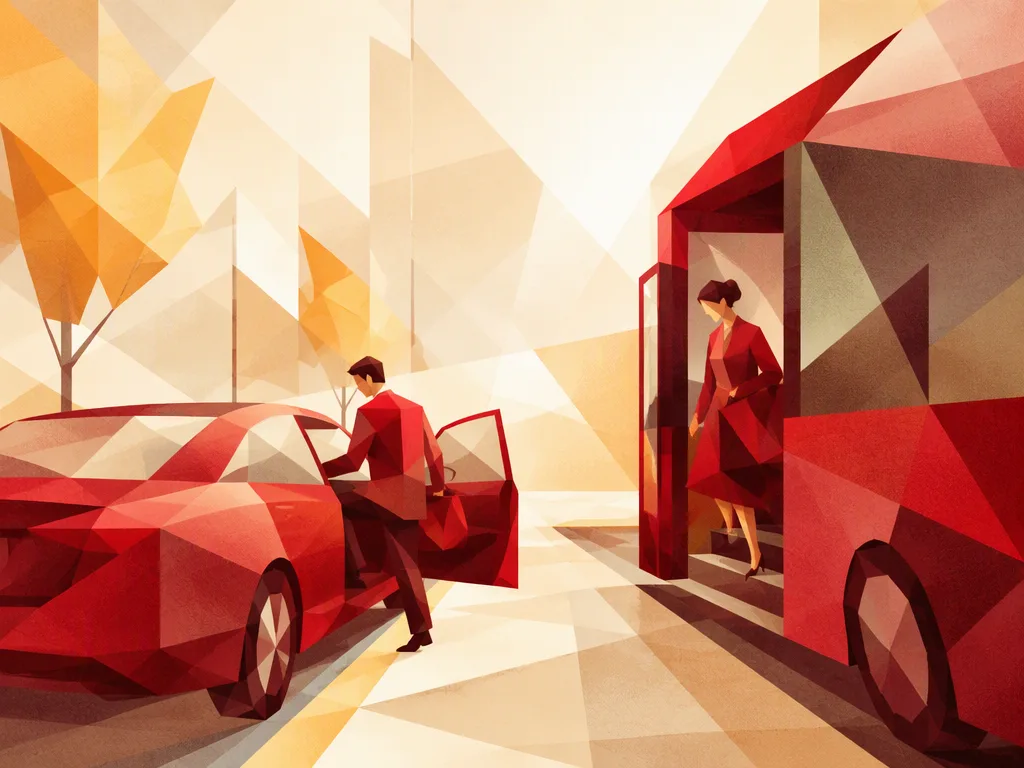
Get In, Get Out, Get On, Get Off
Explore short travel situations and learn how to talk about entering and leaving cars and buses.
Preview
Questions with solutions-
1. Preencha a lacuna.
Open the car door, get ___, and sit next to the driver.
- in
- on
- out
Your seat is inside the car.
Show solution
Open the car door, get in, and sit next to the driver.
For cars and taxis, we usually say “get in” when we enter.
-
2. Preencha a lacuna.
You are waiting at a bus stop.
Here comes our bus! Let's get ___ the bus and find seats.
- off
- on
- out of
You are starting your bus ride.
Show solution
Here comes our bus! Let's get on the bus and find seats.
We use “get on” for buses, trains, and planes.
-
3. Escolha a resposta correta.
Which movement does the speaker mean?
The car is parked beside the sidewalk. Please get out of the car.
- From the sidewalk into the car
- From one car seat to another
- From inside the car to the sidewalk
Show solution
- From inside the car to the sidewalk
“Get out of” is followed by the name of the place or vehicle you are leaving.
-
4. Escolha a resposta correta.
What do the travelers need to do at the library?
We need to get off the bus at the library.
- Leave the bus
- Board the bus
- Stay on the bus
Show solution
- Leave the bus
If you are not sure about your stop, you can ask, “Where should I get off?”
-
5. Preencha a lacuna.
Your taxi ride has ended.
The driver says, “Here we are! You can get ___ now.”
- out of
- out
- from
There is no vehicle name after the gap.
Show solution
The driver says, “Here we are! You can get out now.”
“Get out” can stand alone when both people know which car or taxi they mean.
-
6. Escolha a resposta correta.
You are on a bus. The next stop is the bank. Where should you leave the bus?
Get off at the stop after the bank.
- At the bank
- At the stop before the bank
- At the stop just past the bank
The bus will pass the bank first.
Show solution
- At the stop just past the bank
The words after “get off” can tell you where to leave: “at the station” or “at the next stop.”
-
7. Escolha a resposta correta.
Who should move through the bus door first?
Wait before you get on. Let these passengers get off first.
- The passengers entering the bus
- The passengers leaving the bus
- Both groups at the same time
Show solution
- The passengers leaving the bus
Letting people get off first makes space near the door for people getting on.
-
8. Escolha a resposta correta.
You are riding the bus to the hospital. What should you do now?
Don't get off here. The hospital is two stops away.
- Stay on the bus
- Leave the bus now
- Change to another bus now
Your stop is still ahead.
Show solution
- Stay on the bus
“Don't get off” tells you not to leave yet. You are already on the bus.
-
9. Escolha a resposta correta.
What is the speaker's role in this taxi ride?
I got in the taxi and told the driver my address.
- The person driving the taxi
- A person waiting outside the taxi
- A passenger riding in the taxi
Show solution
- A passenger riding in the taxi
“Got” is the past form of “get.” “I got in” describes entering the taxi earlier.
-
10. Preencha a lacuna.
You are sitting in a parked car.
Please get out ___ the car. I need to clean the seats.
- from
- of
- on
Here, “out” needs another word before “the car.”
Show solution
Please get out of the car. I need to clean the seats.
Keep “out of” together before a vehicle name: “out of the car” or “out of the taxi.”
-
11. Escolha a resposta correta.
Which ride came first?
We got off the bus before we got in the taxi.
- The bus ride
- The taxi ride
- Neither ride has started yet
Look at the word “before.”
Show solution
- The bus ride
“Before” puts the bus ride earlier. The travelers finished one ride and then started another.
-
12. Preencha a lacuna.
You have just left your friend's car, but it starts to rain.
Your friend says, “Get ___ in. You can wait here until the rain stops.”
- away
- off
- back
You were inside the car a moment ago.
Show solution
Your friend says, “Get back in. You can wait here until the rain stops.”
“Back” adds the idea of returning. “Get back in” means enter again.
-
13. Escolha a resposta correta.
What should you do at the next stop to change buses?
You got on the wrong bus. This bus goes to the zoo, not the beach. You want to go to the beach.
- Stay on this bus until it reaches the beach.
- Get off and wait for a bus to the beach.
- Get off and then get on the same bus again.
You need to leave this bus before taking a different one.
Show solution
- Get off and wait for a bus to the beach.
“The wrong bus” means a bus that does not take you where you want to go.
-
14. Preencha as lacunas.
Your car ride ends at the bus station. Your next ride is by bus.
Get ___ the car, then get ___ the bus to the airport.
- in
- out of
- off
- on
You are leaving the first vehicle and entering the second.
Show solution
Get out of the car, then get on the bus to the airport.
Changing rides can mean getting out of a car and then getting on a bus.
-
15. Preencha as lacunas.
Your bus is arriving at the station. Dad is waiting there in his car to drive you home.
Don't get ___ the bus until it stops. Then get ___ Dad's car.
- on
- out of
- in
- off
Finish the bus ride safely before starting the car ride.
Show solution
Don't get off the bus until it stops. Then get in Dad's car.
“Until it stops” tells you to wait. Once the bus stops, you can leave it and enter the car.