


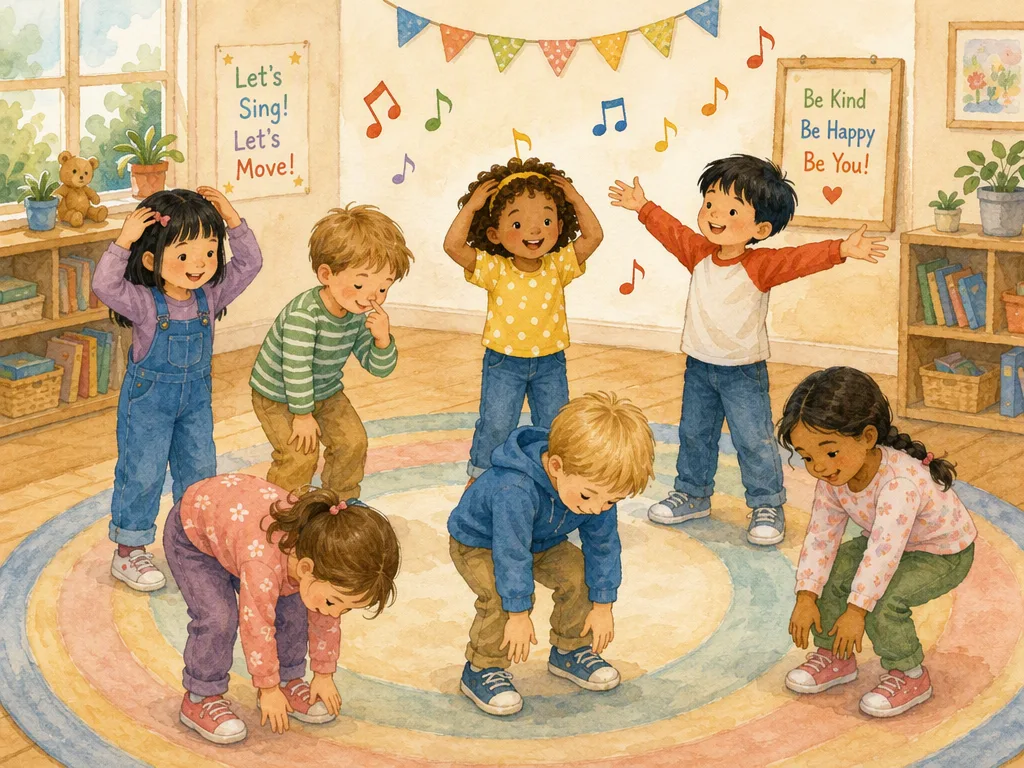
歌曲内容
这是一首动作歌。歌手会问你的身体部位在哪里,并让你摸一摸、动一动,再跳跳舞。孩子们可以边唱边做每一个动作。最后,大家一起拍手、跺脚、跳跃,这节课也快结束了。
实用词汇
身体部位: head, nose, ears, arms, fingers, tummy(小孩子用来表示肚子的词),shoulders, face, knees, toes, back, hand, hands, feet
动作词: touch, stretch, move, wiggle, lift, turn, smile, bend, pat, wave, clap, stomp, jump, dance
实用表达:
- side to side:反复向左、向右移动
- up and down:向上、向下移动
- stretch them wide:尽可能张开双臂
- have some fun:玩得开心
- a frown:悲伤或生气时皱眉的表情,与微笑相反
- the smartest in the land:所有人中最聪明的
语法
用 where 提问:问一个事物时用 is,问多个事物时用 are。
- Where is your head?(一个头)
- Where are your ears?(两只耳朵)
单数与复数: hand → hands、finger → fingers,但也有 foot → feet,以及 toe → toes。Feet 是不规则复数形式。
宾格代词 them: Where are your arms? Stretch them wide! 这里的 them 指的是 your arms。
表示所属关系的 your: your head, your nose, your tummy
为了押韵而选用的词句
有些歌词主要是为了押韵,所以在日常说话时不要照着用:
- Is it blue or is it red? 与 head 押韵。这只是一个搞怪的玩笑,因为头并不是蓝色或红色的。
- Look at how the music goes! 与 nose 押韵。对于音乐,我们是listen(听),而不是看。人们通常会说 Listen to how the music goes.
- Learning English is so yummy! 与 tummy 押韵。Yummy 表示食物很好吃。说到学习时,要用 fun:Learning English is so fun!
- Listen to the song you hear 与 ears 押近似韵。这句话有些意思重复,因为 listen 和 hear 的意思相近。在歌曲里这样说没问题,但人们通常只会说 Listen to the song!