


Theme & Story
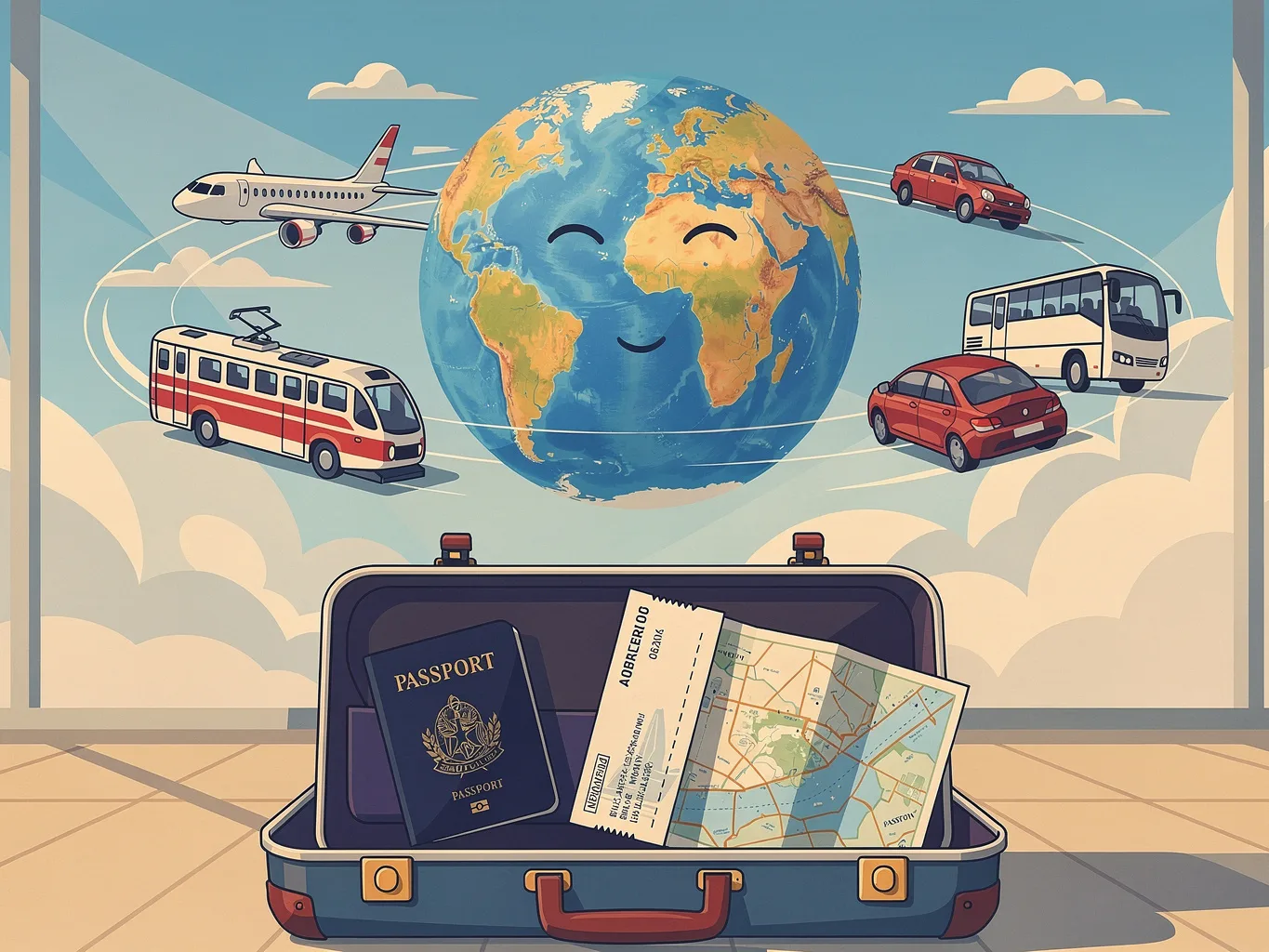
“Fly With Me” is a bright, simple travel song about getting ready for a trip and exploring the world. The singer moves through common travel moments: packing bags, carrying a passport, buying a ticket, finding a gate, taking trains, taxis, buses, and asking for directions. The chorus invites the listener to join the adventure: “Come along and travel with me.”
For language learners, the song is especially useful because it tells a clear story in everyday English. It uses practical travel vocabulary and short dialogues you might hear at an airport, train station, hotel, or in the street.
Metaphors & Meaning
The song is mostly literal, but it has a few poetic or symbolic phrases:
- “The world is wide” means the world is full of many places to discover. It suggests possibility and adventure.
- “From the station to the sky” connects ground travel and air travel. It gives the feeling of moving freely through different kinds of transportation.
- “We watch the clouds go drifting by” creates a peaceful travel image, especially from a plane or train window.
- “Every flag and map unfurled” means discovering many countries and places. “Unfurled” means opened or spread out, like opening a map or raising a flag.
- “Traveling light, feeling so free” has both a literal and emotional meaning. Literally, it means carrying little luggage. Emotionally, it suggests freedom, simplicity, and openness to new experiences.
- Pack your bags: prepare your luggage for a trip.
- Passport: an official document for international travel.
- Airport: the place where planes arrive and depart.
- Ticket: proof that you paid for travel.
- Gate: the airport area where passengers board a plane.
- Platform: the place where passengers wait for a train.
- Schedule: a timetable showing when transport leaves or arrives.
- Luggage / bags: suitcases or items you carry while traveling.
- Taxi / hotel / subway / bus: common city and travel vocabulary.
- On my way: traveling toward a place; already going somewhere.
- On time: not late; arriving or leaving at the correct time.
- Traveling light: traveling with only a small amount of luggage.
- Come along: join someone.
- Bon voyage: a French phrase often used in English meaning “Have a good trip!”
- “Where is your luggage?”
- “How do I get to the square?”
- “Can I see your passport and ticket, please?”
- “Which platform does the train leave from?”
- “How long is the flight?”
- “Is the bus on time?”
- Imperatives: The song uses commands or invitations, such as “Pack your bags,” “Fly with me,” “Come along,” and “Go straight ahead.” Imperatives are common for giving instructions, invitations, or directions.
- Present simple: Many lines use the present simple to describe routines or actions in a story: “I buy a ticket,” “I find my gate,” “I check the schedule.” This makes the song easy for learners to follow.
- Present continuous feeling: “Traveling light, feeling so free” uses -ing forms to describe the traveler’s situation and mood.
- Questions with auxiliaries: The song includes useful question structures: “How do I get…?” “Does the train leave…?” “Is the bus…?” These are essential for asking for information.
- Polite requests: “Can I see your passport and ticket, please?” is a polite service or official request. The word “please” softens the question.
- “Whether… or…”: In “Whether by train or by a fast jet,” this structure means “it does not matter which option.” The idea is that any form of travel can be exciting.
The ending — “Where are we going next? / I don’t know. / But let’s go. / Bon voyage.” — shows that the exact destination is less important than the spirit of adventure.
Vocabulary & Slang
Key travel words and phrases include:
Useful question patterns from the song:
These are practical phrases for real travel situations.