


Theme & Story
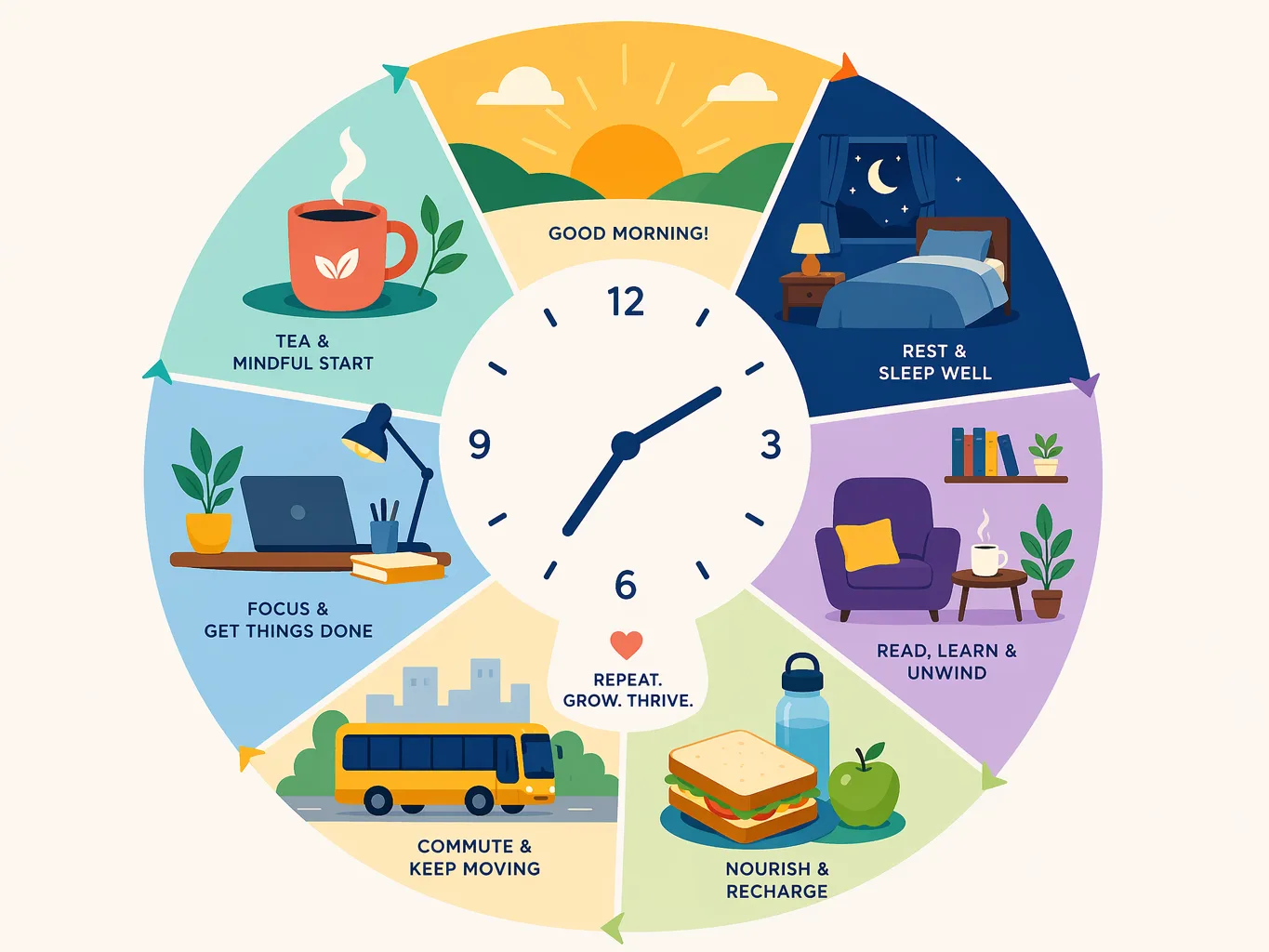
“The Rhythm of My Day” is a clear, friendly song about a person’s daily routine from morning until night. The speaker wakes up, gets ready, has tea, goes to work, eats lunch, returns home, relaxes, and goes to sleep. The story is simple on purpose: it helps learners practice common actions, times of day, and everyday vocabulary.
The repeated lines—especially “This is my day, from start to end” and “A simple life, a steady beat”—make the song feel organized and predictable, just like a real routine.
Metaphors & Meaning
The main metaphor is in the title: “The Rhythm of My Day.” A rhythm is usually connected to music, but here it means the repeated pattern of daily life. The person’s habits are like a song with a steady beat.
- “The clock is ticking on the wall” suggests time moving forward and guiding the day.
- “A steady beat” compares routine to music: regular, calm, and easy to follow.
- “No matter where I have to roam” means that even if the speaker goes different places, they still return to the comfort of home and routine.
- “The human race” is a playful phrase. In everyday English, it can mean all humans, but in this line it also sounds like getting ready to join the busy world outside.
- There are no deep cultural references, but the song reflects a common modern daily schedule: waking up early, going to work, lunch around noon, relaxing in the evening, and sleeping at night.
Vocabulary & Slang
- wake up / get up: Both mean to stop sleeping, but get up often means physically leaving the bed.
- feeling light: Feeling happy, calm, or free from stress.
- routine: A regular set of actions you do often.
- tasks: Jobs or activities you need to complete.
- tick / ticking: The sound a clock makes; also suggests time passing.
- from start to end: From the beginning to the finish.
- roam: To travel or move around, often without staying in one place.
- steady beat: A regular rhythm; here, a stable pattern of life.
- around the block: Near the speaker’s home or workplace; a short walk in the neighborhood.
- neat and clean: Tidy, organized, and not dirty.
- around noon: Approximately 12:00 p.m.
- nook: A small, cozy corner or space.
- easy chair: A comfortable chair for relaxing.
Grammar Notes
- This song is excellent for practicing the simple present tense, especially for routines and habits:
- I wake up early.
- I brush my teeth.
- I walk to work.
- I cook some dinner.
- The simple present is used because these actions happen regularly, not just one time.
- The song also practices time expressions:
- at eight o’clock
- at twelve o’clock
- at five o’clock
- at seven
- around noon
- at ten
- Use at with specific times: at seven, at noon, at ten o’clock.
- The dialogue section is useful for question formation:
- What time do you wake up?
- How do you go to work?
- When do you have lunch?
These questions use do because the subject is you and the tense is simple present.
One small note: “I sleep at ten” is understandable, but many native speakers would more commonly say “I go to bed at ten.” “Sleep” describes the state of sleeping, while “go to bed” describes the action of preparing to sleep.