


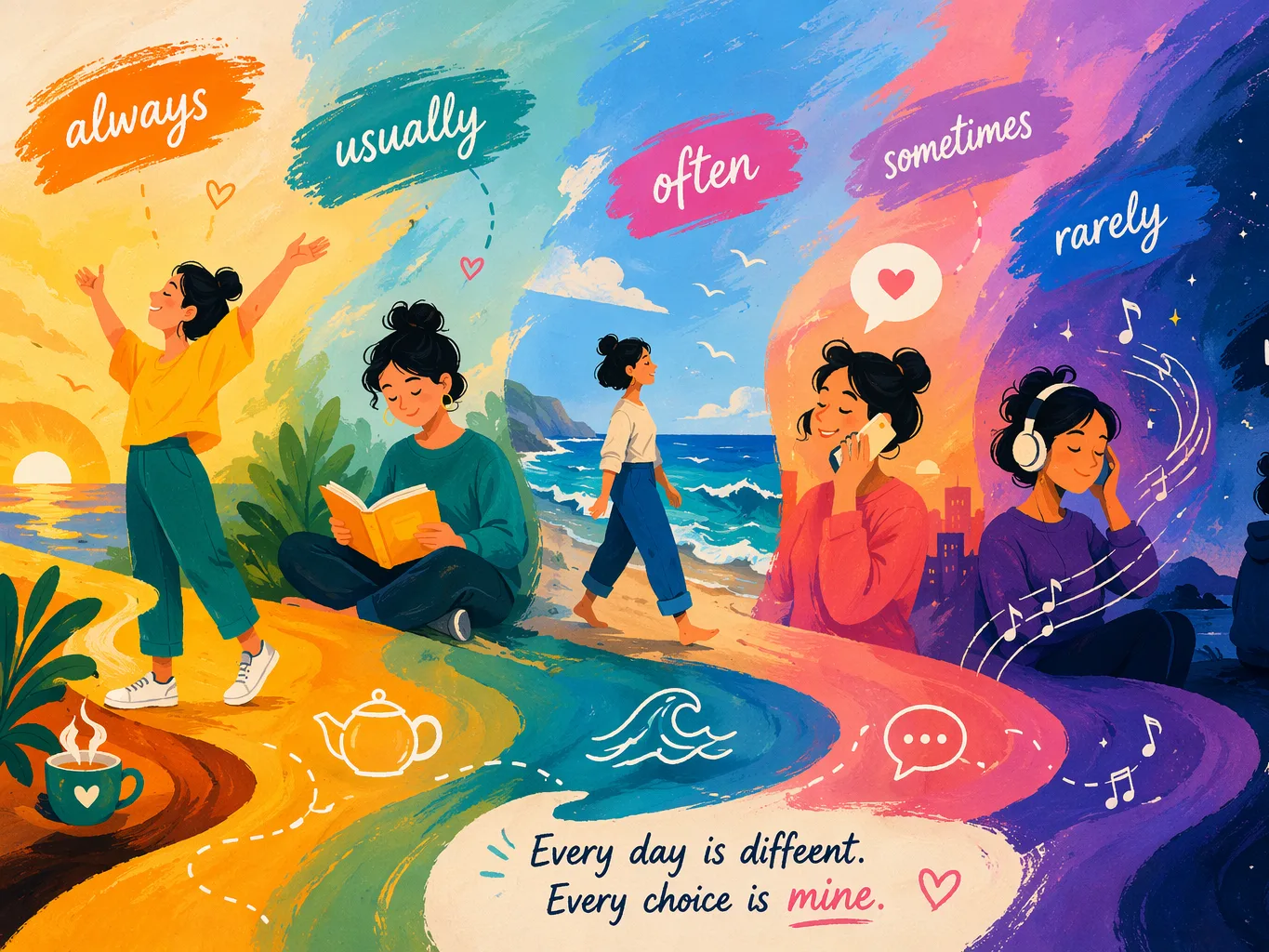
Theme & Story
“The Rhythm of My Life (Adverbs of Frequency)” is a cheerful learning song about daily routines and habits. The singer describes a simple, balanced day: waking up with the sun, drinking tea, reading, walking by the sea, calling a trusted friend, and going to bed at a reasonable time.
The main teaching goal is clear: the song helps learners understand adverbs of frequency—words like always, usually, often, sometimes, rarely, and never. These words tell us how often something happens.
Metaphors & Meaning
The title, “The Rhythm of My Life,” uses “rhythm” as a metaphor. It does not only mean musical rhythm; it also means the repeated pattern of someone’s daily life. Just as music has a beat, our routines have repeated actions and habits.
The line “Let the rhythm make you soften” suggests that the music and routine can help you relax. “Soften” here means to become calmer, gentler, or more comfortable.
“From the morning to the night / Everything will be alright” gives the song a comforting feeling. It suggests that simple routines can make life feel safe and positive.
The line “Nothing stays the same forever” adds a slightly deeper message: even though we have habits, life changes. Frequency words help us talk about patterns, but those patterns can change over time.
Vocabulary & Slang
- Always: 100% of the time. Example: “I always wake up with the sun.”
- Usually: most of the time. Example: “My day has usually just begun.”
- Often: many times, frequently. Example: “I often walk along the sea.”
- Sometimes: occasionally, not always. Example: “I sometimes call an old-time friend.”
- Rarely: not often. Example: “I rarely go to bed too late.”
- Never: 0% of the time. Example: “I never cry.”
- Wake up with the sun: to wake up early, around sunrise.
- A page or two: one or two pages; a small amount of reading.
- Old-time friend: an old friend, someone you have known for a long time.
- Depend on: to trust or rely on someone.
- Stay with me for a while: remain here/listen for some time; in a song, it invites the listener to continue.
- “I always wake up.”
- “I usually read.”
- “I often walk.”
- “I sometimes call.”
- “I rarely go.”
- “I never cry.”
- “I am usually happy.”
- “She is often late.”
- “They are never tired.”
- “How often do you read?”
- “How often does he call?”
- “How often do they walk by the sea?”
- “A friend I know I can depend on.”
There is no strong slang in this song. The language is simple, clear, and designed for learners.
Grammar Notes
1. Adverbs of frequency usually go before the main verb
The song directly teaches this rule:
“Before the verb, that is the way.”
Examples:
The basic pattern is:
Subject + adverb of frequency + main verb
Example: I always sing.
2. With the verb “be,” the adverb usually comes after “be”
The song mostly uses action verbs, but learners should know this important exception:
Pattern:
Subject + be + adverb of frequency + adjective/noun
3. “How often…?” asks about frequency
The repeated question:
“How often do you smile?”
means: “Do you smile always, usually, often, sometimes, rarely, or never?”
Pattern:
How often + do/does + subject + base verb?
Examples:
4. “On whom I know I can depend” is formal English
The line:
“On whom I know I can depend”
means: “I know I can depend on this person.”
This is grammatically correct but formal. In everyday spoken English, many people would say:
5. Repetition helps learning
The chorus repeats the frequency adverbs many times:
“ALWAYS, USUALLY, OFTEN, too. / SOMETIMES, RARELY, and then NEVER.”
This repetition makes the grammar easier to remember, like a musical grammar chant.