


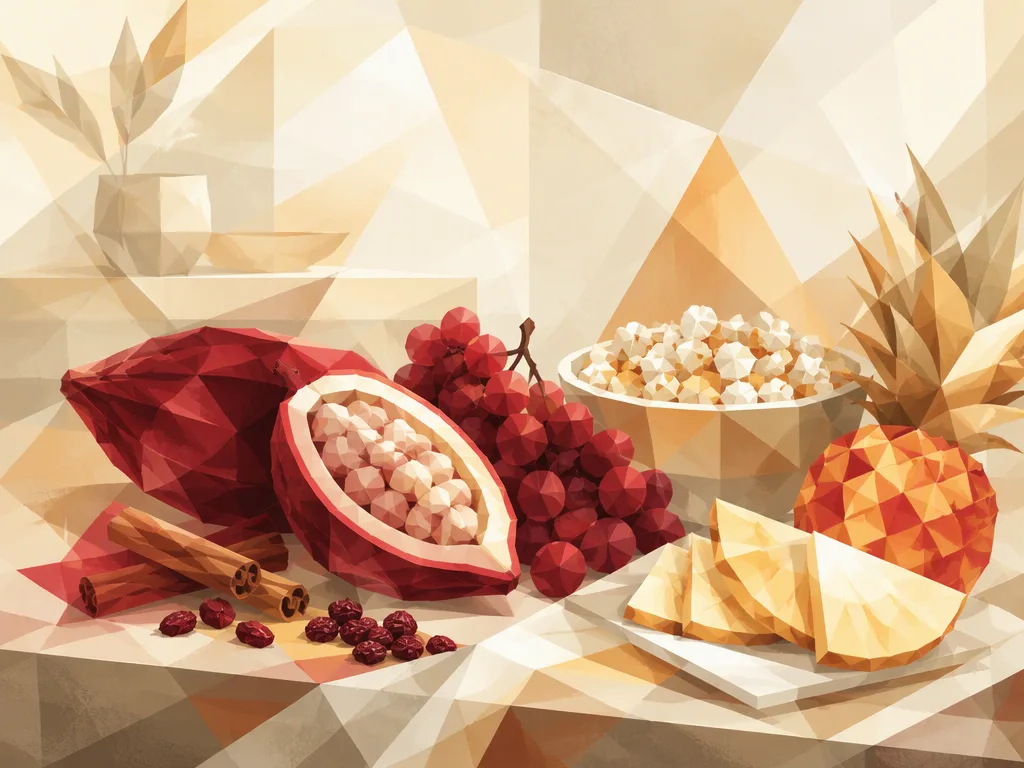
Datos asombrosos sobre los alimentos
Descubre datos sorprendentes sobre ingredientes cotidianos, desde el chocolate y las palomitas de maíz hasta las frutas y las verduras.
Preview
Questions with solutions-
1. Completa el espacio en blanco.
When grapes are dried, they become ___.
- prunes
- raisins
- dates
Piensa en la pequeña fruta deshidratada que suele encontrarse en las galletas de avena.
Show solution
When grapes are dried, they become raisins.
El secado elimina gran parte del agua de la uva, por lo que su azúcar natural se concentra más.
-
2. Elige la respuesta correcta.
¿Qué alimento se elabora con estas semillas?
Cacao trees produce large fruits with seeds inside. The seeds are dried and roasted before being used in food.
- Coffee
- Black pepper
- Chocolate
Show solution
- Chocolate
La manteca de cacao, la grasa natural de las semillas de cacao, ayuda a que el chocolate se derrita suavemente en la boca.
-
3. Elige la respuesta correcta.
Where do peanut pods develop?
A peanut plant's flowers grow above the ground. After a flower blooms and fades, a small stem grows downward into the soil.
- Below the surface of the soil
- On the plant's highest branches
- Inside flowers above the ground
Follow the direction of the small stem.
Show solution
- Below the surface of the soil
Despite their name, peanuts belong to the same plant family as beans and peas.
-
4. Completa el espacio en blanco.
Cinnamon sticks are made from the inner ___ of certain trees.
- wood
- sap
- bark
Piensa en la capa externa que recubre un árbol.
Show solution
Cinnamon sticks are made from the inner bark of certain trees.
Los trozos delgados de corteza interna se enrollan al secarse. La canela molida es el mismo material convertido en polvo.
-
5. Elige la respuesta correcta.
¿Qué parte de la planta proporciona el sabor a vainilla?
Vanilla comes from a climbing orchid. Its long fruit is often called a “vanilla bean.”
- The roots
- The long fruit
- The leaves
Show solution
- The long fruit
El fruto se trata y se seca después de cosecharlo para desarrollar el característico sabor a vainilla.
-
6. Elige la respuesta correcta.
¿Qué hace que un grano de maíz para palomitas reviente?
A popcorn kernel has a hard outer shell and a little water inside. As the kernel heats up, the water becomes steam.
- Steam builds up pressure inside the shell.
- The outer shell melts into liquid.
- The shell shrinks as all the water escapes.
Piensa en lo que sucede cuando el vapor no puede escapar.
Show solution
- Steam builds up pressure inside the shell.
Cuando la cáscara se rompe, la liberación repentina de presión ayuda a que el interior blando se expanda y se convierta en palomitas esponjosas.
-
7. Completa el espacio en blanco.
Honey can become grainy over time. The crystals that form are mostly made of ___.
- salt
- fat
- sugar
Piensa en lo que hace que la miel sea dulce.
Show solution
Honey can become grainy over time. The crystals that form are mostly made of sugar.
Los cristales por sí solos no significan que la miel se haya echado a perder. Calentarla suavemente puede hacer que vuelva a tener una textura uniforme.
-
8. Completa el espacio en blanco.
La clara de un huevo se vuelve firme al cocinarse.
The ___ in an egg change shape when heated and join together to form a firm structure.
- fats
- proteins
- sugars
Piensa en el nutriente por el que los huevos son especialmente conocidos.
Show solution
The proteins in an egg change shape when heated and join together to form a firm structure.
Estos cambios no se revierten cuando el huevo se enfría, por lo que un huevo cocido no vuelve a estar crudo.
-
9. Elige la respuesta correcta.
¿Por qué presionar plástico para envolver contra la superficie cortada puede retrasar el oscurecimiento?
Oxygen in the air reacts with substances inside a cut apple, turning its surface brown.
- It removes the apple's natural acids.
- It absorbs water from inside the apple.
- It limits contact with oxygen.
Show solution
- It limits contact with oxygen.
Este cambio de color no significa, por sí solo, que no sea seguro comer la manzana.
-
10. Elige la respuesta correcta.
¿Por qué enfriar una cebolla antes de cortarla podría reducir el lagrimeo?
Cutting an onion releases a gas that can irritate your eyes. The reactions that produce this gas happen more slowly when the onion is cold.
- It slows the production of the irritating gas.
- It removes all the water from the onion.
- It removes the substances that give onions flavor.
Show solution
- It slows the production of the irritating gas.
Enfriarla puede reducir el lagrimeo, pero no evita por completo que se forme el gas.
-
11. Elige la respuesta correcta.
¿Por qué sube la masa?
Yeast feeds on sugar and releases a gas called carbon dioxide. Bread dough traps this gas in small bubbles.
- The yeast turns sugar into extra flour.
- The gas bubbles make the dough expand.
- The yeast removes water, making the dough swell.
Piensa en el espacio que ocupan las burbujas.
Show solution
- The gas bubbles make the dough expand.
La masa necesita una estructura elástica para retener el gas en lugar de dejarlo escapar.
-
12. Elige la respuesta correcta.
¿Qué probablemente le pasará a un plátano verde si se coloca junto a uno maduro?
Ripe bananas release a gas that helps nearby bananas ripen.
- It will stop ripening.
- It will return to a greener stage.
- It will ripen faster.
Show solution
- It will ripen faster.
Las manzanas y las peras también responden a este gas. Mantener separadas las frutas maduras de las que aún no están maduras puede ayudar a retrasar la maduración.
-
13. Elige la respuesta correcta.
Which peas are likely to keep the most vitamin C?
Peas can lose vitamin C if they are kept in a warm place for a long time. Freezing them soon after picking slows this loss.
- Peas frozen soon after picking
- Peas left in a warm room for several days
- Peas kept warm for several days before freezing
Consider what happens before the peas reach the freezer.
Show solution
- Peas frozen soon after picking
Frozen does not always mean less nutritious. Storage time and temperature matter too.
-
14. Elige la respuesta correcta.
¿Por qué la piña cocida funciona mejor en un postre de gelatina?
Fresh pineapple has an enzyme that breaks down proteins. Gelatin is a protein that makes some desserts firm. Cooking pineapple stops this enzyme from working.
- Cooking turns the pineapple's sugar into gelatin.
- Its enzyme no longer breaks down the gelatin.
- Cooking removes all the liquid from the pineapple.
Relaciona el efecto de la enzima con la composición de la gelatina.
Show solution
- Its enzyme no longer breaks down the gelatin.
La piña enlatada ya se ha calentado, por lo que suele funcionar mejor con la gelatina que la piña fresca.
-
15. Elige la respuesta correcta.
Which of these ingredients can help your body absorb lycopene from tomatoes?
Tomatoes contain lycopene, a substance that gives them their red color. Your body absorbs it better when you eat it with some fat.
- Plain water
- Table salt
- Olive oil
Think about which ingredient contains fat.
Show solution
- Olive oil
Cooking can also make lycopene easier to absorb by breaking down some of the tomato's structure.