


Animales con habilidades extraordinarias
Descubre las sorprendentes maneras en que los animales perciben su entorno, se mueven, cazan y sobreviven.
Preview
Questions with solutions-
1. Elige la respuesta correcta.
¿Qué habilidad está usando el murciélago?
A bat sends out high-pitched calls and listens to the returning echoes to locate insects in the dark.
- Echolocation
- Heat detection
- Night vision
La información clave proviene del sonido, no de la luz ni de la temperatura.
Show solution
- Echolocation
El tiempo que tarda en regresar un eco ayuda al murciélago a calcular qué tan lejos está un insecto.
-
2. Elige la respuesta correcta.
¿A qué se debe principalmente la adherencia de los dedos del geco?
Many geckos can climb smooth glass and hang upside down without leaving a sticky trail.
- Tiny claws that dig into the glass
- Microscopic hairs that make close contact with the surface
- Suction cups that trap air beneath the toes
Su adherencia depende del contacto a una escala muy pequeña.
Show solution
- Microscopic hairs that make close contact with the surface
Las fuerzas débiles entre las moléculas se suman en los numerosos puntos de contacto diminutos, creando una fuerte adherencia.
-
3. Elige la respuesta correcta.
¿Qué característica del sueño de un delfín le ayuda a mantenerse alerta?
A resting dolphin still needs to surface to breathe and monitor its surroundings.
- Both halves of its brain always enter deep sleep together.
- Only its muscles rest; its brain never sleeps.
- One half of its brain can rest while the other remains more alert.
El descanso no tiene que involucrar a todo el cerebro a la vez.
Show solution
- One half of its brain can rest while the other remains more alert.
Durante este tipo de sueño, un ojo suele permanecer abierto para ayudar al delfín a vigilar su entorno.
-
4. Elige la respuesta correcta.
¿Cómo pueden estos patrones ayudar a una abeja?
Some flowers have ultraviolet patterns that bees can see, although humans cannot.
- They can guide it toward the flower's nectar.
- They can show it the route back to its hive.
- They can identify which bee last visited the flower.
Piensa en lo que busca una abeja cuando visita una flor.
Show solution
- They can guide it toward the flower's nectar.
Estas marcas suelen llamarse guías de néctar: una flor que a nosotros nos parece lisa puede parecerle a una abeja que tiene patrones.
-
5. Elige la respuesta correcta.
¿Cómo ayudan estas características de las plumas a un búho a acercarse a sus presas sin ser detectado?
Some owls have comb-like edges on their flight feathers and a soft, velvety feather surface.
- They increase the owl's sensitivity to high-pitched sounds.
- They improve the owl's vision in very low light.
- They reduce the noise of air moving over the wings.
Piensa en el sonido que puede producir un ala en movimiento.
Show solution
- They reduce the noise of air moving over the wings.
Un vuelo más silencioso también ayuda al búho a oír los sonidos tenues de sus presas sin que el ruido de sus propias alas interfiera.
-
6. Elige la respuesta correcta.
¿Qué les permite hacer esta disposición a los brazos de un pulpo?
An octopus has many nerve cells in its arms, not just in its central brain.
- Wait for the central brain to direct every small movement
- Manage some movements and responses to touch locally
- Replace the central brain in controlling the entire animal
La información puede procesarse cerca de donde se recibe.
Show solution
- Manage some movements and responses to touch locally
Este control local ayuda a los brazos flexibles a explorar y manipular objetos mientras el cerebro central coordina acciones más amplias.
-
7. Elige la respuesta correcta.
¿Cómo pueden estas células producir una descarga eléctrica potente?
An electric eel has thousands of specialized electric cells. Each cell produces only a small voltage.
- The cells discharge together, and their voltages add up.
- One cell supplies the entire discharge while the others rest.
- The cells collect electricity already present in the water.
Piensa en cómo varias baterías pueden trabajar juntas.
Show solution
- The cells discharge together, and their voltages add up.
Las anguilas eléctricas también usan señales eléctricas más débiles para percibir su entorno, no solo descargas potentes para atacar o defenderse.
-
8. Elige la respuesta correcta.
¿Por qué es esto útil en un hábitat seco?
Desert kangaroo rats produce very concentrated urine. Their kidneys return much of the filtered water to the blood.
- It allows them to make new water directly from mineral salts.
- It prevents all water loss through their skin and breathing.
- It lets them remove waste while losing relatively little water.
Los desechos todavía tienen que salir del cuerpo, pero el agua es valiosa.
Show solution
- It lets them remove waste while losing relatively little water.
Las ratas canguro también obtienen agua cuando sus cuerpos descomponen los nutrientes de los alimentos.
-
9. Elige la respuesta correcta.
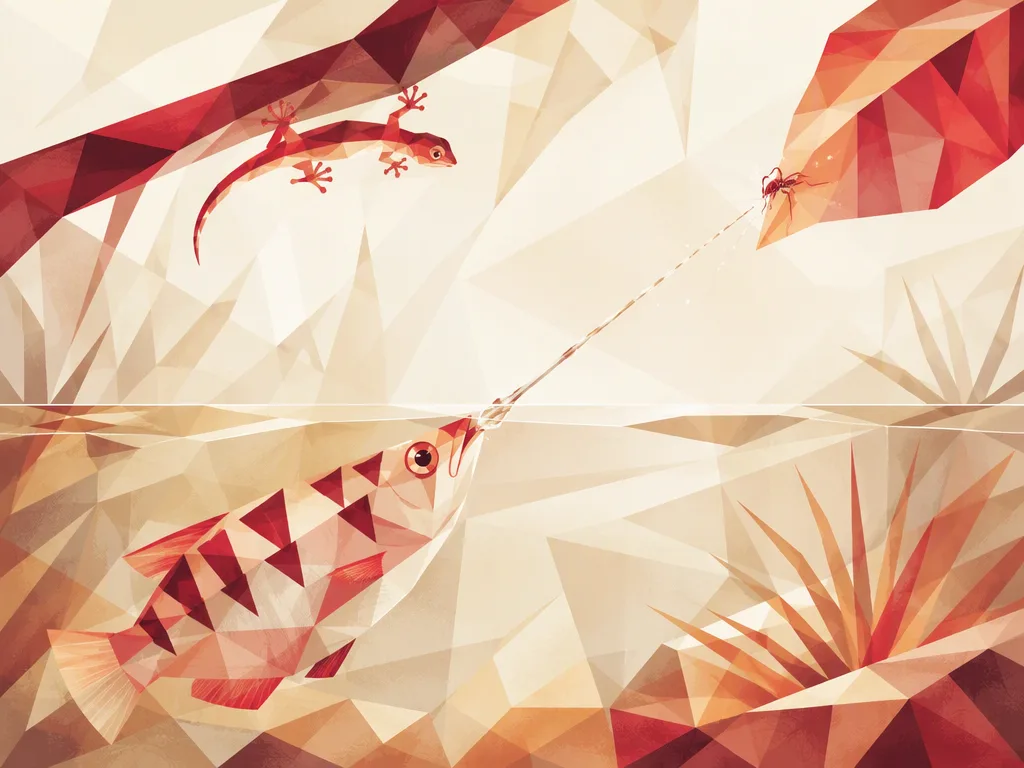
¿Qué debe tener en cuenta el pez arquero al apuntar?
An archerfish shoots water at insects above the surface. Light bends as it passes between air and water, making a target appear shifted from its actual position.
- The insect being underwater despite appearing above the surface
- The difference between the insect's apparent and actual positions
- The water jet bending in exactly the same way as the light
El objetivo no necesariamente está donde parece estar.
Show solution
- The difference between the insect's apparent and actual positions
Esta desviación de la luz se llama refracción; también hace que una pajilla en un vaso de agua parezca doblada.
-
10. Elige la respuesta correcta.
What does the extra glucose help do?
Wood frogs can survive winter with ice forming outside many of their cells. Glucose, a type of sugar, builds up in their tissues.
- Limit cell damage caused by freezing and water loss
- Keep every part of the frog above freezing
- Make the heart beat faster throughout the frozen period
Surviving some freezing is different from preventing all freezing.
Show solution
- Limit cell damage caused by freezing and water loss
The frog's heart can stop during freezing and start again after it thaws.
-
11. Elige la respuesta correcta.
¿Cuál es el principal beneficio de esta disposición?
In an emperor penguin's legs, warm blood traveling toward the feet flows close to cold blood returning from them.
- The feet stay as warm as the body's core.
- The returning blood carries extra cold into the body's core.
- Heat passes to the returning blood, reducing heat loss through the feet.
El calor puede pasar de un vaso sanguíneo a otro cercano antes de llegar a los pies.
Show solution
- Heat passes to the returning blood, reducing heat loss through the feet.
Los pies pueden mantenerse mucho más fríos que el cuerpo, lo que reduce la cantidad de calor que transfieren al hielo.
-
12. Elige la respuesta correcta.
¿Qué causa la fuerza adicional?
A mantis shrimp strikes prey with a fast-moving club. An additional burst of force can follow even without a second strike.
- The club releases stored electrical energy into the water.
- A vapor bubble forms and collapses, creating a pressure shock.
- The club releases a jet of venom under high pressure.
El efecto se debe a un cambio repentino en la presión del agua circundante.
Show solution
- A vapor bubble forms and collapses, creating a pressure shock.
Este proceso se llama cavitación y también puede ocurrir alrededor de las hélices de barcos que giran a gran velocidad.